Atlas Berry
M1C
“The world is industrializing... we want to back the founders that are pushing forward this next industrial era.”
The short version
Atlas Berry is an investor at Mission One Capital (M1C), a venture fund focused on energy independence, industrial resilience, and frontier industries as part of what he calls the next industrial era. He built a team of niche experts, including a Cambridge nuclear engineering PhD and a 30-year CIA veteran, to bridge lab-scale prototypes to commercialization, and pairs this with a peak performance protocol for founders that includes coaching from the U.S. national cycling team's coach. His path to venture capital included managing the VC arm for the band Linkin Park before founding his current specialized fund strategy.
- Atlas Berry invests at M1C (formerly Mission One Capital), which focuses on three buckets: energy as national security, industrial resilience, and Earth systems (critical minerals and resource tracking).
- He built a team of specialized experts, including a Cambridge PhD in nuclear engineering for technical diligence and a 30-year CIA veteran to help founders access non-dilutive government grants.
- M1C evaluates deep tech companies using the TRL (Technology Readiness Level) scale and typically invests around the prototype-to-first-pilot stage, sometimes when contracts are still in LOI form.
- Berry's path into venture capital began when he pitched the band Linkin Park on an investment vision and was asked to build out their family office and venture strategy.
- He believes venture capital is bifurcating into a barbell, with multi-stage giants on one side and hyper-specialized niche funds like M1C on the other, which allows niche funds to take on more technical and commercialization risk due to domain expertise.
- Berry uses content and transparency about his investment thesis as a distribution strategy so founders feel they know him before a first meeting.
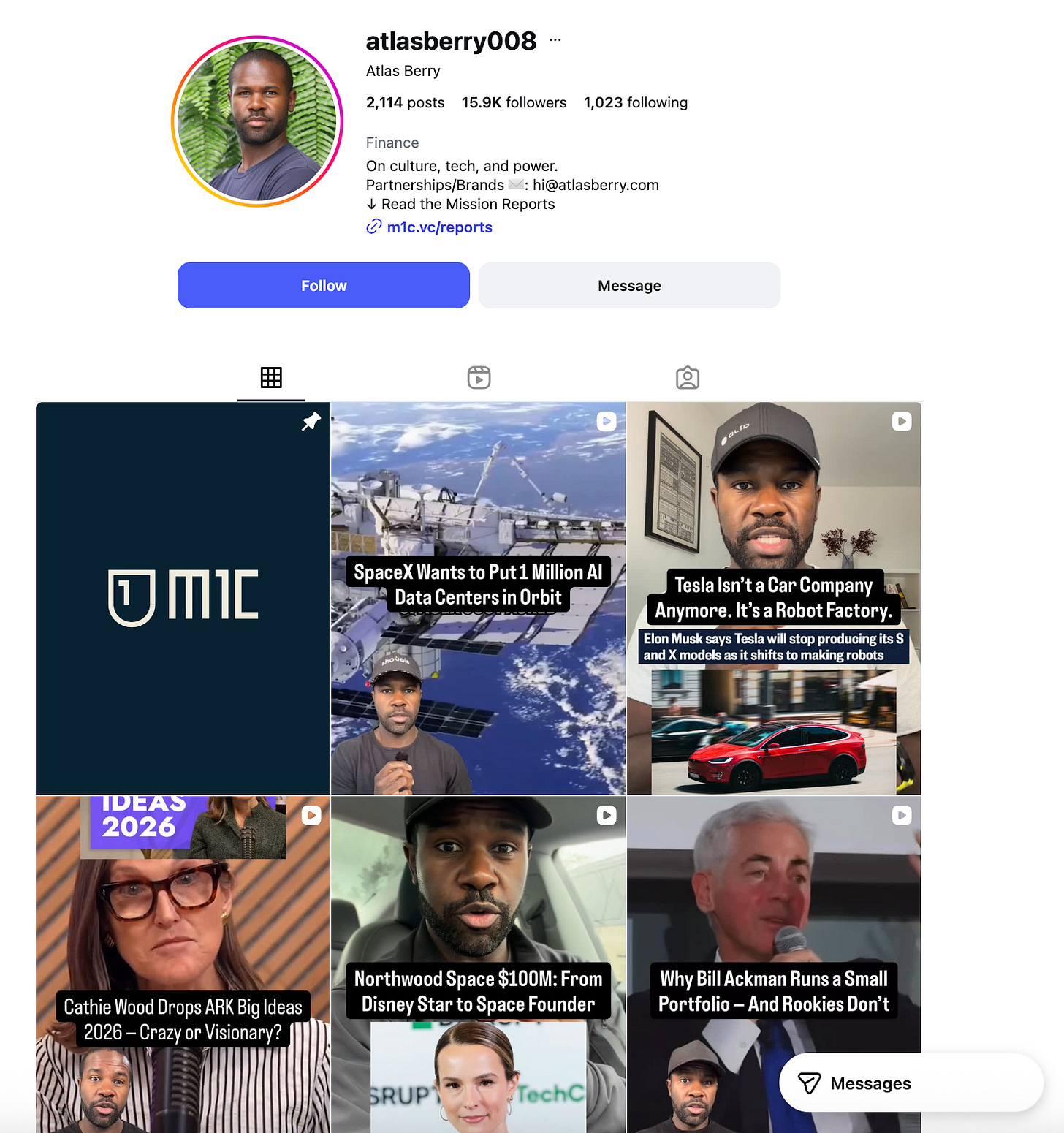
Connect with Atlas
VC Uncovered’s View
Atlas Berry has one of the coolest paths to venture we've ever seen. And at M1C (Mission One Capital), he focuses on the fundamental pillars of our future economy: energy independence, industrial resilience, and frontier industries. His journey from the rural areas of South Africa to managing the VC arm for Linkin Park (yes, the band) gives him a distinct advantage that others might miss.

Atlas embodies the exact investor VC Uncovered aims to highlight, prioritizing a model that functions less like a passive board and more like a hyper-specialized technical SWAT team. To bridge the gap between lab-scale prototypes and commercialization, he has assembled a team of niche experts—including a Cambridge nuclear engineering PhD to validate deep tech and a 30-year CIA veteran to help founders unlock non-dilutive government grants. This rigorous approach extends to a "peak performance protocol" utilizing the U.S. national cycling team's coach, ensuring founders possess the physical and mental longevity required to navigate the next industrial revolution.

He is also leaning into the power of media to bridge the trust gap with founders. By sharing his thesis and process openly, he builds a relationship before the first meeting even happens. This is the new playbook for venture capital. It replaces the old guard's gatekeeping with transparency and genuine value.
Meet Atlas
Q: You can be anywhere, doing anything, eating anything, drinking anything, whatever it is. Paint that picture.
A: My happy place is really one of three spots, born from a self-described gluttony for punishment and a deep love for endurance sports. Between two kids and a wife who is a three-time entrepreneur, our household is incredibly busy; these sports provide the necessary counterweight.
My sanctuary is either swimming laps, out on the bike for a long ride, or hitting the pavement for a long run. These aren’t just physical outlets for me; they are intellectual ones. I stay informed by listening to the podcasts and books we’ve discussed while I train. I even have waterproof headphones for the pool. Whether I’m in the water or on the road, I use that movement as my dedicated time to go deep, get smart, and conduct my research. It is where I truly do my best thinking.
Key Quotes
“The world is industrializing; we want to back the founders pushing forward this next industrial era.”
“Rather than thinking about what can go wrong and all the downside risks, focus on what happens if things go right. You only have the opportunity to lose your initial investment, but the upside of 100X is really what you’re trying to solve for.”
“Make shit happen. You may be looking at one opportunity, but if you look at it opportunistically, you find doors where others see walls.”
“You are only going to be able to go as far as your health will allow. If you try to burn yourself out running a hundred-meter dash when you have a 10K to run, you will never make it.”
“We look at this as physical AI; AI going into the physical world through sensors and autonomous systems that can even extend to zero-G manufacturing in space.”
Original Responses (Lightly Edited for Clarity and Flow)
Background and Personal Journey
Experiences Shaping My Investment Approach
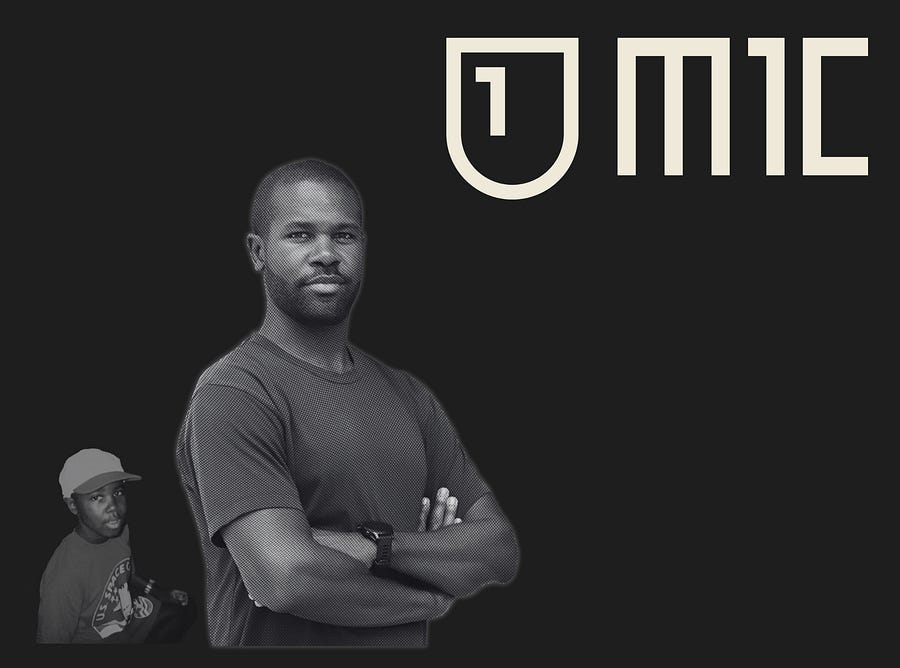
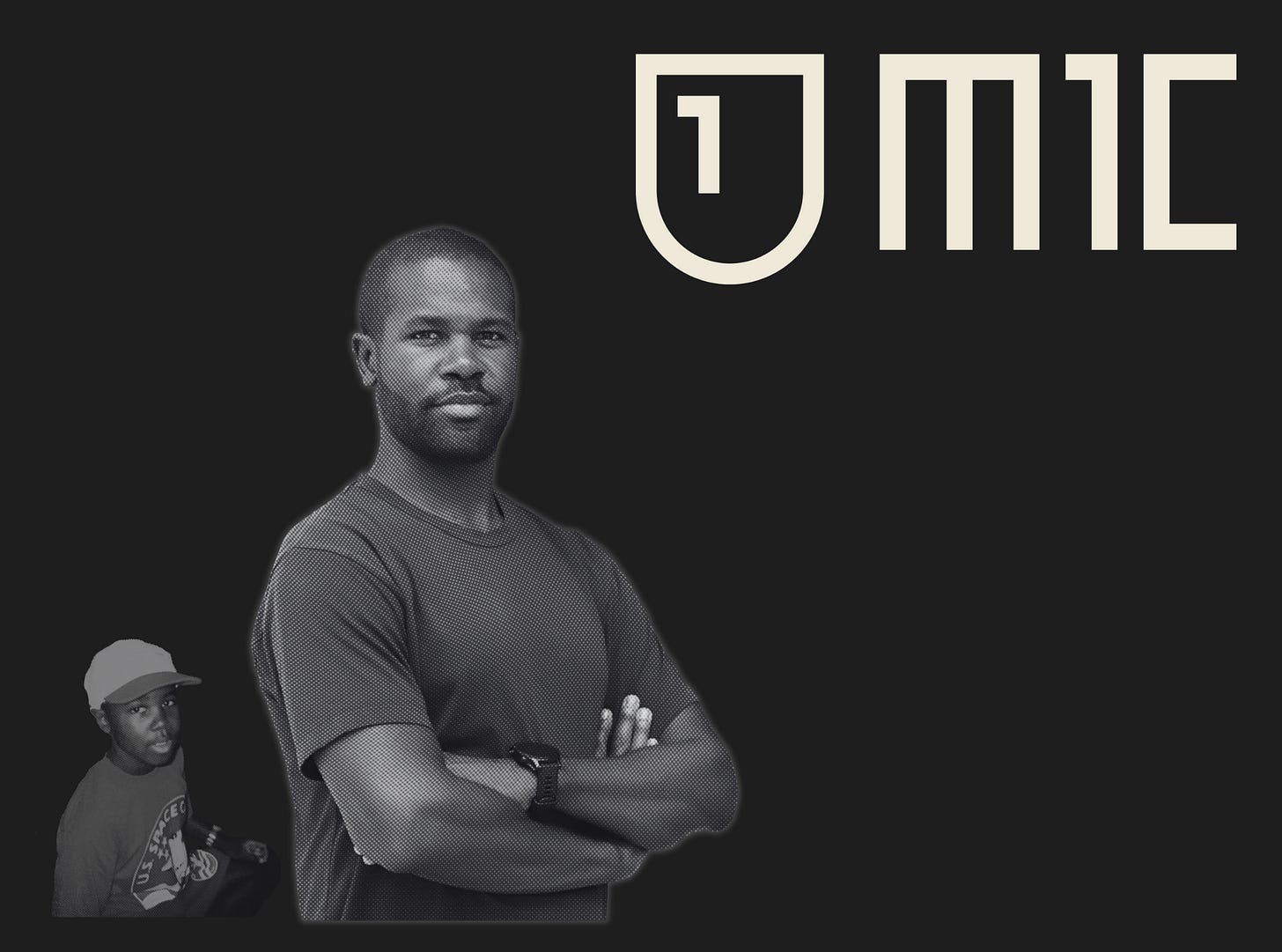
When I was nine years old, I begged my parents to send me to Space Camp (see pic of me in the post thumbnail). I was a nerdy kid who lived on a steady diet of sci-fi and had an absolute conviction that I was going to be an astronaut. My parents actually agreed to it. They put me on a plane by myself from New Jersey to Huntsville, Alabama. That was my first real entry into frontier technology. Even though I was just a kid, being surrounded by simulators and the sheer scale of human engineering planted a seed. Today, when I’m looking at companies building nuclear reactors or zero-G manufacturing satellites, that nine-year-old kid is still the one doing the gut check.
I moved to South Africa while still with J.P. Morgan. I ended up doing a lot of the things that build a tolerance for risk: non-traditional frontier markets, unstructured markets, and facing real danger. I got robbed twice out there. My work involved diligence at mines and different banks in backwater areas; that was my first start for building a high tolerance for risk.
Moment Inspiring Venture Capital Career
I met Linkin Park, the rock band, and pitched them a really grand vision. They ended up asking me to join them and build out their family office to handle alternative investing and a venture-type strategy. That was my first entree into venture capital, and I found myself touring the world with the band while building businesses.
Influences on Worldview
My IB economics teacher in high school, Mr. Gilbert, shaped how I process information. He would bring newspapers and magazines like The Economist into the classroom. We would read through all the news and then back-solve them; this taught me that what I was learning in the classroom actually had practical knowledge if I applied it the right way to the real world.
Unconventional Belief
I try to strip away the traditional investment banker or consulting mindset that focuses on poking holes at a situation. My unconventional belief is to focus on what happens if things go right. You only have the opportunity to lose 1x your money, but the upside of 100X is what you are really trying to solve for.
Best Advice Received
Make shit happen. You might be looking at one opportunity, but if you look at it opportunistically, you find doors where others see walls. I once knew the head of a division was going to be in a certain elevator at a certain time. I happened to be there and was prepared to explain why I was the best candidate to go to South Africa; next thing I knew, I was on a plane.
Philosophy and Insights
Evolution From Mission One Capital to M1C
The shortening allows us to build distinction around the brand and those letters. It was an evolution in how we’ve grown as a fund. We are becoming a specialized fund, focusing on fewer verticals and going deeper into niche specific areas. Moving to three letters signals that change in our investment thesis.
The Next Industrial Era
The world is industrializing, and we want to back the founders pushing forward this next industrial era. We see this unfolding across three specific buckets. First is energy as national security. The energy demand of AI is now a major choke point, and we are looking at everything from power generation like nuclear and geothermal, to novel power storage.
The second bucket is industrial resilience. We are re-industrializing and bringing manufacturing processes back on shore. To be competitive in the U.S., we need to bring in robotics and automation.
Finally, we focus on Earth systems. Critical minerals are essential for the energy transition, but we also need to efficiently track and aggregate resources like water, forests, and soil. These are the resources that will feed the next industrial process.
Values When Working with Founders
We look for founders operating at peak performance. You are only going to be able to go as far as your health will allow. If you try to burn yourself out running a hundred-meter dash when you actually have a 10K to run, you will never make it. We value mental and physical longevity as core components of a successful founder.
Mastering Technical Readiness
Especially when it comes to deep tech and hardware, there are some specific milestones that are pretty commonplace. They’re called the TRL scale of when a company is ready to be commercialized. TRL one through three might be in the lab; four to five is when you have a prototype and your first “commercializable” product, and five plus is broader scale, scalable commercialization.
We start tracking companies early, but around that initial prototype to when they get in their first set of pilots is where we come in. We have one company where we joined when those contracts were in the LOI stage. I saw the prototype in the lab and they were already in LOI form for first commercialization. That is the sweet spot.
Approach to Risk
The industry is splitting: one end holds the multi-stage giants, while the other (where we play) is defined by hyper-specialized niche funds. Venture capital is bifurcating into a barbell. On one side are the multi-stage firms sucking up most of the capital. The other side of the barbell, where we operate, is about going niche. We go very focused and become a specialized firm. This allows us to take on more technical and commercialization risk because we have the domain expertise to front-run those larger firms.
Lessons From the Woolly Mammoth
My favorite anti-portfolio story is hilarious to think about. A founder comes in and says they are going to bring back the woolly mammoth, release them into the Arctic to pat down the icebergs, and solve climate change. I thought the idea was so outlandish and had too much downside risk. We did not invest. That company ended up being Colossal Biosciences, which is now a 10 billion plus company. That was a huge miss in thinking about the downside without considering the upside.
Building the M1C Swat Team
I tried to build a team that already has deep expertise to complement my own skills and bridge technical gaps. We have people who have done deep tech industrial investing at scale and others focused specifically on energy. We even have someone who spent 30 years in the CIA to help with D.C. relationships and non-dilutive government grants. We also have a PhD out of Cambridge in nuclear engineering for technical expertise.
Beyond technical skills, we built a peak performance protocol. We bring in experts on leadership and longevity. One of our coaches is the national coach for the U.S. national cycling team to help with leadership. On the longevity side, we have people who can talk about sleep, recovery, and eating. If you are not thinking long term about building a company with the right state of mind and body, it leads to a bad outcome.
Trends and Future Vision
Exciting Trends and Technologies
Physical AI is the future. This is AI going into the physical world through robotics and sensors. It involves taking physical IoT data to train models and autonomous systems.
Improving the VC Ecosystem
I would make it easier for emerging managers to raise capital. We are seeing a flight to safety where 60 to 70 percent of LP dollars are being gobbled up by large institutions. This concentration of capital can be a challenge for innovation.
Strategy for Modern Distribution
I realized that content is being used by VCs now as a point of getting differentiation reach and distribution for portfolio companies. It helps explain our point of view so that founders feel like they know us before we even meet. It is a new experiment on the content side that is starting to grow rapidly. I will be doubling down on it in 2026. My advice is to avoid trying to be everything to everyone. Be specifically the best thing to a small group of people. That is how you get your initial penetration.
More from Uncovered Media





Questions this answers
What does M1C (Mission One Capital) invest in?
M1C focuses on three buckets: energy as national security (including nuclear, geothermal, and power storage), industrial resilience (re-industrializing manufacturing with robotics and automation), and Earth systems (critical minerals and tracking resources like water, forests, and soil).
How did Atlas Berry get into venture capital?
Atlas Berry met the band Linkin Park, pitched them a vision, and was asked to join them to build out their family office to handle alternative investing and a venture-type strategy, which became his first entry into venture capital.
What is M1C's approach to evaluating deep tech companies?
M1C uses the TRL (Technology Readiness Level) scale, where levels one through three are lab-stage, four to five involve a prototype and first commercializable product, and five-plus is broader scalable commercialization; M1C typically invests around the prototype-to-first-pilot stage.
Who is on Atlas Berry's team at M1C?
The team includes people with deep tech and energy investing experience at scale, a 30-year CIA veteran to help with D.C. relationships and non-dilutive government grants, and a PhD from Cambridge in nuclear engineering for technical expertise.
What is M1C's 'peak performance protocol' for founders?
It is a program that brings in experts on leadership and longevity, including the national coach for the U.S. national cycling team, along with people who advise on sleep, recovery, and eating, based on the belief that founders need mental and physical longevity to succeed.
Originally published on VC Uncovered · By Drew Glover, Nick Madrid