Ryan Falvey
Restive Ventures
“Our best founders are absolutely terrified of fictional competition, not even actual competition.”
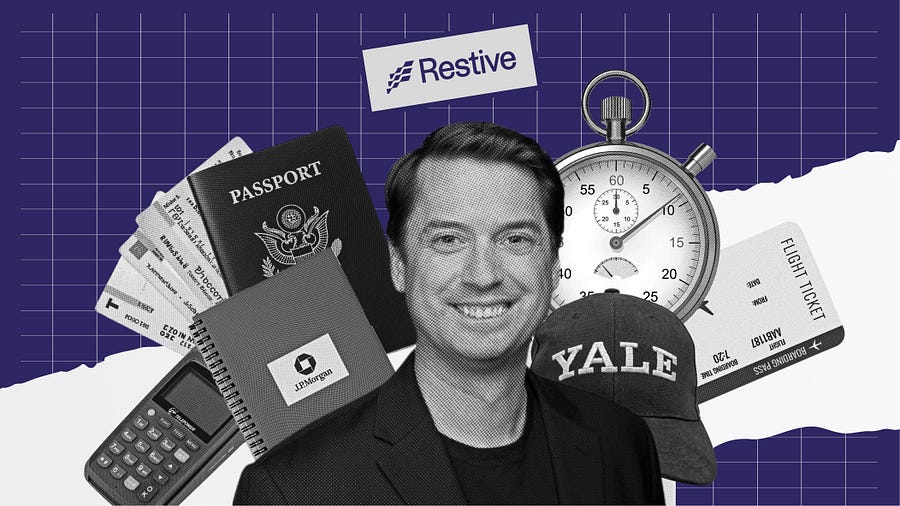
The short version
Ryan Falvey, founder of Restive Ventures, explains his investment philosophy centered on speed as the only true advantage early-stage startups have. He argues that companies fail due to apathy rather than competition, and that venture funds are structurally built to absorb high risk but are run by individuals who avoid it. Restive aims to be founders' first call and first institutional check, sometimes deciding within a day, while committing about 1% of fund capital to each initial investment.
- Ryan Falvey worked in emerging markets for five years across 55 countries before starting to invest with J.P. Morgan's FinLab in 2015.
- Restive Ventures aims to be the first institutional check, sometimes deciding within a day, and strives to be the founder's first call for advice, introductions, and hands-on help.
- Falvey believes companies fail because of apathy, not competition, and that speed is the only advantage an early-stage team truly controls.
- The best founders at Restive are described as terrified of fictional competition rather than actual rivals, constantly trying to outpace an imagined faster competitor.
- Falvey argues venture as an asset class under-invests in risk because individual partners avoid career risk even though fund structures are designed to absorb high risk for outlier returns.
- Restive initially commits about 1% of its capital per company and builds larger positions only based on direct data and observation after investing.


Connect with Ryan
https://www.linkedin.com/in/ryan-falvey/
VC Uncovered's View
Ryan Falvey operates on a single premise: in the world of early-stage startups, speed is not just an advantage, it is the only advantage.

This conviction is the engine behind Restive Ventures, a firm aptly named for the fintech founders they seek out: those impatient visionaries "unable to keep still or silent”.

While the VC landscape is often dominated by large funds bogged down in bureaucracy, Restive is engineered for agility. As former fintech founders and senior operators themselves, the team at Restive understands that transforming financial services requires more than just capital. It requires velocity. They aim to be the first institutional check, sometimes making decisions within a day, and more importantly, they strive to be the founder’s first call. They do not just offer advice and capital; they provide the crucial industry connections and even the deep experience needed to accelerate growth.

This hands-on, high-speed approach embodies the new breed of nimble, daring investors that VC Uncovered champions. It directly challenges the traditional VC model where, as Ryan points out, decision-making slows as funds get larger.

Ryan highlights a critical disconnect in the industry: venture funds are structurally designed to absorb high risk in pursuit of outlier returns, yet the individuals managing those funds often become paralyzed by career risk, opting for safe bets over bold decisions. Restive embraces this challenge, arguing that the asset class significantly under-invests in risk. By moving quickly and committing to being a helpful early investor on the cap table, Restive is backing the restless founders reshaping the future of finance.
Meet Ryan
Q: You can be anywhere. Eating, drinking, and reading your favorite thing. What is it?
A: Discovering somewhere new, ideally with my family!
Key Quotes
"Companies fail because of apathy, not competition."
"The only advantage an early-stage team has is its speed, so the most critical thing it can do is move faster."
“Our best founders are absolutely terrified of fictional competition, not even actual competition.”
“Having a great product isn't enough... You also need amazing timing, a couple of lucky breaks, and for unlucky things not to happen.”
"We're not trying to de-risk; we're trying to maximize return outcomes with our investments. To maximize your return, you should increase your risk."
Original Responses (Lightly Edited for Clarity and Flow)
Background and Personal Experience
Experiences Shaping My Investment Approach
I've always been interested in technology and investing, but most of my career has been in financial services. After graduate school, I worked in emerging markets and spent about five years in 55 different countries. From 2008 to 2013, I focused on extending financial services outside the traditional banking system using technology.
It was an interesting job, and I learned that the best drivers of innovation – the people getting stuff done – are the principals. There's only so much you can do as a consultant or an investor; it's really someone else's show. A big part of that job was thinking about how to support them and what actually moves the needle.
When I had the opportunity to start investing with J.P. Morgan's FinLab in 2015, we had basically unlimited resources. The goal wasn't to maximize financial returns, but to help the companies. This forced us to focus on what would really move the needle for these companies and how we could align our interests.
That thinking infused my early approach to investing and continues today at Restive. Our goal is to become an extension of the management team. We want to be the founder's right hand; if they need an introduction to a bank, help with a regulatory issue, or assistance with hiring or fundraising, we want to be the first call. We provide advice, ideas, or even grunt work to help founders accomplish their goals. Our investment strategy is predicated on being the most helpful, most engaged investor for our companies.
Unconventional Belief
This is a job where you're on the bleeding edge of capitalism, and it is deeply unfair. It's not a field where hard work alone pays off, though hard work is required. It's not somewhere being smart moves the needle, because everyone's smart. Having a great product isn't enough, because many have great products. You also need amazing timing, a couple of lucky breaks, and for unlucky things not to happen.
The one thing you can control is how fast you move. Speed seems to make the biggest difference. The only advantage an early-stage team has is its speed, so the most critical thing it can do is move faster. There's no limit to how fast you can go.
Companies fail because of apathy, not competition. They fail because people, including the founder, stop caring enough. There's no natural pull; it's just one person consistently driving an idea forward. Our job as investors is to support that process and help founders move faster.
The best founders are inherently driven to avoid this apathy. They're what we call "restive"—unhappy with the status quo and constantly agitating for change. Our best founders are absolutely terrified of fictional competition, not even actual competition. They believe there is somebody out there who might be faster, smarter, or better than them, and they're just trying to stay ahead of that imaginary person.
Balancing Intuition with Data
Our initial investments are designed to be made quickly, sometimes within a day, but usually within a week or two. On that first check, there are certain things we generally look for. We want to see a tech company with technical aptitude on the founding team. We look at the revenue model, the vision, and get a sense of the distribution, product, and potential for margin expansion. We also look for big markets, though it's sometimes easier to see the initial hook and how the company could expand from there. We're also screening for red flags.
The first check is optimized to see everything, and our deployment strategy is flexible, allowing us to invest in various situations whether we lead the round or not. Our full fund deployment will be predicated on the relationship we build with the founder and what we observe as we start working with them. Our deployment strategy is much more focused on facts we gather from the company and our direct observations, not just their performance metrics.
Philosophy and Insights
Investment Philosophy
Venture as an asset class significantly under-invests in risk. My fund is designed to take risks; our LPs are large allocators managing tens of billions of dollars, and they've slotted us into their extremely high-risk bucket of capital, looking for outlier potential. A fund’s structure allows you to take far more risk than most VCs are personally willing to take.
But people don't want to lose money. I don't want to pitch an idea to my partners and then be wrong. So while the fund can absorb a lot of risk, the individual partners don't want to. This disconnect between the fund's ability to absorb risk and an individual's willingness to absorb it increases as funds get larger. As you get paid more, you are less willing to lose your job by making bad decisions, even if the fund is designed to support it.
Our preferred range is to invest as much money as we can in the companies that are doing well. We want to be early, ideally with the first money in. Our goal of being early encourages us to look at companies at their inception. We don't tell founders, "It's too early for us." Instead, our approach is to ask, "What would make it not too early?" and "When should we reconnect?"
Approach to Risk
The structure of a venture fund allows you to take a lot more risk than most VCs are personally willing to take. We're not trying to de-risk; we're trying to maximize return outcomes with our investments. To maximize your return, you should increase your risk.
Restive Ventures is designed to take risks. Our LPs are large allocators managing tens of billions of dollars, and they are looking for outlier potential, 6x to 10x funds. Our fund is structured to take a specific, limited amount of risk with each new investment, initially committing about 1% of our capital to each company. We then work closely with them in a market we know well. We only concentrate our capital and build our positions based on actual data.
People don't want to lose money. I don't want to pitch an idea to my partners and then be wrong. So while the fund can absorb a lot of risk, the individual partners don't want to. This disconnect between the fund's ability to absorb risk and an individual's willingness to absorb risk increases as funds get larger. As you get paid more, you are less willing to lose your job by making bad decisions, even if the fund is designed to support it. I think venture as an asset class significantly under-invests in risk.
Trends and Future Vision
Exciting Trends and Technologies
We've seen a complete sea change in the market over the last two years with the deployment of AI tools within startups. Honestly, the best use case for AI is starting a company because you can skip so many steps and get things done much more quickly. For example, you could ask ChatGPT to create a compliance manual for a payments business, and it would produce something pretty good. After a review, you could save $200,000 in drafting costs.
This has had a huge impact on accelerating companies. Over the last year, we've seen the rise of AI-native financial service companies solving for gaps in the ecosystem that are now being exposed by AI. If AI adds a point to GDP growth over the next decade, as the consensus estimate suggests, you're talking about another $300 billion of new financial services revenue in the United States and over a trillion dollars globally.
A lot of that new revenue will go to new entrants. Why? Because so much of the existing financial services ecosystem is based on rent-seeking and exploiting information advantages. That is going to get compressed and arbitraged out by AI. This will fundamentally change the balance of power between consumers and providers, and a host of new companies will make a ton of money helping to close that gap.
Today's AI can find you the best product, but it cannot complete the purchase. Our entire payment system is designed for humans, not bots. If you gave a bot your credit card to purchase something, you would violate your cardholder agreement, and the merchant would violate theirs by accepting it. The whole transaction is broken in an AI-native world.
While alternatives like stablecoins exist, they don't yet solve for critical needs like dispute resolution and fraud, which credit cards handle. With AI compressing costs everywhere else, you have to ask: are people going to keep paying 2-3% for a payment method that doesn't work in this new world? There's a whole host of new tools that need to be developed for AI-native commerce.
It's like gold has been discovered. People are already making money with these AI tools, but they're having trouble getting that money into the real economy. Our job is to invest in that piece of the puzzle.
The Consumer Opportunity
We've been an active investor in consumer fintech for a long time because consumers have all the money. It's very hard to build a consumer business, but with the exception of NVIDIA, you'd be hard-pressed to find a top tech company that isn't serving consumers. Especially in the United States, which is home to the world's richest group of people, it's a ripe field for building new products. Even the poorest Americans have more money than most people globally. Some of our best-performing companies are those focused on expanding the financial services ecosystem for this market.
Improving the VC Ecosystem
As a small fund manager, the hardest part is raising capital. We're starting to see concentration in venture, but I don't think it will last. The market is brutally competitive, and there isn't a huge advantage to be gained by scale. I don't think small managers will be driven out by large ones; if anything, it increases the incentive for new people to enter the market.
However, I do think the market is becoming too concentrated for it to be healthy from a performance perspective. I worry about the knock-on effects for the asset class if performance starts to decline at a small number of large funds. When you see 50-60% of venture dollars from LPs being committed to just two funds a year, that is not healthy for the ecosystem. We are a high-risk, high-reward asset class. As the word "venture" gets applied to strategies that are no longer high-reward, that is not good.
More from Uncovered Media


Questions this answers
Why does Ryan Falvey say companies fail?
Falvey states that companies fail because of apathy, not competition—when people, including the founder, stop caring enough to keep driving the idea forward.
What is Restive Ventures' investment approach?
Restive Ventures aims to be the first institutional check and the founder's first call, often deciding within a day or a couple of weeks, and initially commits about 1% of its capital to each company before building larger positions based on direct observation and data.
What does Ryan Falvey mean by 'fictional competition'?
Falvey says the best founders are terrified not of actual rivals but of an imagined competitor who might be faster, smarter, or better, and this fear drives them to keep moving.
Why does Falvey believe venture capital under-invests in risk?
He explains that venture fund structures are designed to absorb high risk for outlier returns, but the individual partners managing the funds avoid career risk and opt for safer bets as funds and their pay grow larger, creating a disconnect.
What opportunity does Falvey see in AI and financial services?
Falvey points to AI-native financial service companies solving ecosystem gaps, noting that if AI adds a point to GDP growth over the next decade, that could mean $300 billion in new US financial services revenue and over a trillion dollars globally, much of which will go to new entrants rather than incumbents.
Originally published on VC Uncovered · By Drew Glover