Sherman Williams
AIN Ventures
“What attracts me to founders are those who can clearly and concisely articulate a gap in a market, why they are uniquely qualified to build”
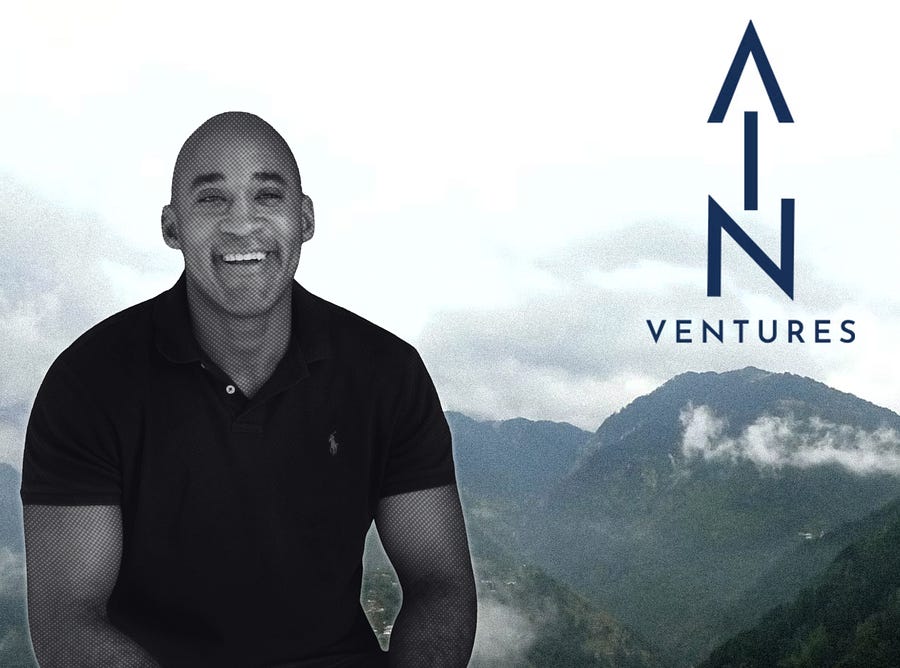
The short version
Sherman Williams is co-founder of AIN Ventures, a deep tech venture fund that transitioned from a syndicate model to an institutional fund in 2024. He built the AIN Brain, a proprietary internal AI system, to weigh investment decisions with a 'data-informed' approach that shifts emphasis from management quality at pre-seed to market growth and technological differentiation at seed. Williams invests in dual-use technologies serving government and commercial markets, currently focused on the orbital economy and AI-driven drug discovery automation, while tracking the global race for AGI as his next major investment horizon.
- Sherman Williams co-founded AIN Ventures, which moved from a syndicate model to a fully institutional fund in 2024.
- Williams developed the AIN Brain, an internal AI platform originally built as his Kauffman Fellow capstone project, to track metrics across hundreds of deals and reduce unconscious bias in investment decisions.
- At pre-seed, AIN Ventures weights management quality most heavily; at seed, the emphasis shifts toward market growth and technological differentiation.
- Williams views government contracts as a de-risking tool through non-dilutive capital and a stable anchor customer, rejecting the traditional VC view of government funding as a negative signal.
- AIN Ventures maintains a commercial-first philosophy, expecting portfolio companies to eventually derive most revenue from the private sector rather than government contracts.
- Williams is currently deploying capital into the orbital economy (space infrastructure) and automation of drug discovery, and sees the race for AGI as more consequential than nuclear weapons development.

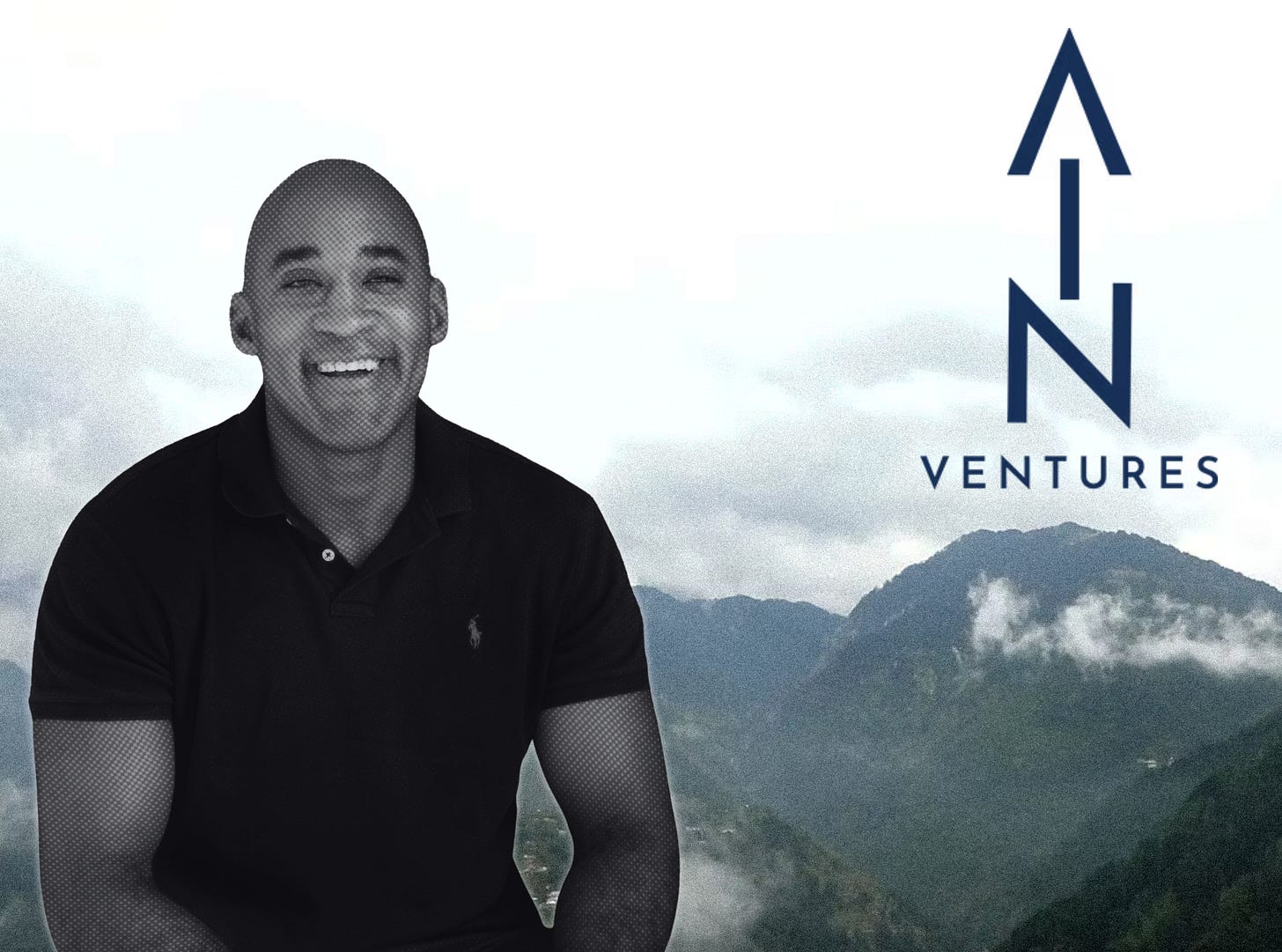
Connect with Sherman
https://www.linkedin.com/in/sherman-williams/
The Calculus of Command
In the volatile landscape of deep tech, where the horizon between a laboratory breakthrough and a market-ready product can span decades, Sherman Williams is building a different kind of ledger. As the co-founder of AIN Ventures, Sherman anchors the fluid, often chaotic world of early-stage venture capital with the military's rigid discipline. While the broader market frequently chases the latest SaaS iteration, Sherman is looking toward the stars and the microscopic, anchored by a proprietary internal intelligence system he calls the AIN Brain.
The transition from a syndicate model to a fully institutional fund in 2024 marked a pivotal shift for the firm. Sherman, a Kauffman Fellow who sharpened his financial teeth in M&A investment banking after serving in the military, has designed a fund architecture that treats human potential as a quantifiable asset. By focusing on dual-use technologies, those that serve both government interests and commercial markets, he is betting that the most significant returns lie where national security meets private sector productivity.
Meet Sherman
Sherman Williams lives at the intersection of data-driven discipline and a deep-seated optimism for the future. When he envisions his “happy place,” Sherman is happiest being at the beach with his partner.
However, the true centerpiece of Sherman’s perfect day isn’t the scenery; it’s the dialogue. His mind is rarely far from his core mission: the power of innovation. “I believe technology can change the world,” he says, a mantra that appears on his LinkedIn and drives his career. To Sherman, a day well-spent involves sharing great food and deep conversation with “amazing people,” debating how science and technology can be leveraged to improve the human condition. It is a philosophy of being “present in the present”—recognizing that life is a gift and using his time to ensure the world is better for those who follow.
The Logic of the Lead
The architecture of AIN Ventures is built on a foundation of “data-informed” conviction. Sherman is quick to distinguish this from being purely data-driven, a distinction that allows for the “serendipity of the outlier.” At the pre-seed stage, the firm’s internal weighting is aggressive, assigning the overwhelming majority of its investment decision to the quality of management. The market size and technological differentiation, while important, make up the rest of the investment decision-making calculation.
As a company matures into the seed stage, Sherman shifts the calculus, placing much more emphasis on the market's expected growth and technological differentiation. This shift reflects a belief that, by the seed round, a founder must transition from a visionary to a technician of market penetration. The AIN Brain, the internal AI platform Sherman developed as his Kauffman capstone project, tracks these metrics across hundreds of deals, seeking to identify and eliminate the unconscious biases that often cloud human judgment in the high-stakes world of deep tech.
Market Friction and the Dual-Use Pivot
The “Contrarian Signal” at AIN Ventures is a rejection of the traditional skepticism surrounding government contracts. For years, the venture community viewed government funding as a “kiss of death,” suggesting a lack of commercial viability. Sherman views this as an outdated relic. He argues that dual-use capability is a potent de-risking tool, providing non-dilutive capital and a stable, albeit demanding, anchor customer.
However, Sherman maintains a “commercial-first” philosophy. He expects his portfolio companies to eventually derive the majority of their revenue from the private sector. He treats the government-commercial split not as a balance, but as a series of tactical priorities. Much like the work-life balance debate, he believes that at any given moment, one side must take precedence to ensure the survival of the whole.
“What attracts me to founders are those who can clearly and concisely articulate a gap in a market, why they are uniquely qualified to build for it, and how they will go to market. You have to be able to recruit talent to join you on a crazy, Don Quixote-type experience. That is a skill.”
The Convergence of Space and Life
Sherman is currently deploying capital into two primary frontiers: the orbital economy and the automation of drug discovery. In space, he sees a complete greenfield, driven by the collapsing cost of launch and the rise of on-orbit compute power. He isn’t just looking for rocket companies, but for the infrastructure that will support a multi-planetary species, from lunar logistics to asteroid mining.
Simultaneously, Sherman is focused on the “marginal cost of labor” approaching the “cost of energy.” He believes that AI-driven automation in wet labs will rescue failed drug discoveries and create massive, proprietary data sets that were previously impossible to aggregate. By investing in technologies that increase productivity exponentially, he is positioning AIN Ventures to catch the wave of price deflation that typically follows such massive efficiency gains.
The Capital Horizon
As Sherman looks toward the next $100 million in deployment, he is focused on the global race for Artificial General Intelligence (AGI). He views this race as more consequential than the development of nuclear weapons, with the potential for far greater humanitarian benefit. His focus remains on “FLOPs per second, per kilowatt-hour, per dollar,” seeking the efficiency gains that will allow the United States to lead in AI without compromising the environment. For Sherman, the goal is clear: building the world he wants to live in, one data-informed investment at a time.
More from Uncovered Media





Questions this answers
Who is Sherman Williams of AIN Ventures?
Sherman Williams is the co-founder of AIN Ventures, a deep tech venture fund. He is a Kauffman Fellow who worked in M&A investment banking after serving in the military, and he built the fund's internal AI system called the AIN Brain.
What is the AIN Brain?
The AIN Brain is a proprietary internal AI platform that Sherman Williams developed as his Kauffman Fellow capstone project. It tracks metrics across hundreds of deals to identify and eliminate unconscious biases in investment decision-making.
How does AIN Ventures weigh investment decisions at different stages?
At the pre-seed stage, AIN Ventures assigns the overwhelming majority of its investment decision to the quality of management, with market size and technological differentiation making up the rest. At the seed stage, the firm shifts to placing more emphasis on expected market growth and technological differentiation.
Why does Sherman Williams invest in dual-use technologies and government contracts?
Sherman Williams views dual-use capability as a de-risking tool that provides non-dilutive capital and a stable anchor customer, rejecting the older venture view that government funding signals a lack of commercial viability. He still maintains a commercial-first philosophy, expecting most portfolio company revenue to eventually come from the private sector.
What sectors is Sherman Williams currently investing in?
He is deploying capital into the orbital economy, including infrastructure like lunar logistics and asteroid mining, and into AI-driven automation of drug discovery in wet labs. He also sees the global race for AGI as central to the next phase of his fund's capital deployment.
Originally published on VC Uncovered · By Sean Lindy, Brandy Whalen, Drew Glover