Tarun Gupta
Jump Capital
“Only invest in companies you are so bullish on that you would legitimately be excited to quit your VC job and work with that founder on tha”
The short version
Tarun Gupta of Jump Capital explains his investment approach, which prioritizes founder quality and market signals over traditional TAM analysis. Drawing on his background in investment banking and corporate development, he focuses on founders with unique market insight, talent magnetism, and rapid iteration speed. He also discusses the growth math VCs require and why founders need to understand it before raising large rounds.
- Tarun Gupta does not focus on TAM when evaluating opportunities, believing VCs generally overthink and poorly estimate this metric.
- He looks for founders with unique perspective/insight into their market, who attract great talent, have a chip on their shoulder for why the business needs to exist, and iterate quickly.
- His background in investment banking and corporate development gives him insight into how larger companies evaluate acquisition targets, which he uses to help portfolio companies with partnerships and M&A.
- He draws hard lines on needing a technical co-founder/leader in place and having most of the team centralized in one location to iterate quickly.
- VCs look for companies growing 3x+ year-over-year with potential to become billion-dollar businesses, and founders should understand this math before deciding if VC funding fits their business.
- He believes VCs are not predictors of the next big thing but rather finders of intelligent, driven founders who they capitalize and support with advice and network connections.

Connect with Tarun
https://www.linkedin.com/in/tmgupta/
VC Uncovered's View
Tarun Gupta from Jump Capital stands out among investors. While many spend too much time focusing on strict numbers and formulas, he takes a fresh approach.

He often ignores TAM (Total Addressable Market) - a measurement many investors swear by. Instead, he looks at founder qualities and signs of real customer need. This matches what VC Uncovered talks about: new investors who think differently.

His background in investment banking helps him understand how big companies buy smaller ones. He often shares this knowledge with founders to help them form partnerships and grow. What makes him special is his knowledge of what matters most. He insists on strong technical leaders and keeping teams together while being flexible about market size and product growth.
Meet Tarun
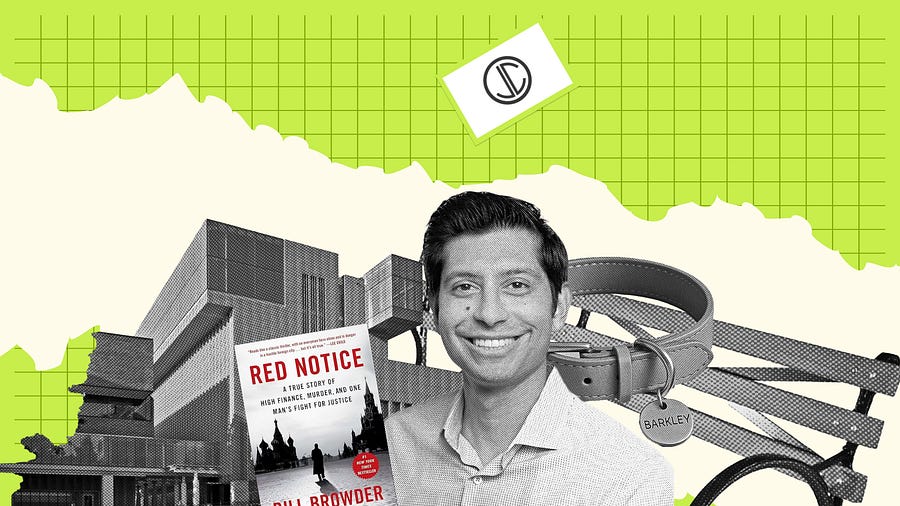
Q: You can be anywhere. Eating, drinking, and reading your favorite thing. What is it?
A: Walking through Central Park in NYC with my dog Barkley, cortado in one hand, and a copy of Red Notice in the other.

Key Quotes
"Only invest in companies you are so bullish on that you would legitimately be excited to quit your VC job and work with that founder on that startup."
"VC's spend a lot of time assessing TAM when investing to determine how big opportunities can be, but I believe we generally overthink this, poorly estimate where companies can expand into etc."
"Find founders with unique perspective/insight into the market they are building in, who are magnets when it comes to attracting great talent around them, who have a chip on their shoulder for why this business needs to exist, and who iterate on ideas/product incredibly quickly."
"The [VC] math is really important for founders to understand because very few businesses can sustainably put their foot on the gas to that level without everything else breaking."
Original Responses (Lightly Edited for Clarity and Flow)
Background and Personal Journey
Experiences Shaping My Investment Approach
My experience before venture capital significantly shapes how I invest today. Investment banking gave me a strong analytical foundation and sharp attention to detail, while corporate development provided firsthand insight into how companies assess acquisition targets, evaluate founders, and consider strategic alignment. As a result, I deeply understand what larger companies—whether potential customers or acquirers—look for, allowing me to assess whether startups are positioning themselves effectively. This perspective helps select the right founders and companies to back and advise portfolio companies as they navigate strategic partnerships, M&A opportunities, and scaling challenges.
Unconventional Belief
VCs spend too much time assessing TAM when determining how big investment opportunities can be. They often overthink the metric, poorly estimating where companies can expand, etc. As a result, I don't focus on TAM when looking into new opportunities. What's most important to me is the founder and trends in the market they are building that showcase a hair-on-fire problem or "why now" event for rapid adoption.
Balancing Intuition with Data
Given Jump's focus at Series A, I'll always drill into early financial data, customer cohorts, etc. to ensure the data tells the right story on efficient growth, high customer satisfaction, rapid product adoption, heavy product usage, etc. But, even if all of those things are true, none matters if I don't believe the founder is uniquely positioned (through experience, insight, passion, tenacity, etc.) to build a large business here.
Best Advice Received
Nothing is stopping you from becoming an expert in a given field. Sure, there are some limitations, but most folks won't take the time to be extremely well-read in a given category or market. If you are constantly consuming information, you'll start to naturally see more gaps for opportunity, be able to have good conversations with founders building in those spaces, etc.
Philosophy and Insights
Investment Philosophy
Find founders with unique perspective/insight into the market they are building in (likely have experienced a problem firsthand), who are magnets when it comes to attracting great talent around them, who have a chip (outside of money) on their shoulder for why this business needs to exist, and who iterate on ideas/product incredibly quickly.
Values When Working with Founders
My investment philosophy captures some of this. Still, another way I think of it is investing only in companies you are so bullish on that you would legitimately be excited to quit your VC job and work only with the founder of that startup. I look for thoughtful, intellectually curious people obsessed with solving a specific pain point they've experienced.
Approach to Risk
It's impossible to avoid risk in early-stage investing. Still, over my time in venture, I've become more comfortable with certain aspects, like investing in markets that seem small initially, taking a leap of faith in product expansion, and believing that can mean access to a new ICP. However, I've also drawn hard lines on things like needing a technical co-founder/leader in place (necessary to build great products) and that it helps to have most of the team centralized in one location/office to quickly iterate.
Trends and Future Vision
Exciting Trends and Technologies
I've always been drawn to the compliance software vertical and believe that AI adoption (in whichever form you think it takes) will result in a new set of potential risk areas. If agents can execute transactions on behalf of individuals, how do we ensure that the agent has the right authority, is tied to the right person, etc.? If more money starts to move in real time and AI enables fraudsters to trick or scam individuals more easily, how do we protect consumers while not stopping the innovation that has enabled us to move funds instantly? There will be some interesting developments in the coming years around identity verification (for both humans and their agents) and transaction monitoring/fraud prevention as more real-time/autonomous money movement occurs. Solving these problems will enable us to safely transact in a whole new way, which should dramatically affect our economy through increasing and more efficient purchasing/transactions.
Misconception About VCs
I think it's a misconception that VCs are in the business of coming up with big ideas that will shape the future. We're less predictors of the next big thing and more in the business of finding the most intelligent, driven, and thoughtful founders with the big ideas, we give them a capital jumpstart to execute against that vision. When they need support or hit bumps on the road, we can either help advise them, given prior experience, what we've seen work with other companies, or connect them to experts in our network to unlock key learnings.
Challenges for Early-Stage Founders
A big challenge is determining if VC money is right for the business you're trying to build. VCs are looking for extremely high growth companies (3x+ YoY) that have the potential to be $B+ businesses to return their funds. The math here is really important for founders to understand because very few businesses can sustainably put their foot on the gas to that level without everything else breaking. A lot of good businesses can be built that grow slightly slower than that and with more capital efficiency, but founders should always keep in mind what VCs are optimizing for to ensure incentives align. Better communication and transparency from VCs on the expected growth we need to see, scale to achieve quickly, and founder dilution should help founders determine if large funding rounds align with their vision and desired business outcome.
More from Uncovered Media


Questions this answers
Why does Tarun Gupta not focus on TAM when investing?
He believes VCs spend too much time assessing TAM and generally overthink it, poorly estimating where companies can expand, so he instead focuses on the founder and market trends showing a hair-on-fire problem or 'why now' event.
What does Tarun Gupta look for in founders?
He looks for founders with unique perspective or insight into their market (often from experiencing the problem firsthand), who attract great talent, have a chip on their shoulder for why the business needs to exist, and iterate on ideas and product incredibly quickly.
What growth rate do VCs like Jump Capital expect from portfolio companies?
VCs are looking for extremely high growth companies, 3x or more year-over-year, that have the potential to be billion-dollar-plus businesses in order to return their funds.
What is Tarun Gupta's background before venture capital?
He came from investment banking, which gave him analytical foundation and attention to detail, and corporate development, which gave him firsthand insight into how companies assess acquisition targets and founders.
What trend is Tarun Gupta excited about?
He is drawn to the compliance software vertical and expects AI adoption to create new risk areas around identity verification for humans and their agents, and transaction monitoring or fraud prevention as more real-time, autonomous money movement occurs.
Originally published on VC Uncovered · By Drew Glover