Uncovered Originals
Hidden profit engines, culture-making founders, and the thin line between conviction and chaos.
The short version
This Uncovered Originals roundup covers four topics: the ethics of Trump's reported Nvidia stake given his influence over AI policy and chip exports, the hidden profit engines behind loyalty programs at companies like Delta, Costco, and Starbucks, the founder paradox illustrated by Kanye West's cultural power and downfall, and the power-law investing logic behind early bets like David Sacks' investment in SpaceX. The throughline is that real value and returns come from things that look risky or unconventional at first: politically sensitive investments, loyalty infrastructure disguised as a side business, obsessive founders, and ideas dismissed as absurd until they reshape markets.
- 93% of respondents in an Uncovered poll said Trump's reported Nvidia stake creates a conflict of interest given his influence over AI policy and chip-export rules.
- Delta's core profit engine is tied to its Amex partnership, following the same pattern as Costco (selling access), Starbucks (selling habit), and Best Buy (selling warranties).
- Fiat portfolio company Odynn is built on the idea that loyalty programs are becoming infrastructure for revenue and retention, not just points systems.
- Kanye West can still draw 118,000 people to a show because he creates culture, which Uncovered describes as the one moat capital cannot buy.
- Jeff Becker, discussed in VC Uncovered, says he backs 'the maniacs' -- obsessive founders with a bias toward action -- but notes that mania without judgment becomes risk rather than genius.
- David Sacks reportedly invested in SpaceX when it was valued at $27 million, an example of power law investing where the founder's 'crazy' idea turns out to be scalable.
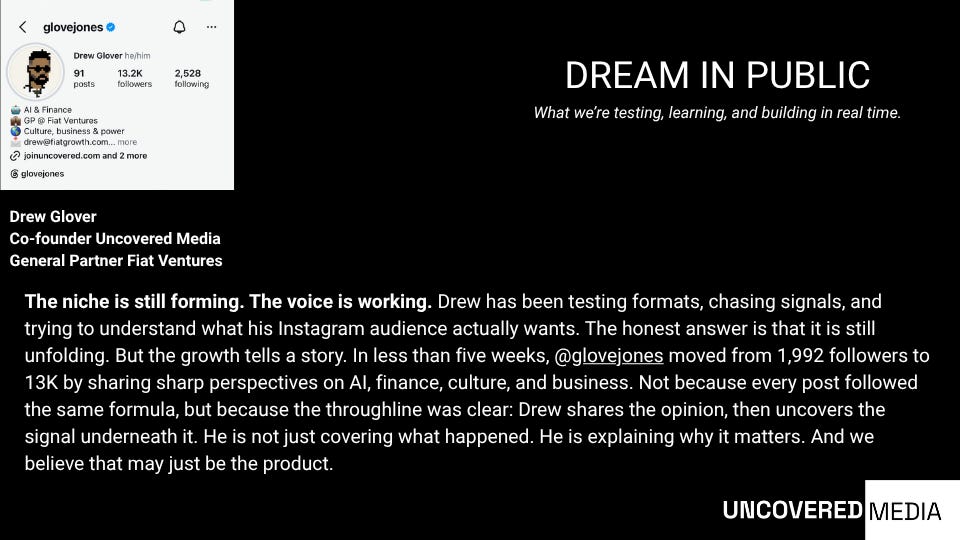
The crowd called it: conflict of interest. Trump’s reported Nvidia stake sits at the center of the AI policy and chip-export debate, two areas the White House can directly shape. We asked if that crosses an ethical line. 93% of you said yes. The optics are hard to ignore. Politicians have been trading individual stocks while writing the laws.
The flight is the front door. The card is the business. Delta may look like an airline, but its profit engine is tied to its Amex partnership. The same playbook shows up everywhere: Costco sells access, Starbucks sells habit, Best Buy sells warranties. The product gets you in. The financial layer keeps you spending. That’s the bet behind Fiat portfolio company Odynn: loyalty is no longer a points program. It’s infrastructure for revenue, retention, and the next financial product.
Culture is the moat money cannot buy. Kanye can still draw 118,000 people to a single show because he creates culture, and culture is the one thing capital cannot manufacture. But the same conviction that built Yeezy into a global machine also helped torch the empire around it. That is the founder paradox. As Jeff Becker put it in VC Uncovered, he backs “the maniacs,” the obsessive builders with a bias toward action and a different read on the world. But mania without judgment is not genius. It is risk. The goal is not to copy Kanye. It is to build with his belief and the brakes he never had.
The best venture bets look ridiculous until they rewrite the market. David Sacks reportedly wrote into SpaceX when the company was valued at $27 million. At the time, Elon was proven, but the idea was still absurd: a private rocket company taking on NASA, governments, and an industry built on impossibility. Same pattern with Airbnb convincing people to sleep in strangers’ homes, Uber asking people to get in strangers’ cars, and Coinbase betting that internet money would become an asset class. That is power law investing. You are not looking for the obvious business. You are looking for the founder whose crazy is scalable, the one delusional enough to attempt it and calculated enough to build it. The job is to back them before the rest of the world realizes they were right.
Questions this answers
What percentage of people think Trump's Nvidia stake is a conflict of interest?
According to an Uncovered poll referenced in the piece, 93% of respondents said Trump's reported Nvidia stake crosses an ethical line, given his administration's influence over AI policy and chip-export rules.
How does Delta Air Lines actually make its profit?
Uncovered argues that Delta's real profit engine is its partnership with Amex rather than the flights themselves, similar to how Costco sells access, Starbucks sells habit, and Best Buy sells warranties.
What is Fiat portfolio company Odynn focused on?
Odynn is built on the premise that loyalty programs are becoming infrastructure for revenue, retention, and future financial products, not just traditional points systems.
What does Jeff Becker mean by backing 'the maniacs'?
In VC Uncovered, Jeff Becker says he backs obsessive builders with a bias toward action and a different read on the world, but cautions that mania without judgment becomes risk rather than genius, as illustrated by Kanye West's rise and downfall.
What is power law investing, according to Uncovered?
Power law investing means backing founders whose ideas look ridiculous at first but are scalable, such as David Sacks reportedly investing in SpaceX at a $27 million valuation, or early bets on Airbnb, Uber, and Coinbase.
Originally published on The Week · By Brandy Whalen