Courtney McCrea
Recast Capital
Finding Alpha in Emerging Managers
In this Episode
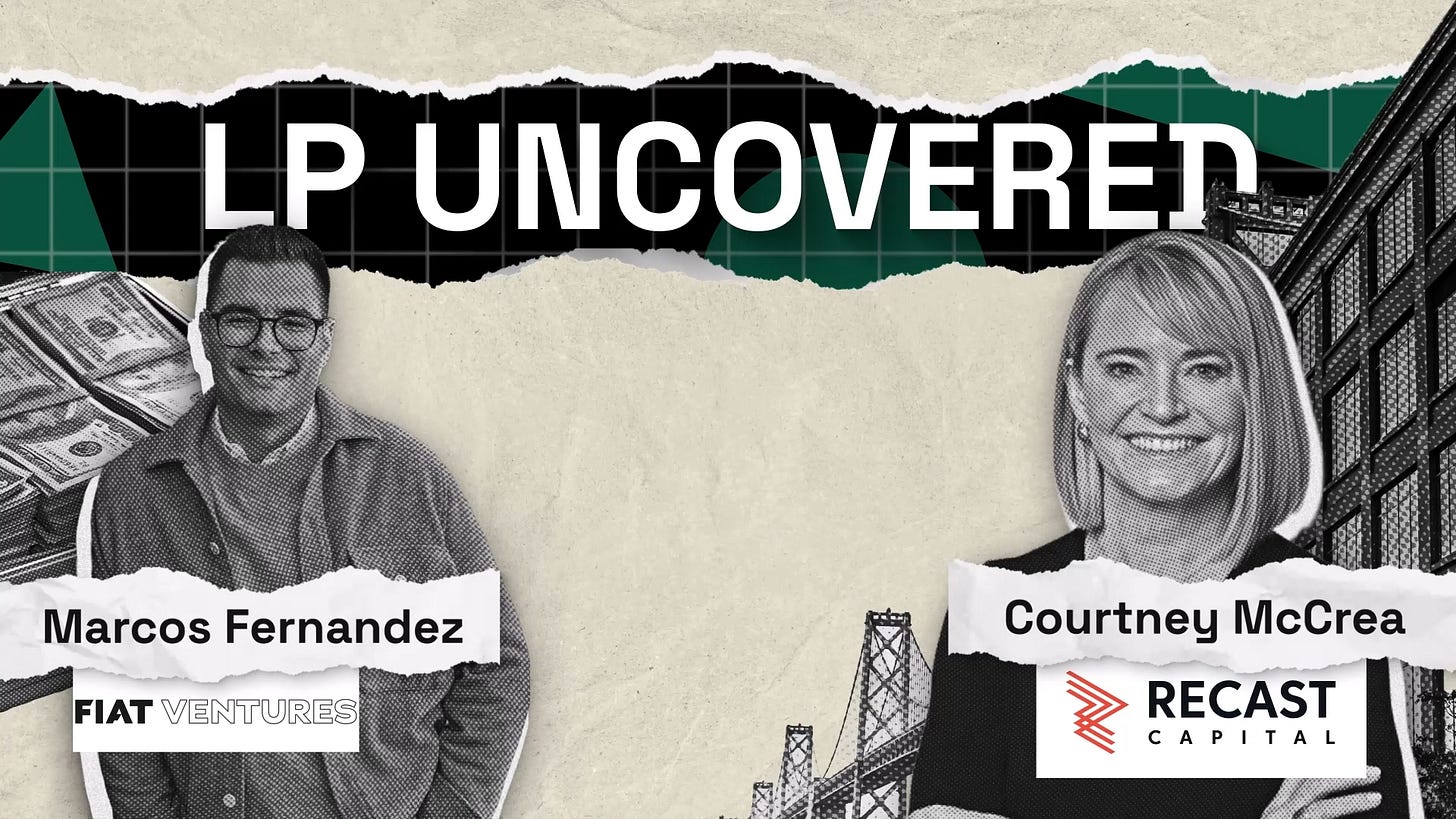
Courtney McCrea spent more than a decade watching the behemoths of venture capital grow too large for their own good. As fund sizes ballooned and general partners grew wealthier, she noticed a persistent paradox: returns were becoming increasingly muted. In 2019, Courtney saw the signal in the noise. The true alpha no longer resided with the multi-billion-dollar “asset gatherers,” but with the hungry, scrappy, and often overlooked emerging managers.
As a co-founder and managing partner of Recast Capital, Courtney has shifted from being a traditional allocator to a “New Builder” in the asset management space. Her firm operates with a dual-track mission: a fund of funds that backs top-performing emerging managers and a productized support system designed to institutionalize the next generation of venture talent. For Courtney, the goal isn’t just to write checks—it’s to build an ecosystem where diversity of thought and experience drives superior returns.
Precision Over Scale: Redefining True Venture Returns
Courtney distinguishes between two very different businesses currently operating under the “venture” umbrella. On one side are the large aggregators, firms like Andreessen Horowitz or Sequoia, which she describes as competitors to Blackstone or TPG (large asset managers). These firms prioritize stability and the ability to absorb $500 million checks from massive institutional LPs. However, with that scale comes a shift in the risk-return profile. When a firm manages $28 billion, a 1.8x return is a success; for Courtney, that isn’t venture capital.
True venture returns are generated by firms that stay “right-sized.” Courtney focuses on managers who maintain the discipline to invest at the early stages where 10x or fund-returning outcomes are still possible. By backing these smaller, specialized funds, Recast provides institutional investors with a diversified pipeline to the blue-chip firms of tomorrow. Courtney argues that the market saturation at the top has created a vacuum of opportunity for specialist managers who possess the specific “founder-market fit” required to navigate sectors like artificial intelligence.
Systemic Resilience: Productizing the Playbook
The traditional LP/GP relationship is often transactional and siloed, but Courtney and her co-founder, Sarah, sought to break that mold by productizing the LP experience. Through their “Accelerate” program, Recast has supported 156 managers, offering a 12-month cohort-based curriculum that covers everything from fund formation to executive coaching. This framework recognizes that being an emerging manager is an inherently lonely endeavor, and that a cohesive community can serve as a powerful risk mitigation tool.
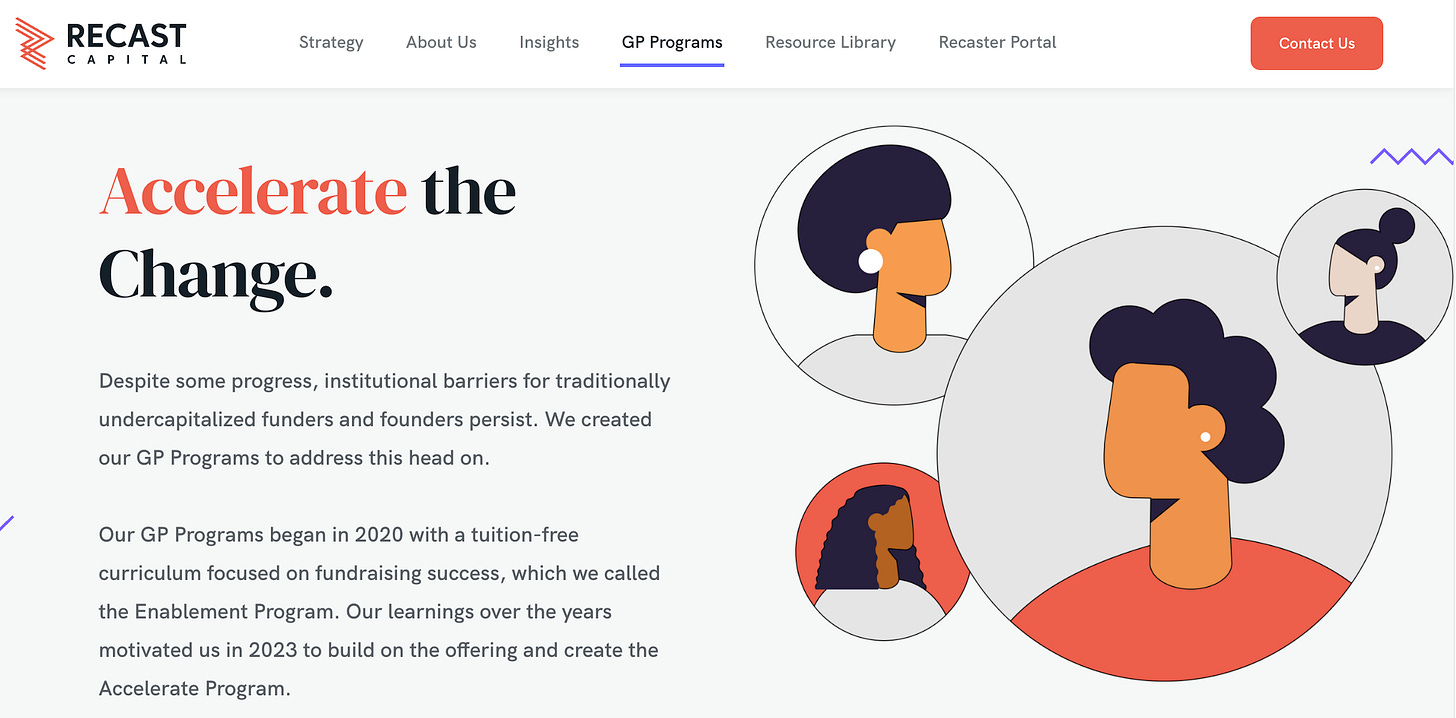
By providing services like AI-driven operational audits and liquidity solutions, Courtney is helping managers build firms, not just funds. This “skin in the game” approach goes beyond capital; it involves a year-long engagement with a manager’s fundraising and development process. Courtney believes that by professionalizing the operations of these emerging firms, Recast effectively de-risks the asset class for other institutional allocators who might otherwise be wary of the “first-time fund” label.
“If you have a tiger by the tail and you are a seed-stage investor, and that company is now a fund-returning position for you—lock that in. Get your invested capital off the table and play with house money.”
The Human Algorithm: Betting on the Decision Maker
When Courtney evaluates a potential manager, she isn’t just looking at a track record; she is looking for a “good community actor.” In the long-term marriage of an LP/GP relationship, alignment of character is as critical as alignment of interest. Courtney utilizes an “off-the-books” vetting process, tapping into a network of over 150 managers to gauge how a GP interacts with their peers. The “hidden signal” she seeks is a manager who lifts up others—someone who is active, engaged, and participatory.
This human-centric lens extends to how managers pitch. Courtney often finds that emerging GPs spend too much time defending their thesis and not enough time emphasizing their unique qualifications. She looks for “GP-fund fit”—the specific life experiences, networks, and points of view that make a person the only one who should be making a specific set of decisions. In a market where anyone can write a check, Courtney bets on the decision-makers who have the discipline to be succinct, the patience to allow their wins to be absorbed, and the humility to sell when the valuation outpaces the reality.
The Future Outlook
As the venture landscape enters a new era of liquidity constraints and AI-driven disruption, Courtney remains focused on the fundamental math of the asset class. While the secondary market has matured into a viable path for mid-market companies to provide DPI, she maintains that venture capital cannot be timed. The “New Builders” who remain in the market through these cycles—those who focus on quality over voice and precision over scale—are the ones who will define the next decade of performance. Courtney’s work at Recast ensures that when the next financial cycle peaks, it will be the right-sized, diverse, and operationally sound managers who are standing at the top.
More from Uncovered Media





Read the full transcript
0:00 I think the worst habit is feeling like you have to say everything in a first meeting. You should be able to be succinct and to be well-measured and paced in the conversation that you have with LPs and and nothing is harder to
0:21 understand than someone who is talking very very quickly and I can't keep up. When you say I had a 10x on my last fund you have to stop and give me a moment to absorb it because that's something important to use that as one
0:36 example but there are many so I think often people's voices are too busy and their decks are way too busy. In the World Adventure Capital where the conversations often focus on either the
0:51 mega funds or these mega unicorn companies there's a huge piece of the equation that's missing and that's the limited partners in the allocators that provide a lot of the capital to this ecosystem and I'm your host Markles Fernandez to provide a little bit of visibility to this ecosystem. I'm fortunate to be one of the co-founders and the managing partner Fiat Ventures
1:08 and Emerging Manager and on LPN covered we want to give a voice to these crucial investors. The goal of this is to help you get a better sense of the people who are leading this innovative industry. Today is a very very special episode I know I say that for each one. Courtney McCray of Recast Capital when we are
1:25 just getting our fund off the ground this is one of the first programs that we joined where they don't just teach you what venture capital is they teach you how to build a firm. This is a wonderful episode so strap on in if you're trying to get a sense of what our allocators looking for how are they supporting and then how can you become a part of programs like this this is a must listen
1:43 to. I'm really excited to have her on let's get right to Courtney. Hey everybody welcome back to LPN covered and today I'm joined by one of my favorite people in the venture space who has truly been a part of our journey from the very beginning and certainly that's not just unique to Fiat Ventures. Courtney McC
2:01 ray thank you so much for joining us today. Thank you for having me Marcus good to see you again. Yeah same same and you've always been so generous with your time including today of just providing mentorship and advice and guidance but I think what makes you know what you've done really special and particularly what
2:18 you and Sarah have created at recast capitals productizing that so you can reach a broader audience. Want to learn all about recast capital and let people know what that is who aren't familiar but take us first back to what inspired you to start recast capital with a long background as an allocator and investor . What did you see in the industry and why did you decide to start recast? Yeah
2:38 so it takes a lot to start a new firm I'll tell you that but so I had been investing in brand name venture funds and emerging managers at the time I launched recast five years ago I've been doing it for about 11 years and
2:55 quickly became I became obvious to me as a student of the industry that not all brand names end up having more muted returns but many of them do and the fun
3:10 sizes get larger the general partners get wealthier and for some reason the returns get more muted and at the same time there was this next generation of scrappy hungry well networked with the entrepreneurs who matter solo GP's that we started backing back in 2010 20 2009 2011 Mike Maples I didn't said cut and
3:31 some of those funds ended up just knocking the ball out of the park and so after being a weather gauge my former firm for 10 years the senior partners decided they didn't want to raise the next fund and so it's a nice retirement
3:47 plan for them but wasn't what I wanted to do with my career and so with their blessing you know I went off to figure out my next step would be but I was passionate that institutional investors needed thoughtful diversified exposure to emerging managers in venture to get the returns they want to get out of
4:03 venture to get access to the blue chip firms of tomorrow and also it's a pipeline to much more diversity and venture capitals become highly competitive and to the extent that you have different live life experiences networks or point of view it drives superior returns so I found a kindred
4:20 spirit in my co-founder Sarah who you know and we launched recast really two parts of the business a fund of funds to invest in what we believe are the top performing emerging managers today and tomorrow and then because any well-built venture capital fund of funds you say no more than you say yes and you say no
4:40 to great managers it just doesn't work for your own portfolio construction purposes so we always said we wanted to do something for the rest of the ecosystem and my co-founder Sarah is more an entrepreneur than I and she said why don't we productize it doing cohorts of 12 to 15 managers to make it a
4:58 cohesive group bring in our friends from the limited partner and the general partner community to talk about broadly how to how to run your fundraising process more effectively more efficiently and possibly even more enjoyably and less in a less lonely manner and so we started doing that back
5:18 in 2020 and you know our expenses were low at the time it was just your tech stack some gifts for your guest speakers and that was about it we didn't charge GPs anything and then fast-forward pivotal ventures was a strong supporter
5:36 of ours early on a Melinda French Gates company and they gave us a grant a very sizable grant a three-year grant to allow us to hire staff as well as to
5:52 provide services to this community pivotal cares dearly about advancing women and so that program which we call accelerate focused exclusively on venture capital funds where at least one member the senior investment team
6:09 identifies as female or non-binary and with that community we've been able to support them with our educational program programming but in addition pay for a lot of their support services for running of actually running a firm so
6:24 fast-forward to today we have worked with 156 managers crazy yeah and we right now have just opened up applications for our fourth accelerate cohort here we
6:40 're gonna launch it here in a couple of weeks so it'll be open till the end of April it's crazy congratulations yeah it's it's incredible when you hear those stats because I know I just mentioned it but we are one of the benefactors of those programming when we were first getting our first fund off
6:55 the ground there's a whole handful of these different types of programs but recast was by far the most helpful because it wasn't just coaching on everything from data rooms and connections with other managers connections with LPs there was executive coaching provided there was mentorship by I remember connected with Mike Maples who's always been one of my
7:13 heroes within the venture category and so I think one thing that stands out to me is I think oftentimes founders don't see funds as entrepreneurial certainly fund of funds as entrepreneurial but certainly you you took that avenue so I'm I'm curious to get your perspective from idea of what what can we do to
7:28 better enable and help how did over time that turn into almost a set of businesses and structures and programming that has now become really at the forefront of emerging manager support yeah no it's interesting I mean as you start to help emerging managers you you realize all the needs that the
7:46 community has and I also we also realized the community itself is an incredible asset to one another and so creating space for the community to get to know one another we find that with this ecosystem everybody helps one
8:01 another out they help out with you know LPs but also the tech stack running into challenges with a co-founder or whatever it might be it's a very it's a very cohesive group of managers so we we started to do the executive coaching because it's lonely
8:19 being an emerging manager in venture we've done community events we do our summit now annually for the people in our ecosystem and it really is an opportunity for the community to come together also
8:34 there is a lot of expertise within the ecosystem and so having time for people that are excellent at how to use your use AI to help manage the that your investment stack how do it use AI to
8:50 better operate your firm and and these general partners will run sessions for the rest of the community and then we also will bring in guest speakers on topics that that we have heard are of interest to this ecosystem one of the things that I'm really excited about that we are
9:06 actively working on now both for our our extended community and also for our accelerate community is a number of service providers that will help you to get liquidity for your math companies you know not not your super you know run away
9:23 great returning companies not the ones that you've written off and they've disappeared but the ones that are just kind of not not flourishing and trying to give the message to emerging managers that getting a point 8x or getting a one point at you know getting all your capital back for your math companies there's value in that
9:41 and there are third parties now that can help you try and get liquidity for those companies and so that's just one example of something that that we're now onboarding into our our programming as well and think that it could benefit not only the managers that we've invested in
9:57 but also the 156 managers that we've been around yeah I think that's well one is all of it is very helpful but what it sounds like is you're you're listening to the market you're seeing where the challenges are and then you're thinking about how do we connect this community to support our managers and what's next in this case
10:14 it's that you know the mid-market company or the mid-sized company you're looking for liquidity or DPI there may not be a horizon for it how do you solve that problem I'm curious is that kind of your approach as you think about opening up either new service lines or new programming you know what how are you identifying those
10:31 opportunities and maybe what's coming next you know outside of this example around you know finding liquidity so I mean we you know we brought on Ava from the Kauffman Fellows program and so her whole job is community her whole job is making sure that
10:46 our lot you know our community is the right community and that and that we have the the products to offer this community that's valuable to to the ecosystem and so one of the other things we brought on is we now have a a woman who's who has a
11:03 entertainer with us who will work one-on-one with our managers in in helping them to use our AI you know to really advance their operations of their business and she's done this with a lot of brand name firms and so we found that that has been a real
11:21 game changer you know it's hard when you're a solo GP to do all the things that you're supposed to do and we can use technology to try and help us with a lot of the more mundane tasks that's that can be a real game changer that's just one example and then you know we can tweak content our accelerate program now is going
11:41 to run for a year 12 months just so it's not as time-consuming for our managers in a in a tighter time frame it also allows the community to really gel we also do an in-person event at the beginning and in-person event at the end again
11:57 you know with with a summit in the middle to try and and have touch points with one another in real life and then so having it be less frequent cadence is helpful we can also be there for the whole year of your fundraising and a whole year of your fun formation and
12:12 development there's value to the community for that type of pacing being improved so we're always trying to iterate after every session we do we ask for feedback on the session did you like it didn't did you not like it what could what would have made it better
12:27 we also ask for that after in-person events and we really really listen to that do we listen to it for iterating on you know we can ask that guest speaker back again are we gonna do that content again and and we also can see it when
12:43 content you know hitting well and when it's a bit more flat or less relevant for our ecosystem I mean that was an example there was one session that we kept trying to find third third parties to do and we kept getting it just wasn't it wasn't resonating and finally
12:59 Sarah and I said we have to run that session ourselves because we actually know how to how to answer the questions for this community and it was very hard for third party speakers to do the same first off shout out to Ava who who does an incredible job on the logistics on the planning you can tell there's a lot of thoughtfulness there and
13:16 I'm curious to get your perspective on this is it's such a wonderful community I'm so grateful that we've been able to be a part of it since our founding but you'd mentioned you want to curate an audience that is thoughtful so you certainly don't want to balloon and now you know thousands of managers can participate
13:32 how do you find that balance of making sure that you're highly curated while still wanting to open up those opportunities to new managers as they enter and for any manager who's thinking about becoming a part of or applying towards either the accelerate program or the recast community what advice do you have for them as they think about
13:48 you know making that introduction and becoming a part of it so we are always looking for um those managers that we believe are going to be in business for the long haul um it might not be with this fund name it might be
14:04 you might go to a big brand name firm you might find a partner you you might pivot but you're going to be in the venture capital ecosystem and you you deserve to be in the venture capital ecosystem uh and then on top of that um that you're going to be a good
14:20 community actor um that you're going to lift up your peers um you're going to be active and involved and engaged um and so doing that is easier than it sounds um but you know we do look at how people
14:35 are showing themselves in social media we do background checks we talk to now we've got 150 something managers we've worked with we talk to our community to see what their interactions have been like with you and we do it completely off the book um and so and and this is where
14:53 Ava having been at the Kauffman Fellows program uh is is really really focused on this element of being a good actor being you know and and being engaged and participatory if you do sign up uh and so it's it's subtle
15:09 um but it is um uh it's something that we we really strive if you get it wrong occasionally uh but um but we really strive to to have a really productive and healthy uh community yeah I love it and from what
15:25 I've seen it is both um through Slack channels but also the in-person events have been in engaging in um one kind of a side topic for you because you mentioned it but one of the things I really appreciated from last year's summit were these AI tools and hearing from my peers
15:40 of how they're utilizing this to make their jobs and lives easier I'm curious for you are there any examples of how at recast capital how you all are thinking about utilizing AI tools internally to help you know scale up your systems too it's a great question we spend so
15:56 much time helping the managers around us that we don't actually use any of the stuff for ourselves yet but we want to uh and we have been learning a lot of a lot of tools I think one of always a little bit reticent when you're
16:11 you're old school and you've been doing it the the same way for forever to to trust a third party technology to start taking over a lot of this functionality but I do think fast forward a year from now and we will we will be implementing a lot of these these tools
16:28 yeah and and maybe even on that how have you seen managers better equipped themselves with AI tools I know there's a lot of AI functionality natively built into the tools we're already used but I'm curious if there's been any particular use cases that you've really seen stand out
16:43 there's a range of different technological backgrounds of general partners yeah there are those that have been tinkering with writing code you know their entire professional career and they're very comfortable tinkering with creating their own their own solutions
16:59 most managers are using third party solutions you know properly asking Claude or you know anthropic open AI questions and they use and various different applications and so they use them all for very specific use cases for specific
17:16 functionality I don't know which of the two AI sessions you you listen to I listened to the Sarah Smith version and she has a very thoughtful way of using
17:31 creating very thoughtful artificial intelligence with various triggers she's identified as a hundred points for how I'm going to analyze the management teams that I'm interested in backing they need to have these types of backgrounds it could be that
17:46 they it could be that they were a previous operator it could be that they were a CTO at a big cup whatever that whatever the triggers are and you can put it all into a filter and it will start prioritizing your inbound deal flow and that's just one use case that one of the managers
18:04 had used technology to to try and and manage the the investment pipeline other managers they don't they don't want to have their investment pipeline managed by technology they really want to make their communications with their fund admin perhaps more streamlined or
18:23 using their CRM more streamlined talking to perspective LPs more streamlined and so there's obviously other technology use cases that can help with with some of that functionality yeah definitely it's something we're kind of going through right now is as we close up our last fund and focus on
18:41 optimization a lot is around CRM automating deal memos note-taking as long as you're establishing that that's taking place and in aggregating that information there's also a lot of old-school ways in traditional excel formats I remember sitting now with Clint from Ulu
18:56 Ventures at one of the summits and being blown away by how they quantify such a very difficult stage to quantify which is which is the seed so just another example of you're bringing together a community of people who are just really highly qualified to look at these different types of solutions and it's helpful in learning from them too and
19:13 I think that's probably one of my favorite parts of it is I am always so humbled by the people that I get to meet and work with and now go invest alongside make introductions to each other there really is this attitude of bringing more than what you you get from the the network so
19:28 y'all have done a great job in curating that audience in those discussions yeah actually there's one way that we have used you know we use we do have a recast chat gpt account and so we just make sure that that it can't get smart on our proprietary information but one of the great things
19:45 especially if you're doing a summary of say you know what is what are the risks and opportunities with investing in agenic AI companies and it'll help lay out it does a good job of laying out some basic research which can be very helpful yeah I love that example and in
20:04 having your own instance you can have more protections but you can still get the efficiencies of of all the tooling and I'm going to switch up topics a little bit from AI but to something that you mentioned really as you're just getting in your introduction is you've been in this space for a long time and at one point you realize that
20:19 there's almost a saturation of capital into larger firms the gps were getting more comfortable if you will and and so in the early 2010s 2011s you saw this emergence of this next category you could say very similar trends today right with 75 of venture capital
20:35 dollars going to 30 firms 20 of that going to just injuries and Horowitz you're seeing this aggregation of capital with these large firms and then you're seeing these emerging managers who aren't getting as much capital but have to be specialists what are the similarities that you've seen from your past experiences
20:52 how does that compare to where we are today and how do you think about you know differentiating yourself if you're in this market as a general partner now the industry has this sector has really had a transformation it's a very
21:09 two very different businesses you have what I would call the asset gatherers or or the large aggregators of really large checks I mean there are so many LPs that have to write $500 million checks $200 million checks and that allows them a place to invest
21:28 with Andreessen and Sequoia and you know very very very large quote unquote venture funds and then you have on the other side it's not just emerging managers predominantly emerging managers but there are also some higher roman numeral
21:44 venture funds that have stayed right size and so that group collectively I call venture capitalists and just like late-stage venture isn't really venture anymore it's much more akin to growth equity or or buy out in some ways
22:04 when you look at emerging managers most emerging managers 99 percent of emerging managers and you look at the brand you know the firms that have stayed right size they're the folks that are getting in at early stages they have the potential given the size of their fund
22:19 and their portfolio construction and the stage that they're getting in at they have the potential to be having a 10x fund but more likely they could actually get to a 3x fund right I would argue that when you're managing 28 billion
22:34 15 billion that's not really the goal I think the goal is a nice 1.8x and stability and you don't get fired for getting access to investing in Andreessen and Sequoia and so they're more of a competitor to Blackstone
22:50 or to TPG or to other very large money management institutions but if you actually want venture capital type performance you need to find a way to either get access to these higher roman numeral right-sized funds like benchmark
23:07 or or you have to create a thoughtful portfolio of the next generation of managers so that you can so that you can have the potential for venture exposure to early-stage venture which is where true venture returns are generated yeah I think it's well said
23:26 too and also the point unknown gets fired for investing in and excel Sequoia and Andreessen that being said you can see the general catalyst that the investments they're making aren't necessarily venture when general catalyst is buying up whole hospital systems for distribution injuries and Horowitz are buying up media
23:41 companies for better exposure for their companies it changes the asset class but to your point we're seeing a lot of capital move back in that direction especially when there's been the other problem you're solving lack of liquidity so people know that they want exposure to a category there's been a limit
23:57 little bit of limited liquidity I'm curious from your perspective looking at the venture category as a whole when compared to growth equity mid-market PE even public equities how have you seen that evolve over the last few years as liquidity remains
24:12 a little bit stagnant within the venture category are you seeing people pull back just because they're over exposed are you seeing these name brand firms and allocators stay true to the category because they understand uh vintages uh are are important to have exposure to across it I'm curious to kind of get your macro view
24:30 so it always you you cannot time venture uh you cannot time your venture portfolio um if you look you know to that you know right after the financial crisis in 2008 those were some of the best vintage years just phenomenal performance um and so if you had been
24:49 um nervous about being in the market at that time you would have for lost that opportunity that being said sometimes it's just math I I have I want my venture portfolio to be x percent of my my portfolio and today it's over that because I haven't had
25:05 liquidity and so I just don't have any cash to be able to invest more in venture so sometimes it's just math you can even though you believe it you can't do it the other thing I heard is um it is interesting that um and I've seen it as well you know
25:22 investing in in hospitals investing in media company that is much more akin to buyout uh and so again you're going to start seeing more buyout type performance than venture performance because you just have to when you're managing that amount of
25:37 capital you you can't put that much money to work in anthropic and uh yes you know it's just there are only so many companies that can absorb uh you know even a portion of that yeah yeah and you you bring up the example of the anthropics and in the space as a whole you
25:53 you talked about LPs right these large allocators where they're managing so much capital that their minimum check sizes are 500 million couple hundred million even 50 million that means that if you have rules internally that you can only be 10 percent of a fund that means that the minimum fund size needs to be 500 million or even a billion dollars um and it's the same thing with venture
26:11 capital firms and founders right so venture capital firms have target ownership. And when you're managing so much capital, you can't afford to go out there and underwrite million to $5 million opportunities. You're writing 15 to 20 to $25 million checks at minimum. And it has a little
26:27 bit of a disparate push on the market from a valuation perspective where you're seeing some of these early rounds, somewhat reminiscent of 2021, particularly within the AI space. That just take off really quickly because it's almost becomes a self-fulfilling
26:42 prophecy with the amount of competition and how it gets marked up. I'm curious to get your perspective. Do you feel like there's value there because we are seeing these companies grow at pretty quick rates, the zero to 100 million stories and, you know, the 12 months are out there.
26:57 Do you anticipate that maybe this is a bigger issue that we have just with just overexposure within particularly the AI category? So it's interesting. I mean, the flip side of your argument and the folks that are going all in on artificial intelligence investments, their argument is this
27:14 is a technology that's going to take over the entire world. The world as we know it, and it's going to affect every single industry to the entire US GDP. That's our market. Yeah. Yeah. And therefore, we can pay these large valuations because these
27:33 companies will be enormous. The reality is they're going to be some companies that are going to be massive winners. And people paying up in the earliest stages is going to be a brilliant move. And those companies are going to be portfolio makers. And then there's going to be a whole host of these companies where they don't
27:51 end up having that same level of success. And you're going to think, oh my gosh , that investor made a bad decision investing in that valuation in that size of a round. And I saw this back in the internet, the .com era, this happened. There were
28:13 companies that failed ultimately, but the venture capitalists got liquidity and it was a really nice multiple e-toys as an example of that. The earliest investors in e-toys made an incredible return because they sold that company and got liquidity before the company disappeared.
28:30 So there's always money that can be made and there are money that can be lost. And so is what we're looking to do as a fund of funds is back the general partners that given their live life experiences and what they know,
28:50 they're incredibly well positioned to make better decisions than others in terms of this space, right? Is what scares me is when I invest in a manager who has no background in investing in AI in this use case with this type of
29:08 technology. And they're coming into a massively expensive round and a massive, you know, everyone's trying to get into the round. I don't, I wait and see, but that gives me more reason to pause than a manager that I've done all the work on and they are absolutely the right folks to
29:25 decide whether or not to go into that fully priced round or not. And so we're in the business of assessing human beings and whether or not they 're going to make good decisions. Yeah, I think it's very well said and in complete agreement with AI right now
29:42 it's a big move, it's an internet era, it's an iPhone introduction era, every industry will change fundamentally so so fully aligned with you on that one. One comparison that I always used to is a dot com era where venture capital firms did well because there was a lot of IPOs at the time and liquidity events
29:59 . One thing that's a big challenge now and maybe dovetailing over to the latest offering that you're talking about is M&A typically you're not seeing the multi ples that you would on a private market. IPOs are being delayed a little bit longer because companies can get that capital on private markets and it means that they can continue on their
30:17 operations. So the secondaries offering has really kind of taken off over the last few years. You mentioned the offering that you had but I'm curious, both why are you starting that service for your managers with some of these, you know, mid mark companies but also, how is your perception on the secondaries market as a
30:34 whole. When do you think emerging managers should think it should think about that as a viable option for liquidity and maybe what are some of the things to watch out for. So the secondary market is really matured, I mean really matured, and there are lots of credible players out there and they don't just have to be mid market
30:50 companies. You could have a business that just has really great tech stack or it's got a really great, you know, patents or really great talent aqua hires are less of a thing now but they, you know, who knows that could come back with the right
31:05 company. And so being thoughtful about your portfolio construction and getting liquidity when you can has always been critically important and it's very important now.
31:21 Some of our best managers at my former firm, they got liquidity in companies that were on fire and they just sold into a really expensive fully priced round
31:36 and got liquidity. One of the things we tell our managers is, if you've got a tiger by the tail and you are a seed stage investor and now this company is a fun returning type position for you.
31:52 Lock that in, you know, because you know better than the new investors, whether or not you can get a triple from that valuation and whether or not this management team is capable of tripling this business, you know, from that valuation. And if you say, yeah, I do believe in them and they can triple it, then my
32:09 argument is get your invested capital off the table, you know, play with house money. And if you're like, oh no, it's going to take probably six years for them to do that and I don't have six years. And it's very easy to make the argument. Listen, I'm a very small investor in
32:25 this massive company. And my investors are looking for liquidity back for me. I 'm looking to raise my next fund. I need to put some points on the board. Usually they're very open to doing that because I hate to say it. Most emerging managers are not a signal in market about how good an investment is.
32:43 So always try and get liquidity, always be thinking about your portfolio as am I a buyer or my seller. And that's a very good way to, I think, to approach a portfolio. And if you're, if you're, I want to sell this, I'd be reaching out to credible
32:58 service providers. Now, I have heard that there are some shysters out there and people that are unethical. And so you do need to be careful that you don't work with somebody who sells things they don't have or acts and not in a good faith type of a relationship.
33:15 And that's where having it be vetted by other emerging managers or by recast or by some third party that validates or Ben Black over at Acadian that knows the whole list of the good guys and the bad guys. And so making sure that you work with credible
33:32 third parties to help you get liquidity on your companies. Yeah, absolutely. And I'm curious to just dive a little bit more into it of getting your perspective and I'm sure the answer is it depends on the situation . But how do you think about managers who want to almost use a weighted cost
33:47 average approach of, you know, selling some secondaries at those rounds call you hit the C the D the E as opposed to holding on to a position in liquidating at one time. Have you seen any strategies work better than others that that you recommend or I'm sure the answer is a lot of it.
34:03 It depends how long till the end of your life how much exposure do you have? I normally have seen, I mean, I've usually seen managers that it's, it's either just a little bit in the, in one round or it's the whole thing.
34:19 And locking it in, but I'm sure there are different strategies. It's just, it's a little bit of brain damage trying to negotiate, being able to sell in every round. It starts to get more complicated. And either you're, you're a believer or you're not, you're not half pregnant.
34:34 So it's. I like that. Yeah, horseshoe's hand grenades and pregnancies in that case. Yeah , that's awesome. There's so many more questions I have for you, but I want to be mindful of your time and know that we've covered a lot of ground.
34:50 So I might shoot over to the lightning ground with you, which is always my most fun part. So maybe give us one or two examples. What are, what is something that an emerging manager has done either recently or historically that you wish more managers did, whether it's a behavior or tactic that seemed really unique and
35:08 really kind of impressed you. So I'm always impressed by managers that have a unique way of fundraising or have had a unique way of getting access to someone that you think is impossible to get access to.
35:23 And then the other thing that I'm always impressed by sort of a, it's the thing I wish more managers would do. And once so when I see it, I'm impressed is especially emerging managers spend so much time talking about how great the
35:38 area they're going to invest in is. And is what I love to see and what I think is critically important is that very early on, you brag about yourself, you brag about why you given all the things you've accomplished in your lifetime.
35:56 All the way your personality has changed, your CV has changed, your learnings have changed, makes you absolutely the right general partner at this point in time to be investing in this incredible investment opportunity.
36:11 Because I could have the best idea for what I'm going to invest in, but if I'm the wrong person, it just doesn't matter. And too many managers are reticent to brag about themselves. And yet, that's what everyone does, and especially urge merging managers until you can put up
36:28 five companies that each had a 5x. You've got you've got a brag about yourself, because really LPs are investing in you. Yeah, I love that advice and is it safe to make the assumption that if an LP is taking a call with you, that means that they like your thesis.
36:45 They like they like what you're doing. So at that point, it is what we call founder market fit for the companies that we invest in. You're looking for GP fun fit. Yes, absolutely. I mean, I think by the time somebody engages with you to
37:01 invest in your fund, they like what you're investing in. They like the background that you bring to it. And they find they think that what you can do is differentiated within their portfolio. I hope I hope at least that that's when LPs decide to lean in with a fund.
37:21 Yeah, I love it. I've actually replicated that with our founders where I'll get on a call and just say, just before we dive in. I understand the sector. I understand what you're doing. I really want to dive into these things, just kind of letting them know is we don't have to walk through a pitch deck because it can be a waste of time. The reason why we're on this call is because I like the area that you're
37:37 building now. Let's stick into is, are you the right team to do this here? So I love that. And kind of, I guess, similarly with that, are there any things that managers do almost habitually that you wish they just didn't?
37:52 Have there been any bad habits that people can shake? I think the worst habit is feeling like you have to say everything in a first meeting or saying that you have to put everything in an introductory deck.
38:09 I believe strongly that you should be able to be succinct and to be well measured and paced in the conversation that you have with LPs and nothing is harder to understand than someone who is talking very, very quickly.
38:29 And I can't keep up. And you have to pause. When you say I had a 10x on my last fund, you have to stop and give me a moment to absorb it because that's something important to use that as one example, but there are many.
38:45 If you're saying something very important, give it space, take a breath, take a break. And so I find that often folks are talking so fast or they have a slide that is so busy that I just have a slide that says I have a 10x on my last fund
39:03 . That should be just one slide with just that is very powerful. So whatever that is for you, take away all the other static on the page and just make it. So I think often people's voices are too busy and their decks are way too busy.
39:19 Yeah, I really appreciate that it's focusing on the quality of what's conveyed in the quality of the relationship building. Because at the end of the day, that's what's most important in the field of onion. I learned this in an early recast is like you focus on what is the main differentiator and let them pull you down that you don't have to come in and
39:36 explain the 10 things right off the bat. So I think the one or two that are most critical and then let them pull it back for you. And I would say just as a plug for you, you are fabulous at this. You are always in the moment. You're engaged with whoever you're talking to.
39:51 And you are being very thoughtful to answer the question that has actually been poised as opposed to trying to answer a hundred other questions. Yeah, I appreciate it. Funny story. I don't know if you'll remember this, but on one of the first recast sessions we had, it was practice your pitch.
40:06 And I came in like, I've got it down and I gave this pitch and I just got the best advice that I had ever gotten at that point, having done it at that time, probably a hundred times. And it was great. It was one of those where like my tails between my legs a little bit of like, I can't believe I missed those things that were so simple,
40:23 but no one gave me the feedback on. So it certainly comes from practice and like one of the early lessons I learned was from the recast program. So I mean, one of the things like Sarah and I, when you invest in venture funds , especially if you're open to emerging managers, you hear a lot of pitches.
40:38 And for those of us that have heard those pitches, it's a formula. And so it's so easy to give the feedback. One of the things that I was really surprised by, I should not have been surprised by this in hindsight is how thoughtful peers are of one another's presentations.
40:56 The feedback with a couple of exceptions has been exemplary. You can see it in another GP when they talk too fast. You can see it in another GP when they don't spend enough time bragging about themselves early.
41:11 One GP can see another GP that, wow, you had that kind of performance and you didn't stop to talk about that. And then when you see it in other GP's, you bring it to your own presentations. And so many managers, the first time they've ever heard other GP's give a pitch
41:30 has been in some of our sessions. Super helpful and absolutely spot on. A slight change of question for you, but you've got a commute somewhere you've got, call it 45 minutes. What podcast are you putting on in the car?
41:48 Or music. Oh, no, I have to tell you, I do listen to podcasts, but my big thing is when I 'm in the car is I need to talk to my mother or my sister because I never get a
42:03 chance to talk to them. I'm so busy all the time. And so I literally will call my mother and then because my mother is a talker, I will, I know this is what you wanted, but I will, I can tell my mother, I'm so sorry, but I've just arrived at my
42:18 destination. I have to go and it's an easy way to cover off. But yes, yes, yes, I have family members where the same were when I'm five minutes away from home. I say, hey, I'm getting ready to pull up just to kind of prep prep that that's that's awesome. Yeah, I know I need to have a better answer. Everyone loves their podcasts. But
42:36 I have some I've been starting. Actually, it was, I don't know if you know this , but there, there's a book that I just ordered that it's basically getting shit done. It's like GW and read this book. I haven't. No, I've heard of that though. And
42:55 I, yeah. And so, and they have a podcast. So I have been listening to GSD podcast, but I wouldn't say that it's totally hooked me. I've been more, I've been more of a guest speaker. What is your favorite podcast? So it depends on the day acquired is one where it's more long stories over
43:13 historical, particularly like the Charlie Munger, or even as interesting as like Mars. So it talks about it's like two hour podcast, but it's more of a story of what 's going on. And then 20 BC, I think that's kind of cliche, but specifically for
43:30 the venture fund managers that I admire and look up to, hearing the way that they think through cycles and businesses and, you know, Pat Grady from Sequoia on there was incredible. That's great. Mike Maples did that when he was doing his book tour, things that
43:45 are more of like a steward of the game. And then obviously like first up and explained things like that to kind of get you on the new cycles is always a go to. But yeah, those are the kind of the quick, the quick ones. Yeah, I, the first thing I do in the morning is I look at the New York Times,
44:02 the Wall Street Journal and the San Francisco Chronicle. So I'm old school. That's good. That's good. It's funny. I fall asleep to the economist. My wife makes fun of me, but that's like off my phone and reading that. For some reason, it makes me sleepy. Sometimes what's in the news nowadays is
44:19 the opposite of making you tired. It gets you invigorated in different ways, but that's a different podcast. Actually, I have to tell you, so San Francisco Chronicle just talks about food, so restaurants. It makes you hungry. So you make an extra stop to the kitchen after reading the
44:38 Chronicle. Yeah, that's awesome. Courtney, thank you so much for joining us today. Any final words of advice for folks as they're listening in? I would just say if you're an emerging manager, it is always hard to fundraise.
44:53 It doesn't matter what the market timing is, the market cycle. It's always hard . And just don't give up. If you believe this is the right thing for you to be doing, think of it as a sales pipeline. Just pick up the phone, put it down and know as your gift and find your people.
45:08 I love that. That is so true. There are no shortcuts. You gotta kind of treat it like a sales process, but also building unique relationships and making sure it doesn't feel transactional. That's great advice. Courtney, if anyone wants to get in touch with you, learn more about recast
45:23 capital ways that they can get engaged. What's the best way to kind of get in touch with you and the team? I'm very active on LinkedIn. So is our firm recast capital. And then my email is Courtney@recastcapital.com. So feel free to just reach out.
45:39 I'm not going to put that in the notes. Whoever listened to this full thing, that's your Easter egg. You get immediate access there. Courtney, thank you so much. Really appreciate you joining us. I learn a ton every time. This is no exception. So thanks for diving in on all things emerging BC with me.
45:55 Well, thank you for doing these things, Marcus. Really appreciate you. Absolutely. All right. Awesome. And so that's LPN covered for this episode. Very grateful to have my good friend and mentor Courtney McCrayon here from Rec ast Capital. You heard it directly from her. There's so many great tidbits of information
46:11 that she shares around. How do you present yourself, keeping it simple, building up that sales pipeline and going down it, making sure that you have a secondary strategy when you think about liquidity, how the market is shifting, but also how the market is very similar to where we've been in the past. This
46:26 one's chock full of a bunch of tips. She mentioned how you can get in touch if you want to learn more about recast capital. And we're so excited to bring folks like this to you. Really uncovering the ecosystem that is this LPGP relationship. Thanks so much for joining us today.
46:42 We've got a whole bunch of episodes coming your way with other allocators that are really opening up and providing visibility to this ecosystem. We'll see you on the next one. And that's a wrap for this episode of LPN covered. I'm Marcos Fernandez, I'm one of the co-founders and managing partners at Fiat Ventures, and we appreciate you listening.
46:58 We'll see you next time as we continue to uncover this world of limited partners and allocators that place such a key role in both the founding and funding of these world changing and innovative ideas and founders. To explore more insights, you can find a lot more related to this publication
47:13 and other publications on LPN covered.com. And I encourage you to take a look at a whole bunch of the different things that we have going on uncovered media. Get to know the teams, the thesis, the founders, and everything that's driving the industry around this. We'll see you on the next episode.
Transcript generated automatically; it may contain errors.
Originally published on LP Uncovered · By Marcos Fernandez