Milana Kuzmanovic
WiL VC
The Bridge Builder
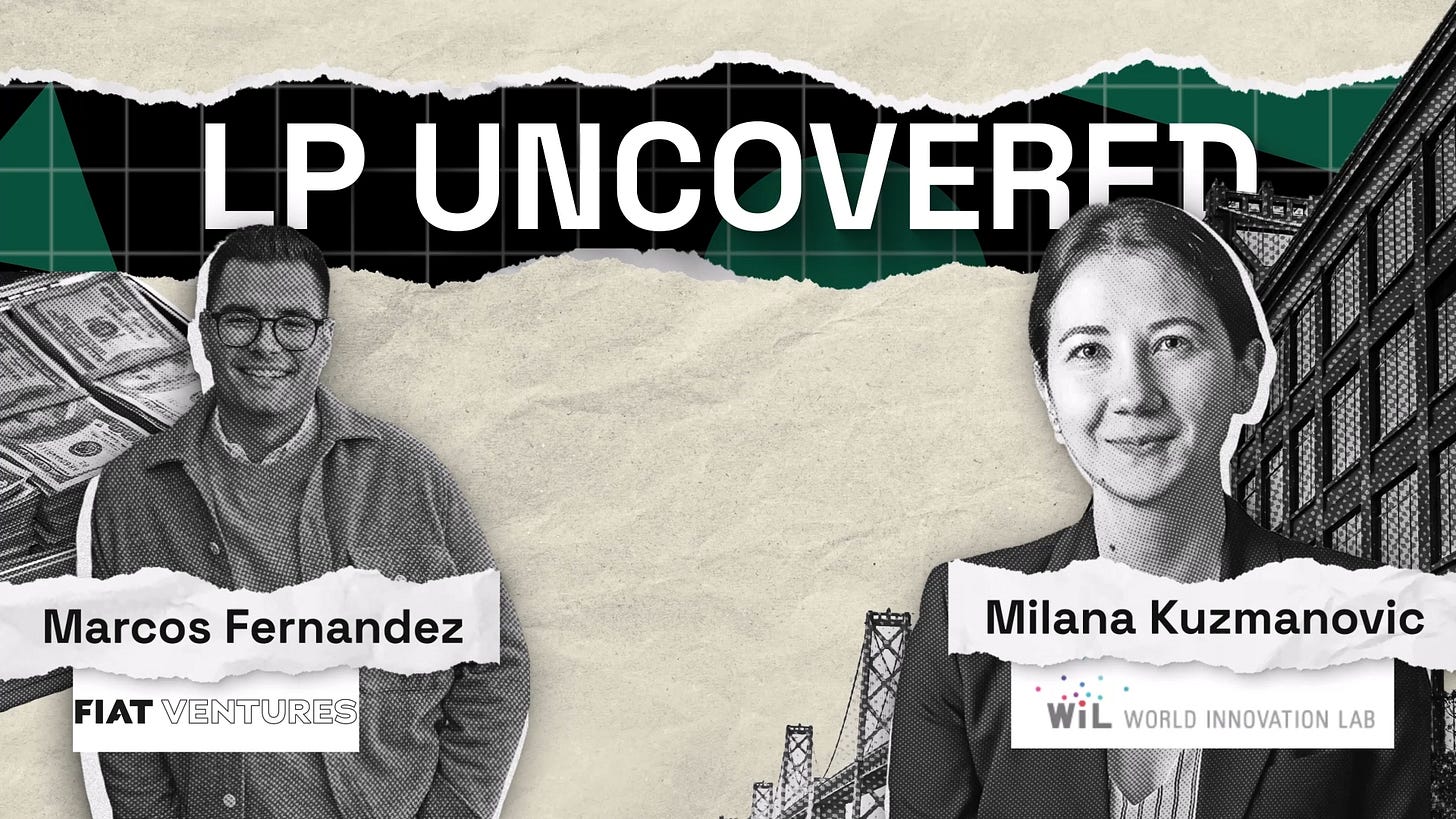
There is a particular kind of clarity that only comes from having lived through reconstruction. Milana Kuzmanovic grew up in post-war Bosnia and Herzegovina, a country remade by conflict and quietly rebuilt, in part, through the generosity of a nation on the other side of the world. Japan’s donations to Bosnia planted a question in a young Milana that she has spent her entire career trying to answer: Why? Why would a country with no obvious strategic interest invest in the recovery of a small Balkan nation?
That question, deceptively simple, became a compass. It led her from Banja Luka to Tokyo, from the trading floors of Citigroup Global Markets Japan to the ICD division of the International Monetary Fund, from the strategy rooms of McKinsey to the rolling hills of Silicon Valley, where she now sits as a partner at World Innovation Lab, better known as WiL. There, she is a part of the fund of funds platform, deploying capital on behalf of Japanese financial institutions and corporations that are, themselves, trying to answer their own version of the same question: How do we access innovation we cannot yet see?
The Fund That Knows What It Is
WiL did not begin as a fund of funds. It started, seven years before Milana joined, as a direct venture platform, backing promising startups and helping them expand into Japan. The thesis was straightforward: Silicon Valley produces innovation; Japan’s corporations need it. The matchmaking business was good. But something was missing from the broader picture.
“Japan as a whole is still missing access to venture capital as a real financial product,” Milana explains. The capital flowing through Japan’s venture ecosystem was, and remains, predominantly strategic, driven by corporate venture arms whose primary motivation is not financial return but industrial relevance. That is not a criticism. It is a structural observation. And it is precisely the gap that WiL Strategic Partners, WiL’s fund of funds strategy, was built to address.
The fund of funds sits alongside WiL’s direct investment arm, but operates with an important firewall. “On the fund of funds side, we are purely financially driven,” Milana says. There is no co-investment pressure, no quiet expectation that GPs will route deal flow back to the mothership. When collaboration happens organically, it is welcomed. But the mandate is clean. That clarity, she argues, is not just good ethics. It is good underwriting.
The LPs on the fund of funds side skew toward large Japanese financial institutions, pension-adjacent capital, and institutional investors seeking diversified exposure to US venture. They are not in it for the strategic trophy. They are in it for returns, for time diversification, and for access to an asset class their domestic market has not yet figured out how to produce on its own.
Zone of Genius, Not Zone of Aspiration
Milana has a term she reaches for when she talks about what separates the GPs she backs from the ones she passes on: zone of genius. Coined by author Gay Hendricks, it refers to the intersection of one's unique innate talent and the work that energizes one the most. Milana has brought it into her investment framework, and in that context it takes on a deceptively simple quality with rigorous implications. Your zone of genius is not what you want to be. It is what you already are, the intersection of your access, your judgment, your network, and your track record. The job of a GP, in her view, is to identify that zone with precision and build a fund sized exactly to operate within it.
The failure mode she sees most often is fund size drift masquerading as ambition. A boutique manager closes a $40 million fund, writes small checks, gets into good deals precisely because the check size is non-threatening to lead investors. The founders come back, grateful, and say they wish the fund could have led the next round. The GP internalizes that as a mandate to go bigger. “What they might not realize,” Milana says, “is that the reason why they might have gotten into some of the good deals is because their check size is small.” The moment the check size grows, the competitive dynamics shift. The GP is no longer a friendly co-investor; they are a lead contender, and suddenly the doors that were open begin to close.
“At what point does my investment strategy break?” That is the question she wants every GP to be able to answer before they sit across from her. Not what is my target return. Not how fast can I scale. The breaking point. The upper bound of the strategy’s integrity.
She is equally skeptical of the return theater that has become standard in GP presentations. “There’s so much pressure, especially on the boutique side, to come with, oh, my target return is 6x or 7x or 8x.” The inflated projection, she argues, is not just intellectually dishonest. It is counterproductive. “The more down to earth, the more realistic you are with your expectations, the easier it is for me to believe that you have a chance of outperforming it.” A GP who walks in and says “I am targeting 3x net as a baseline, and here is precisely how I plan to get there” is infinitely more credible than one who opens with eight times and a slide full of wishful math.
“I want to find a good GP, and I want to continue the relationship. It’s really hard to find, underwrite, and get access to a good GP, so once you find it, you kind of don’t want to lose it.”
The Marriage You Cannot Afford to Rush
Milana has a particular way of describing the LP-GP relationship that cuts through the transactional language that often dominates fundraising conversations. “If I’m going to commit to marrying you, I can’t just have one date.” It is not a casual metaphor. It is a structural truth about how she and her team approach the underwriting process, and it has direct implications for how GPs should be thinking about their own relationship-building timelines.
The fund of funds model, by its nature, demands longevity. When WiLSP commits to a GP, the goal is not a single fund. It is a multi-fund partnership, the kind of relationship that compounds in value as the LP builds institutional knowledge about a manager’s decision-making patterns, their response to adversity, and the accuracy of their self-assessment over time. “As a fund of funds VC, I want to stay with a GP,” she says. “Once you find a good one, you kind of don’t want to lose it.”
This is precisely why she pays such close attention to how GPs talk about the future of their own firms. A manager who presents a clear vision for how their firm will evolve, including how it will scale without drifting from its core strategy, is giving her the information she needs to model a long-term relationship. A manager who says “we’re $40 million now, but we’ll be $2 billion in five years” is actually signaling the opposite of ambition. They are signaling that their role in her portfolio is undefined and, therefore, potentially not a match.
The solo GP question is one she approaches with notable nuance. She does not have a categorical view against backing a single-partner firm. What she does have is a categorical view against adding a second partner simply to avoid that label. “If you have someone you’ve worked with very well, who can maybe challenge you, and at the same time you respect when they challenge you, that is going to improve your decision making. But if you are just bringing on someone who is kind of random, just so that you’re not a solo GP, I would rather you just be a solo GP.” The integrity of the decision-making process matters more to her than the optics of the org chart.
The Boring Stuff Is the Real Stuff
If there is one area where Milana believes GPs systematically underinvest, it is not in deal sourcing or portfolio support. It is in what she calls, without apology, the boring stuff.
“Please give me my financial statement on time,” she says. “Because then I will get in trouble with my accounting firm because I don’t have the data that I need.” The request sounds almost absurdly mundane. But behind it is a serious point about operational discipline and its relationship to trust. An LP who cannot get basic reporting on schedule begins to wonder what else is slipping. The fiduciary chain runs in both directions.
The same principle applies to LPA negotiations. Milana has noticed a recurring dynamic in which GPs interpret a request for protective covenants as a vote of no confidence. She finds this puzzling. “Me asking you to put a certain clause about a key person, about time devotion standard, it doesn’t mean that I don’t trust you. It doesn’t mean that I think you’re going to do something bad.” She draws the analogy directly from venture practice. A GP invests in founders they believe in and still insists on governance terms that protect the company from misalignment. The LPA negotiation is no different. It is not a referendum on character. It is the documentation of a serious, long-term financial relationship, and treating it as such is itself a green flag.
The DocSend problem belongs in this same category. “Make your decks and data room downloadable,” she says. “The links expire. It makes my hard job harder and it disincentivizes me from engaging in a relationship if I can’t even keep track.” For an allocator managing dozens of active manager relationships, the inability to download and reference materials offline is not a minor inconvenience. It is a friction point that signals, however unintentionally, that the GP has not thought carefully about the investor experience on the other side.
The Long View
Milana joined WiL in 2021, a vintage she references with a knowing tone. “Everyone was talking about, oh, I’ve never seen anything like this.” The deployment pace was relentless. Underwriting timelines compressed. Valuations stretched. And then 2022 arrived.
Now, she says, it is happening again. The artificial intelligence wave has generated a level of excitement that is compressing deployment cycles across the venture market, from pre-seed boutiques to multi-stage blue chip funds. She understands the pull. The opportunity set is genuinely extraordinary. Companies are scaling to $50 million, $100 million, $200 million in revenue faster than any prior generation of software companies. The winners are moving quickly and the pressure to commit before someone else does is real.
But she is watching the clock. “If you are deploying all of your capital within a year to year and a half, you’re not getting a lot of time diversification.” And with any major technological transition, she notes, the early landscape is populated by both early winners and a larger number of eventual losers. The managers who pace themselves, who preserve capital for the companies that will crystallize later in the cycle, are the ones whose portfolio construction will hold up when the narrative shifts again.
Her message to established managers carries an extra edge. “If you’re an established manager, you should know better.” A first or second fund GP can be forgiven for not having lived through a full cycle. But a firm with decades of institutional memory deploying a fund in 18 months in a frothy market is not making a first-time mistake. It is making a choice. And that choice will invite a lot of questions when the next fundraise comes around.
Speaking of fundraising, she believes that GPs do have a choice of who they want their LP to be. “Do you just need capital? Then you want someone who will give you the capital and go away,” she says about GPs choosing their own LPs. “But do you need someone to push you on your thinking? Do you need someone who will be involved and an advisor, someone who will be that first call for you?” The relationship, at its best, is not transactional. It is iterative, honest, and built for the long duration that venture capital actually demands.
Milana closes conversations about the industry the same way she approaches everything else: with a directness that is both generous and unambiguous. “Not every LP will be fit for your strategy,” she says. “And that’s okay. You just do you.” In an ecosystem that rewards certainty of vision and punishes imitation, it is advice worth sitting with. Find the zone of genius. Build toward it. And find the partners who can see what you are actually building, not just what you project on a slide.
More from Uncovered Media





Read the full transcript
0:00 I know that there's so much pressure, especially on the boutique side to come with like, oh, my target return or like my projected return is 6x or 7x or 8x and to come up with all these rationales and reasons and plans of you reaching that. So whenever is someone,
0:18 oh, I'm going to give you 3x net DPI. I am like, well, I would certainly love that. He said that I wouldn't love that. It's just like how it's quite I'm getting there. In the world of venture capital where the conversations often focus on either
0:36 the megaphones or these mega unicorn companies, there's a huge piece to the equation that's missing. And that's the limited partners in the allocators that provide a lot of the capital to this ecosystem. And I'm your host, Marcos Fernandez, to provide a little bit of visibility to this ecosystem.
0:51 I'm fortunate to be one of the co-founders in the managing partner Fiat Ventures and emerging manager. And on LPN covered, we want to give a voice to these crucial investors . The goal of this is to help you get a better sense of the people who are leading this innovative industry. Hey, everybody. Welcome back to LPN covered. This is the podcast
1:11 where we get behind the people who are driving innovation in the LP world. Today, and I know I say this every single time, we have truly a special guest, Milana Kuzmanovic, who's a partner at WIL. And I've known her for many years. Every time I get together, I wish I had this
1:27 thing recorded because she shares such great breadth of knowledge. And WIL is unique, right? They're not just a fund of funds, but they're a full investment platform, making both direct investments as well as fund investments. They also are unique in the sense that a lot of their LPs
1:42 are Japanese financial institutions. And for us, we recently spent some time in Tokyo, so she can outline really the level of innovation that they provide to their counterparties and vice versa. It's a really wonderful relationship. And then also, more importantly, right, what are they looking for behind emerging managers and firms that they invest into? How to separate signal from noise?
2:00 How do you show that you're building a firm just making great investments? And also, we focus on the zone of genius, which I love. What is your strengths? What are your skill sets? And then how do you make sure to maximize that? So you're going to learn a ton from today. I know I did in talking to her,
2:15 and I'm excited to bring it forward. But before we dive in, and as always, what you hear on this podcast are our express views. It's certainly not investment advice. There's no guarantees of performance and these investments are risky. There's there's a chance of loss for both us and
2:30 anyone that participates. For WIL and their business, they do not solicit from the general public, and they only offer this offering to qualified investors. With all of that, I'm excited to dive in and to have you learn more with Milana. Let's get started. Thank you so
2:46 much, Milana, for joining us today. Well, thank you. But who is this person you just talked about? I'm not sure it's me. It is definitely you. And that's what I love, too, is you are very humble, although you don't need to be because of the qualifications. But I appreciate it. And one of
3:03 my favorite parts about this is we've known each other for a little while. You've given such great advice to me and to people on the team. And now we get to capture that advice and share it with others who are listening in. So before we jump into what you're doing today, give us a quick
3:20 background on the journey of what took you into becoming an allocator at WIL, both a path to getting there and then what you've done over the last four and a half years. Sure. So originally, I'm actually from Bosnia, Herzegovina, but I started my career in Japan. I work for city group global
3:37 markets in Japan, so sales and trading side. After that, I spent some time at IMF as a research analyst, as well as McKinsey. And I've been here at WIL for coming up on five years now. Yeah, it's really exciting and even kind of backtracking. It's what you're
3:54 comfortable sharing. I know that you're upbringing in Bosnia that you came up during some really difficult times there. And you have a deep connection with Japan and Japanese culture because of that upbringing. So maybe just to give people a little bit of context as we jump into today, how
4:12 is that all kind of tied into the work that you do today? Absolutely. So I was actually born in Yugoslavia, and then within a year, it became Bosnia, Herzegovina. So as I was growing up, there was a lot of post-war reconstruction efforts going on, and Japan actually donated
4:29 significant amount to Bosnia. And so ever since then, I just had this question of why? Because Bosnia, small country, no benefit. And so the reason why I joined my firm is because it allowed me to sort of give back as we focus on bridging Silicon Valley and Japan, and in particular, Japanese
4:49 corporations in these situations. Yeah, I love that full circle moment. And before we jump into WIL and that connection that you're creating, you started at Citi. I think a lot of people who are listening, note Citi, you mentioned the IMF, so the International
5:04 Monetary Fund, maybe a little bit of a different background for people on here. But explain really quickly what that is, because that is also a really interesting global organization that looks at a lot of the same challenges. Yes, International Monetary Fund, I think most people see it as this organization
5:20 that it's like, I give you a loan, and then you have to do what I say. But there are several in different parts of the IMF, and one part of it is we have Institute for Capacity Development, where we teach government officials from central banks, ministries of finance,
5:39 some economic modeling tools, and how to think about inflation, accounts, pretty much how to do a due diligence of the country. And so that's where I've been assigned to, and I really value
5:54 and cherish my time there. Yeah, definitely. And I'm sure it gives you a great macro perspective globally on how markets interact, how different central banks and regulators can influence each other, how that spreads out. Certainly, it's been, we've seen a lot of that
6:11 even since the time you left there. And so then you went to Kellogg to get an MBA and really study there. I'm curious, what was the impetus for that? And then how did you end up at McKinsey right after? So I toyed around with the idea of maybe getting a PhD in economics, but I just
6:26 felt the world was moving so fast, and that unfortunately, six years pursuing something felt like a luxury to me personally. And so kind of sold out a little bit when pursued my MBA. The
6:42 reason why I chose Kellogg is because people, they're just incredibly nice and the school values itself on high impact low ego, which is something that resonated with me. And after that, I love solving hard problems.
6:58 So going to McKinsey seemed like a natural extension of that and great training ground for whatever I wanted to do. And then W.I.L. came knocking. I was about to buy a house in Washington, D.C. And so I gave up all that, for taking my escrow. And I just moved from
7:19 Washington, D.C. to California, to work for my current company. Yeah, I love that. And I'm sure there's a lot of uncertainties at that time, especially making such big decisions and making happen. But what did you first do when you joined? I guess first, maybe a quick second on describing who is W.I.L. and
7:38 what goes on there, and then maybe quickly through the journey of your path there and also to where you're focused today. Absolutely. So W.I.L. stands for World Innovation Lab. We are a VC platform where most of our
7:53 capital comes from Japan. And the idea is that we bridge the innovation that's happening in Silicon Valley with Japanese corporations. We are not a typical VC in a sense that we have, of course, direct side of the house. And that is how we started. But we also have a fund
8:08 of fund strategy, which is where I sit. And on top of that, we are really big on corporate innovation, where we partner with our LPs to help drive culture change, to drive innovation within the organization, and really learn how to adopt as well as adapt the technology
8:26 and innovation that's coming from Silicon Valley. Where I said I actually started working with our founders on helping them expand to Japan, because that is one of the value propositions that we offer for our US and European investments. And then we also help our Japanese
8:44 investments expand to US. So I started on that side of the house, which really kind of helps me now in my current role of being a fund of fund allocator, understand what is the value add and what is it like to work with founders and companies on certain things. Then I became a chief of staff
9:03 to our CEO and co-founder, again, Siamma. And that really, there's not a part of a VC fund that I haven't touched from understanding compliance, understanding IT, to understanding strategy, to
9:18 working with LPs. So I think that was a great training ground. And it helps me understand and convey to some of our prospective JPs that you should underestimate the operating side of the fund.
9:33 It's not that easy. And I've been with my current team for a couple of years now, where I focus on underwriting managers, both on the emerging and established side. Yeah, it's super unique skill set again, where you've gotten to see the whole value chain from hands-on supports to your
9:51 limited partners who are looking both for reach in and for access. And now looking at how do you think about allocating that capital? And a few different topics that we can jump into . So one being what's unique about WIL is that you are both underwriting JPs as an
10:08 LP, but you have LP yourself. So you have the understanding of the relationship with those that are trusting you with their capital, as well as you're allocating that forward that gives you a unique perspective. Let's talk about the relationships that you have. You've mentioned with your
10:23 large Japanese investors. I know you know this, but for listeners, myself and my co-founder and partner, we just got back from Tokyo learning about the market and how people are assessing it. And we came away with kind of three big things, seeing what's going on in Silicon
10:39 Valley in the US market, how can that be applied within Japan, bringing US companies to Japan with those products and helping Japanese companies expand to the US. And so maybe if you can unpack a little bit more about how you've been hands-on in that, how WIL sees that, and why is that really
10:55 important to making sure you're delivering not just alpha to your limited partners, but also thinking about the strategic value of how you help them out? Yeah, so I think especially when it comes to the idea of helping US companies expand to Japan, I think first what people don't
11:12 understand is there has to be a little bit of uncomfortable and hard conversations in some point, right ? Because sometimes founders want to expand their, like a little bit too quickly and you have to really have an honest conversation, "Hey, are you ready now?" And sometimes founders
11:30 will have a market pull, right? They will have a couple of companies that proactively reach out to them and be like, "Hey, I think the market is ready for a product, let's just use it ." So you have to be
11:46 first very clear with the founder and also not over-promise on what you can deliver because that doesn't serve anyone. But if you have that trust, which is a prerequisite, right? How we then help is that all of our LPs, our LPs that we believe are just an
12:04 innovation. That is the reason why they're also our LPs. And from that point of view, we can do sort of like help create that synergy and help find those first Lighthouse customers that are
12:19 more important in Japan than people might imagine because Japan is a very high signal country in a sense that trust really matters. So if someone I trust vouches for you, your credibility
12:34 increases significantly. And so having that trusted connection and having someone who can sort of like help you establish those trust connections is incredibly important. And then also just hiring is
12:49 very hard in Japan, especially as a person who might not be a Japanese native founder. And so you need to find someone who can both communicate with the headquarters and understand different mindset
13:04 and Silicon Valley mindset of go, go, go, go. And maybe let's break a little bit or, you know, tiny things here and there. So in order to gain traction, but you also need to have someone who can
13:19 actually sell into Japanese companies that might be a little bit more traditional, a little bit more, you know, prim and proper. And so you have to sort of like, again, it's a small community of people who can do both. So you have to be able to tap into that community. And that is another
13:37 thing that we help with. But I would say it's really just explaining different structure of the market, like what are SSIs and how did it play into and like, why do I need a distributor? And it's just sometimes also being a little bit of a therapist and explaining like, okay,
13:53 these are the things that are normal for a Japanese market. It might take you longer to actually, you know, get to that contract, but it will be fine. And I will get you the honest feedback. So just kind of navigating cultural differences, go to market differences, and
14:10 then tapping into right networks. Yeah, and it's such a valuable resource in, you know, one of our big observations and Rowan and I had in our past roles done a lot of work with corporations in Japan, but you have
14:25 these large holding companies with these conglomerates. So you have these massive financial institutions who have several different arms of their business. They're very flat organizations. So to your point, it's navigating those organizations. And because it's so trust-based,
14:40 you don't talk to like a champion who talks to someone who signs off. You really have to get to know our organization across management all the way up to the CEO level. So I'm sure the insights that you can provide as well as the direct connections, it just helps with not just the navigation, but the commercialization. And what I was really impressed with is
14:58 there's real appetite from these Japanese corporations to want to integrate this and to understand what's happening in Silicon Valley. But classic Americans, we want to take a trip and have that meeting and it all went well, now sign on the dotted line. And that's just not how business is done.
15:13 No, it's not. And you will get a lot of questions. You will get probably more questions. And some of the questions might feel a little bit intrusive or a little bit too detailed and a little bit, are you really asking me this? But in Japan, transparency and due diligence and
15:32 being prepared is very important. So it's not that they don't have confidence in your firm or fund or anything like that. It's just that that is the standard workflow and you need to be prepared for it and
15:47 you need to be willing to write it out. Yeah, yeah, it's great advice. And one thing that we've noticed is a lot of these corporations now have opened up satellite offices in Silicon Valley, a lot in San Mateo and the peninsula. But to just have someone on the ground
16:04 who can be closer to a lot of the action, I'm curious, are you working with groups here and as well as groups over there? And how have you seen a lot of these Japanese corporations expand out their presence to get a better sense of the market here? Absolutely. So some of our L
16:19 Ps will send expats who will sit with us in our office. And then on top of that, they will also have their own separate maybe CVC functions. So there are many different flavors that we see. I think the biggest pain point maybe with the setup of sending people to Silicon Valley is the fact
16:40 that we as an industry are very network driven. And it takes a while to build the network and to really have a good access. And in Japan, it's very typical. Well, first of all, you have
16:55 visa issues and visa limitations. But even without that, in Japanese companies, it's very typical for people to rotate every so often. And so someone who comes to Silicon Valley maybe hasn't done anything pertaining to the work or they are very experienced. But
17:12 once they go back to Japan, they will be doing completely different work. So I think that is one of the biggest pain points in the nature of Japanese organizations that they might experience when setting up satellite offices at that constant rotation, that constant
17:28 transition. So I think it's important, it's important to have someone who understands your company's priorities on the ground where the innovation is happening. But you also need to understand what are the limitations of that role. And I think that credit to both you and to the WIO organization
17:47 is that's not something that happens right away. It takes years of relationship building to cultivate those relationships with your limited partners. And vice versa, it takes years to understand what's going on in the market. I'm curious of the strategy then to partner with both
18:02 venture funds as well as look at direct access. How has that evolved over the years? And then how do you apply those learnings for your partners who are trying to get better visibility to what's going on?
18:17 Absolutely. So I would say we first started as a direct fund, right? Just investing in great promising startups, helping them expand or what we believe are great at promising startups and helping them expand to Japan and do that matching. And that is more
18:36 innovation oriented. And so majority of our LPs on that front are corporations. But six years after we kind of got started, we felt that Japan as a whole is still missing access to venture
18:51 capital as a really financial product. And the understanding might not be as strong from a financial product point of view. Why? Because a lot of capital in Japanese ecosystem that is within venture
19:08 capital is from CDCs. So that's strategic plans and that focus on strategic returns is very strong in Japan. And so that is how we set up a fund of fund strategy. One thing that we like to highlight is, hey, we're not deal sourcing for our direct team. To the extent our GPs want to
19:28 work with our direct team and there's opportunity for collaboration, great. We all get to be like one big family and we appreciate that. But on the fund, the fund side, we are purely financially driven. And so from that point of view, our LPs, they're still predominantly from Japan, but
19:45 they have a more all-day flavor of being a large financial institutions, institutional investors that need to diversify their portfolio and get some exposure to US-based venture. Yeah, absolutely. And I think one thing you touched on earlier and I'd love to
20:04 get your perspective on is, I think oftentimes as GPs, we think, oh, we need to show is we have a unique model that gives us access that can ultimately result in outsized returns. But you had mentioned this and you've always been really great at coaching this is that is certainly important, but you're also looking at the longevity of a firm. You're looking at the
20:22 stability of it. And oftentimes, I feel like they are things that are important but are either overlooked or not communicated well by GPs who are more focused on what we think is the main thing. I'd love to just pick your brain but get your first high-level overview of outside of the
20:39 obvious you have a unique access to a particular market that we want exposure to. What are some of the things that you're looking at when you're first meeting with firms and maybe what are some of the yellow flags and red flags that immediately jump out to you when you see something that may
20:54 not be positive? So one thing about our strategies, we invest both in boutique funds, which obviously, of course, includes emerging managers as well as what we call blue chip funds or more established managers. And then we also have a small up to 20% of our portfolio that goes
21:14 into direct investments. And so when we're meeting with GPs, we're obviously first trying to sort them. Which bucket are you a boutique fund or a blue chip fund? And there is no direct or like clean cut
21:29 definition. It's a spectrum. But I would say that we need a certain level of baseline returns regardless of where you are. But then as we're trying to optimize for venture alpha, different type of GPs play a different role. So if you're more on the boutique side, which mean you're
21:46 probably on a smaller scale size in terms of fund, you maybe have your partner. There's something unique about how you think about the market and what which pawn you're fishing in. So there, the baseline returns is
22:01 roughly the same, but your potential for our performance or your perceived potential for our performance has to be higher. And then for the blue chip funds, you kind of have a long history of track records. I kind of know what to expect. Maybe your potential for our
22:18 performance is not that high. But I know what I'm getting and I know what role you're going to be playing in my portfolio. And hopefully you will provide me with some sooner, a sooner version of DPI, right? And the distributions because you are investing in multi stage. And so a
22:35 couple of things that I would say are red flags is that, and I actually feel bad for some of the GPs because I feel they get so many different versions of feedback. So this is just, you know
22:50 , use it or lose it, it's fine. But I know that there is so much pressure, especially on the boutique side to come with like, oh, my target return or like my projected return is 6x or 7x or 8x. And to come up with all these rationales and reasons and plans of you reaching that, or maybe to over
23:10 state your own potential. I think for me, from my type of underwriting, that is a red flag because the more down to earth, the more realistic you are for your expectations, the easier it is for
23:27 me to believe that you have a chance of outperforming it. So whenever I someone, oh, I'm going to give you 3x net DPI, I am like, well, I would certainly love that. I wouldn't love that. It's just
23:42 like how you plan on getting there. But some good things that I see that are sort of like green flags is someone saying, if you have a track record, okay, this is my track record based on that. This is how my frame of thinking is going on, how I'm thinking about the market, how I want
24:01 to run my fund. This is how I want my fund to evolve as a firm. So having that long term mindset, it's not just like this fund, but it's like, I have a vision for how I want this to shape up in the future. So that makes it very easy for me to see how you're going to evolve within my
24:20 portfolio. Because as a fund of fund VC, I want to stay with a GP. I want to find a good GP and I want to continue relationship. And once it's really hard to find underwrite and get access to a good GP,
24:36 so once you're there, you kind of don't want to lose it. So the more you can share about how you see yourself evolving, the easier it is for me to know what role you're going to play in my portfolio company. Now another red flag would be, if you were to tell me like, hey, I am
24:53 a $40 million fund, but don't worry, in like five years, I'll be $2 billion fund. That actually worries me because your role within my portfolio construction changes completely. And now, first of all, can you even get there? Second of all, even if you did, is it something that I
25:12 want? No, I kind of want you because you are playing this role in my portfolio right now. So don't feel like you have to go big all of a sudden is, I guess, what I'm trying to say. Yeah, one and I think it's a good point, right, is sometimes I think people
25:29 perceive bigger as better. And I've seen this on the GP side where AUM almost becomes a badge of honor of like, look how big I'm getting and how much I can raise. And it's almost seen as a sign of validity where we take the perspective, at least I take the perspective of DPI is what matters
25:45 at the end of the day. So the more capital to raise, sure, it gives you more flexibility on how you can deploy that capital. But it also increases the sizes of what the return profile needs to be for the investments that you're making. So really, the deployment strategy becomes that much more imperative.
26:01 I think the dirtiest little secret is that some managers will say, well, more A UM, more management fee, therefore, I can really build up my platform. And it gives me a little bit more wiggle room, but are construing it more as deployment strategy and what they're
26:17 doing. I'm curious for you, you certainly want to underwrite a GP and their ability to fundraise, their ability to raise subsequent funds. There's something to be said over the longevity and capital raising. But also, you bring up a good point of, but ballooning that capital is also not great because
26:32 you don't fit my portfolio. And then it makes the return profile a little bit less, less forward. How do you balance those two and when in your underwriting, when you're assessing GPs of, what do you see as being most sustainable? I think the question that addresses that is the question of, at which point
26:53 does my investment strategy break? I think one downfall that some GPs experience is, let's say they're in a size-contrain fund and they have a couple of good deals and the founders come back and they tell them,
27:08 "Oh, I wish you could have led my next round, right? I really like you." And so then they start thinking like, "Oh, I just need to have bigger fun and I can ride more checks and bigger size check." But what they might not realize is the reason why they got into some of the
27:27 good deals is because their check size is small. So, you know, lead or tier one VC is more established firms than not have a problem with like letting you have a share of the round, especially if you have a good like
27:42 value and proposition. But the moment your check size increases and in particular, if you're now like, "Oh, I'm going to lead," now your competition, now you might be getting pushed out. So, I think when you're thinking about your fun size, what you're trying to achieve, the
27:58 first question you need to ask yourself as a GPs, like, "Okay, at what size does my strategy break?" And that should be your kind of like Norton star because even if you can raise and oftentimes, you
28:14 know, you might think, "Oh, maybe I should do an opportunity fund," or, "Maybe I should do a bunch of SPVs." It's really, what is your zone of genius? Open your zone of genius, make sure that the fun size you raise allows you to fully utilize that and you'll be fine and
28:32 you will have that longevity. But the moment you start to have like investment strategy drift and all these different things, the water gets a little bit murky and it's much harder to understand where you're going and what you're trying to do. I love that. The zone of genius is now
28:50 going to be one of my favorite terms. To classbook is right because I think sometimes people will set a target for a fund being like, "Oh, well, I raised it this last time there for a two to three X's that. Let me go raise that and then I'm going to have everything else justify that number." Where it's your point, it should be flipped where you're thinking about, "All right, what have I
29:07 learned from this last fund? Where do I feel like I can expand? What does that look like over portfolio of whatever X number of companies that you have?" And therefore, what then is my range of MVP minimum viable fund size to hard cap of where I can execute on that and then let the, although it
29:25 takes time, let the results of that fund then prove out the track record as I think about expansion . A longer way of saying zone of genius, but it sounds like that's really what you're trying to underwrite is the product that you have fit for you as a GP. Do I think you're going to hit this
29:42 number or not? Correct. It's really fun underwriting is really a people-driven business. And in a sense, I really need to understand who are you as a GP? What is your view of the world? What
29:58 are your beliefs about the market? And I will get asked a lot of time, "What do you think is the correct ownership target size or what do you believe is the correct check size or what do you believe is the correct reserve percent?" And the honest answer is the very typical consulting answer, which is
30:19 it depends. It really depends on your point of view. And what is your strategy and what kind of networks are you fishing in? What is your access? And so I think as a GP, fundraising is
30:35 a very difficult process. and you can get concerned and worried and it will often feel like you have no choice. At some point, you will have a choice in terms of like who your LP is
30:50 and just think about what do you need? Do you just need capital? Then you want someone who will give you the capital and go away. But do you need someone to push you on your thinking? Do you need someone who will be involved in a advisor? Someone who will be, you know,
31:06 GPs are often a first call for founders but maybe you want an LP who will be that first call for you. So just think about it. Yeah, no, I think it's wonderful advice and thinking back to my own learnings when we first started fundraising is
31:21 I would sometimes try to craft what we can be depending on the LP and archetype. And I got advice on it, but it took me a couple years to learn is like there's so many different types of allocators out there and everyone is looking for a different type of product. So what you need to do is determine again,
31:37 what is your genius? What is your strategy that you feel you can execute on? Communicate that to as many potential allocators as possible and then understand kind of who's your tribe? Who is interested in that product, that axis, that sector, that stage and that strategy
31:52 and make sure that you can communicate that really quickly in your conversations because if it's just not a fit, it doesn't mean that you need to change your strategy. It means that you need to find someone who fits. And Milana, there's one example I won't mention names but I remember talking to an allocator who I still trust and respect deeply
32:09 has been doing this for a couple of decades and he gave me this really great piece of advice that I took to heart and then I went back to him eight, 12 months later and talked about deployment strategy and thinking like, you know, I've really thought about what you said, he was like, oh well, our thoughts have kind of changed a little bit
32:24 on that when it comes to ownership and like how many flyers you should have. And like, and I remember coming away being like, okay, the lesson here is still to seek advice from people like that but also to know that you cannot develop a strategy based on what you want others
32:40 to have or what you think others want, you should develop it based on your own skill set. So I love the perspective that you bring there and being kind of the person who dots the eyes and crosses the T's, I'll ask you too,
32:55 outside of construction and deployment, what do you look for when you're looking for longevity of a firm, maybe as it relates to structure or hiring or process or do you see that also being somewhat malleable depending on the firm itself?
33:11 - I, again, the consultant answer of it depends. I think it's just the clarity of thought that is important. Some LPs do not want to take on a solo GP risk and you know, that is fine.
33:26 That is part of their portfolio construction but that doesn't mean that if you are a solo GP, if you feel like this is where you work at your best, it doesn't mean that you should try to change that, right? And if you believe that your firm should stop existing
33:41 once you decide to retire, that's also okay. It's just about communicating what your vision is so that people know what it is that they're signing up for. I would say one thing that is like really hard to underwrite as an LP is when you have a lot of people
33:58 who haven't worked together before or do not have a strong relationship, a history, it's really hard to underwrite that because dynamics are important, how you make investment decision is important.
34:13 And so if you are just bringing on someone who is kind of random just so that you're not a solo GP, I would rather you just be a solo GP. It is completely fine. But if you have someone you've worked with very well
34:29 who can maybe challenge you, who can at the same time you respect them when they challenge you, that is going to improve your decision-making, whether that's about initial investment or follow on investment, then that is great. That is a good partnership.
34:44 That is also easy for me to underwrite because I know what is going to happen. So from that point of view, again, it really depends. I will say one thing that GPs often underestimate is the importance of doing boring stuff.
35:02 And that is where I'm more concerned about the longevity of the firm after we exclude the whole partnership and the team. - Yeah, no, I like that by boring stuff, not to further pull the thread,
35:18 but is that the LPAC construction, is that communications? What are the boring things that you look for? - It comes back down to running the fund. And that means, please give me my financial statement on time because then I will get in trouble
35:35 with my accounting firm because I don't have the data that I need to have. It means understand the LPA market terms and do not confuse negotiating LPA
35:51 with a lack of trust. And let me give you an example. You as a GP would hopefully never invest in a founder that you believe will actively expropriate money out of the company, right? You will hopefully you wouldn't do it.
36:07 But you would still put some terms in the legal docs that would prevent the founder or anyone like in the company doing that, right? And it's the same when we're negotiating an LPA. Me asking you to put a certain clause
36:24 about the key person, about time devotion standard. It doesn't mean that I don't trust you. It doesn't mean that I think you're going to do something bad. To be honest, if I thought that we wouldn't be sitting here negotiating legal documents, you would have been out of my pipeline.
36:40 Before we were talking about it, it's just understand what are the market standards, understand that as an LPA, as an institutional LPA, I have fiduciary duty to my LPs to ensure that their investment is protected.
36:57 And so it's not about trust. It's about doing what I need to do to do my job and just continuing our relationship in a way that is fair to both of us. - Yeah, yeah, I think it's well said in them.
37:12 We talk about this with our founders a lot, you know, our strategy just to provide quick context is we like to price rounds. We like to be the first institutional check-in. We like very vanilla terms, NVCA terms. But even in those NVCA terms, there are a lot of terms,
37:28 especially first-time founders or those that haven't been active in the CEO seat, it catches them off guard. They're saying, wait a minute, I need to do this. And what we tell them is, no, no, no, what we're trying to prevent is the series A is going to come in, ask for the last round, they're going to copy and paste.
37:43 So this actually puts you in a competitive position. And to your point, that's the same thing with GPs is when you're looking at the LPA when you're negotiating terms, as long as there's nothing egregious, it means that you're setting a good foundation for additional capital partners.
37:58 So I can certainly appreciate that. And, you know, one more thing just as you're looking at GPs, a big thing for us is founder market fit. So we say Team Tam traction, but it's really you're investing behind the people
38:13 because the company's changed market shift at least from the direct perspective. And so you want to back people who you know can work through those tough situations and kind of figure it out and create, you know, generational companies. How are you looking at GPs? Is it similarly, are you looking at GP market fit?
38:29 What are some of those intangibles that typically you look for? Again, outside of what we've already discussed and, you know, making sure that you're checking all the boxes. - Correct. So it's very similar in a sense that I'm going to look at the fit between the GP
38:44 and investment strategy. And that can mean, are you telling me you are, you have a history of angel investing, but you want to on the right pre-IPO companies because that just doesn't match. Are you telling me you want to invest, let's say in a highly technical feel like buy or something?
39:02 But, you know, I don't know, you were an English led major and your hobby is writing poetry, right? It's kind of hard to see that fit. So I need to understand why you were this market for this strategy, both from a sector,
39:18 from a stage size, from your check size, from whether you want to lead versus nod lead, which we already touched upon. So those are all the things that I need to assess. And then I also need to see what kind of diversification you bring to my portfolio, right?
39:34 Are you pursuing YC combination companies? Are you pursuing Stanford or like companies? Are you pursuing companies from Berkeley? So where are you fishing and how does that compare
39:49 to where are my existing GP's fishing? Those are all some of the things that I would have to consider. - Yeah, absolutely. And one thing I'd love to get your perspective on is, over time I've also gained a lot of appreciation for folks in your seat because I was fortunate to present
40:07 at Ray's last year and to be a part of several of these, these opportunities, and I am so blown away by my peers. There's so many incredible GP's and firms out there and there's more and more popping up. So the job that you have is very difficult because there are a lot of very qualified opportunities.
40:25 What are some of the ways, maybe one or two examples of how GP's have really stood out to you in this sea of noise of really highly qualified, very impressive people with great track record, maybe a couple of things that you've seen
40:41 that have grabbed your attention in a different way. - That is a very good question. To be honest, it's hard. It's hard to stand out because there are so many funds. I think what really a couple of GP have blown me away in the, let's say last three months,
40:57 there was one GP that is incredibly thoughtful about their portfolio construction. - And there is just, this is how I'm thinking. This is why I'm thinking it. This is where you can see in my past track record how it actually played out.
41:12 And this is why I know how I'll do it. And there is no, let me find a nice word. - Very hopeful. There's no extremely hopeful projections about returns. So those are some of the things that I really like.
41:29 I like it when someone understands capital markets and can talk about what it means to succeed in venture and can explain their thinking. I might not always agree with the thinking or assumptions, but I don't always have to.
41:46 The whole point is for me to find someone who's better than me, right? That's what I'm getting paid for by my own piece. But that is one thing that I really appreciate when someone has a clarity of thought about who they are, where they're playing and why they deserve to win.
42:03 Another thing that I really appreciate is when people self-reflect. And what do I mean by that? You will make mistakes. You will have investments. You will have doubled downs. You will have check sizes or maybe deployment face.
42:18 That's just what was I thinking? It's a point. It's going to be like a very painful experience. But if you can reflect on it, if you can be like, I made a mistake here because this is what I was thinking.
42:34 Now I know better. This is how I'm going to do it differently. That is fine. I would rather have someone like that than someone who's just like, I add that you can't time the market. So it's a bad measure to avoid it.
42:50 Which is true. You cannot time the market and you will have a bad vintage, but are you using that to cover up some of the learnings that you could have extracted? Or are you ignoring the learnings? So those are a couple of things that I always appreciate.
43:06 Like the transparency and the clarity of thought. - Yeah, definitely. And it sounds like in some cases of, it's okay to make mistakes as long as you acknowledge the mistakes you're learning from the mistakes and you're not making those mistakes again. And certainly, you know, now deploying out of a second fund vehicle,
43:23 there's a lot we got right with our first fund. There's a lot that we learned. And so I'm curious for you. Do you look to back GPs in both their first funds and second funds, you have a preference over that knowing that there's a very steep learning curve as you're first building a firm?
43:40 - I think it's a subject of how long we've known the GP, right? So if we have known you for a very long time, if I know what you're thinking, how are you perceiving the market, then it's okay, we will underwrite the fund one.
43:55 And there are some GPs, we were their anchor in fund one and we've been with them throughout their journey. So I think it's more a function of how much I understand you rather than a function of which fund are you in.
44:11 And that goes back to, you know, as an institutional LPs, you won a long-term relationship. And so if I'm going to commit to marrying you, I can just have like one day to like it. (laughs) - I need to have a little bit more of like data points before I can decide that this is a partnership.
44:29 But every LPs different, there are LPs that have to deploy a lot of capital that have an incredible book of cheapies. Or there may be more flexible, maybe they come from, you know, family office where there's a single family, you know, principal
44:46 and they can just like decide on the spot. And then you have LPs like me. So you just need to know who you're talking to. - Yeah, yeah, it's a wonderful perspective. And I remember one of the first programs that we participated in, they brought in someone who said,
45:02 we do invest in first-time funds. We do not invest in first-time relationships. And so it's a very clear way. And similar with us with our founders, right? If you've worked with someone for a long time, you understand how they operate, that they know a lot of where the landmines
45:17 are as they're getting off the ground. It's a very different conversation than someone that you're just meeting. So it's a great point. I'll flip the question on its head a little bit. What is something that you see a lot of GPs doing? And if you had a magic wand that you could just stop,
45:33 maybe some of the bad habits that have now become almost norms. - These make your decks and data room downloadable at this pool, docs and where I cannot download anything. I understand why people do it.
45:49 But it's just so hard for me to track you. It's so hard for me to understand who you are and to keep being involved. If it makes my job harder, right? And so this incentivizes me from kind of engaging
46:06 in a relationship if I can't even keep track and reference than the links expire. So that is a small thing. - Yeah, that's great. - Of actual big thing is I wish people would remember that time diversification matters.
46:22 I joined Venture in 2021. Everyone was talking about, "Oh, I've never seen anything like this." And you had such a fast deployment pace, such fast underwriting pace. And everyone, you know, once 2022 came around 2023,
46:40 it's like, "Oh, I should have known better." We're seeing 2021 all over again. The deployment pace is incredibly fast, across stages, across type of GPs, not just boutique, but more blue chip funds as well.
46:57 And I will say that it's all, you know, it's fine now because you're not fundraising, but once you have to fundraise, can you really say that in the span of five years, you've done the same mistake?
47:14 And especially if you're more on the established side, that bar is much higher for you because, okay, if it's your first fund or second fund, you don't have experience through the cycle. Okay, it was your learning cycle.
47:29 Let's call it that way and maybe we can do something differently. But if you're an established manager, you should know better. You cannot control valuations. Valuations are very hard. You can decide to play or not play,
47:45 but deployment pace is more in your control. And that is something that I wish people would remember and look back to 2021, when they're making the decisions on that front. - Yeah, it's great advice and for those listening,
48:02 typically write a 10-year lifecycle for a venture capital fund, depending on the stage that you're entering. Usually with a four-year deployment period, some as short as three, which is a little tight, some as long as five, which is a little long. And is your advice, then, you want to see weighted cost averaging
48:17 across whatever that deployment cycle is. So not coming into strongly or too low, or are you actually saying in some cases, seeing a cycle in a long-gating deployment or shortening deployment, when you're looking for those types of actions?
48:32 - Again, it depends. In the current context, what I'm seeing is that I feel that with AI, the opportunity set, currently looks incredible, right? And you also have these companies that are now scaling to 50, 100, 200,
48:49 faster than the past, and I get the excitement. And I get it, it's hard to decide who the winner is. But if you're deploying all of your capital within a year to year and a half, you're not getting a lot of time diversification.
49:07 And also, whenever we have a new technological shift, early on, you might have a couple of winners, but you will most definitely have a lot of losers. And you might take a little bit before some other winners crystallize, right? So are you thinking about that
49:24 if you are deploying all of your capital really sub two years? And again, if you're on the more, if your fun size is smaller, if you are more pre-seed and seed, like the deployment pace doesn't necessarily have to be three years, it might be a bit faster.
49:42 But again, I just need you as a GP to understand, am I being prudent manager of the capital? Am I diversifying? Or am I experiencing a little bit of a fomo
49:57 and thinking that, you know, I cannot decide who the winner is. So here, if they call my money (laughs) that is the kind of thinking. - Yeah, and what can happen too is, you know, if you're a specialist in a sector that's hot, that a lot of people are allocating tours,
50:12 you're like, oh, well, I'll deploy more quickly and then I can go raise the next vehicle and it can happen, but the music can stop in certain cases, like you mentioned in 2022, largely spurred by some of the collapses around the banking industry in our sector.
50:27 People were kind of caught with really high valuations. And so the reality is, you know, we can work in the sector our whole lives. Nobody knows what's gonna happen next. And so by deploying over that time period and stretching it out, you can at least offset
50:43 some of the potential, the challenges that you can run into just with that time diversification. So I think that's really great advice, especially in a moment like this. And it's a crazy moment too, where, you know, anthropic and open AI and others are starting to release features that are killing whole sub industries of AI,
51:00 where companies are really taking off that are now starting to struggle. So there's a lot of uncertainty. So weighted cost averaging is a great advice there. Melana, I can talk to you all day. This has been awesome to pick your brain. A quick question for you, are there any podcasts
51:17 or books that you recommend to people who just wanna either learn more about the industry? And then also what's the recent podcast or book that you love that has absolutely nothing to do with the industry too? - I would say for the industry one,
51:32 I really enjoy listening to "Uncapped" by Jack Altman. I love this entry and style. So that is one that I'm not a big podcast person, but I will listen to. So that's one.
51:47 There's this one I've heard somewhere about, it's called like NPLP Uncovered. I don't know if you're familiar with it. That one is also pretty good. - I did not ask for that plug, but I selfishly agree. It's the people who are on that makes it though.
52:06 - Yes, yes, the host is really good. And then for the book, I think more on the book that has nothing to do with industry, it's beginner's haiku. I really love it because haiku is all about
52:22 being in the moment and being present and just actually not overthinking it. It's very much describing what's happening right now. And I feel as we're always constantly chasing new things and always trying to think about how are we better?
52:38 How do we get faster? It's nice to just appreciate being here right now. So definitely that's my recommendation. - That's awesome. I appreciate you being here right now as well. Any parting words of advice or things
52:54 that we haven't covered that you want to leave listeners with before we wrap up? - No, it's just at the end of the day, remember what you're trying to do and not every LP will be fit for your strategy. And that's okay, you just do you.
53:11 And when it looks like fundraising is hard, it's not just hard for you, it's hard for everyone. So you just need to persevere. - Yeah, that's a great advice. Also find your genius, build the strategy around your,
53:27 the zone of genius, yes, build a strategy around it and then find your people. That is a phenomenal advice. Milana, thank you so much for joining us. The main thing I disagree with or the only thing is, no, it is not the host, it is the people on here.
53:43 So seriously, thank you so much, learned a ton. And yeah, if anyone wants to get in touch, what's the best way to connect with you? I'm not, don't have to give out email and cell phones, but just a way to get in touch with you and the team if they want to build a relationship.
53:58 - Absolutely, I think LinkedIn is the best way, but just write a little blurb because if I don't know who you are and why you want to connect, I might be forced to ignore because I get a bunch of these. - Yes, I will guarantee you, if you title it zone of genius,
54:15 my zone of genius, then maybe it'll stand out a little bit more. - Oh, yes. That's a good, that's a good marketing tip. - That's it, for anyone that's listened this long, that's your Easter egg. That's the tip of how you can get a hold of Milana. Thank you so much for joining us today.
54:30 I really appreciate your time. - Thank you for having me. - Absolutely. And that's a wrap on another episode of LPN covered. If you're listening to this point, I hope you caught that Easter egg that she just gave you for a good way to stay in touch. Title that message on LinkedIn, zone of genius.
54:46 What an incredible amount of tidbits that she just shared. How should you think about scaling your firm and communicating that, showing that zone of genius? What is unique to you and how do you scale it? What's really good about you, and WIL is also understanding, these are long-term relationships and how they underwrite,
55:02 but doesn't necessarily need to be long-time funds. What they're looking for is someone who is a specialist and whatever they cater and whatever they're building towards. I'm so excited and very grateful to have Milana on our show today. And as you know, we've got a whole action-packed lineup,
55:18 family offices, multi-family, RAA's, endowments, corporate partners that we're recording to share with you on LPN covered. So if you haven't already, click the follow button, subscribe to the newsletter. It's gonna be really, really fun to continue
55:33 to share these with you. Thank you for listening in and looking forward to bringing you another great episode of LPN covered. See you soon. And that's a wrap for this episode of LPN covered. I'm Marcos Fernandez. I'm one of the co-founders and managing partners if you have ventures and we appreciate you listening. We'll see you next time as we continue
55:48 to uncover this world of limited partners and allocators to place such a key role in both the founding and funding of these world-changing and innovative ideas and founders. So explore more insights. You can find a lot more related to this publication and other publications on LPN covered.com.
56:05 And I encourage you to take a look at a whole bunch of the different things that we have going on uncovered media. Get to know the teams, the thesis, the founders and everything that's driving the industry around us. We'll see you on the next episode.
Transcript generated automatically; it may contain errors.
Originally published on LP Uncovered · By Uncovered Media