Nicole DeTommaso
Harlem Capital
The Opportunity in the Overlooked: How Harlem Capital’s Nicole DeTomaso Bets on What Others Miss
The short version
Nicole DeTommaso, a principal at Harlem Capital, discusses how the early-stage, generalist firm evaluates founders on character and personal history rather than early financials, why speed and proprietary data are the main moats left in a market where building costs have fallen to near zero, and why Harlem targets 'leapfrogging legacy industries' where AI is reaching businesses that never adopted software. She also explains why the firm's 'All Winners Welcome' mission has stayed unchanged even as market attention to DEI has cooled.
- Harlem Capital is an early-stage, generalist firm that writes seed checks of $1 million to $2.5 million and prefers to lead rounds so it can stay close to portfolio companies.
- Nicole DeTommaso joined Harlem Capital as an intern at the tail end of Fund One and is now a principal five and a half years later, with the firm having moved into Fund Two.
- The firm evaluates founders by asking about personal history and earliest entrepreneurial experiences to gauge whether a founder's motivation is deep-rooted rather than driven by a current hype cycle.
- With build costs near zero, DeTommaso says the remaining moats are speed of learning and shipping, plus proprietary data access that competitors cannot replicate even if they copy the product.
- Harlem Capital has a formal thesis called 'leapfrogging legacy industries,' investing in sectors like trucking that skipped software adoption but can now use AI tools that require no learning curve, citing portfolio company Trash Lab as an example.
- DeTommaso says Harlem Capital's diversity-focused mission, summarized in its tagline 'All Winners Welcome,' has not changed despite the broader market's retreat from DEI commitments.
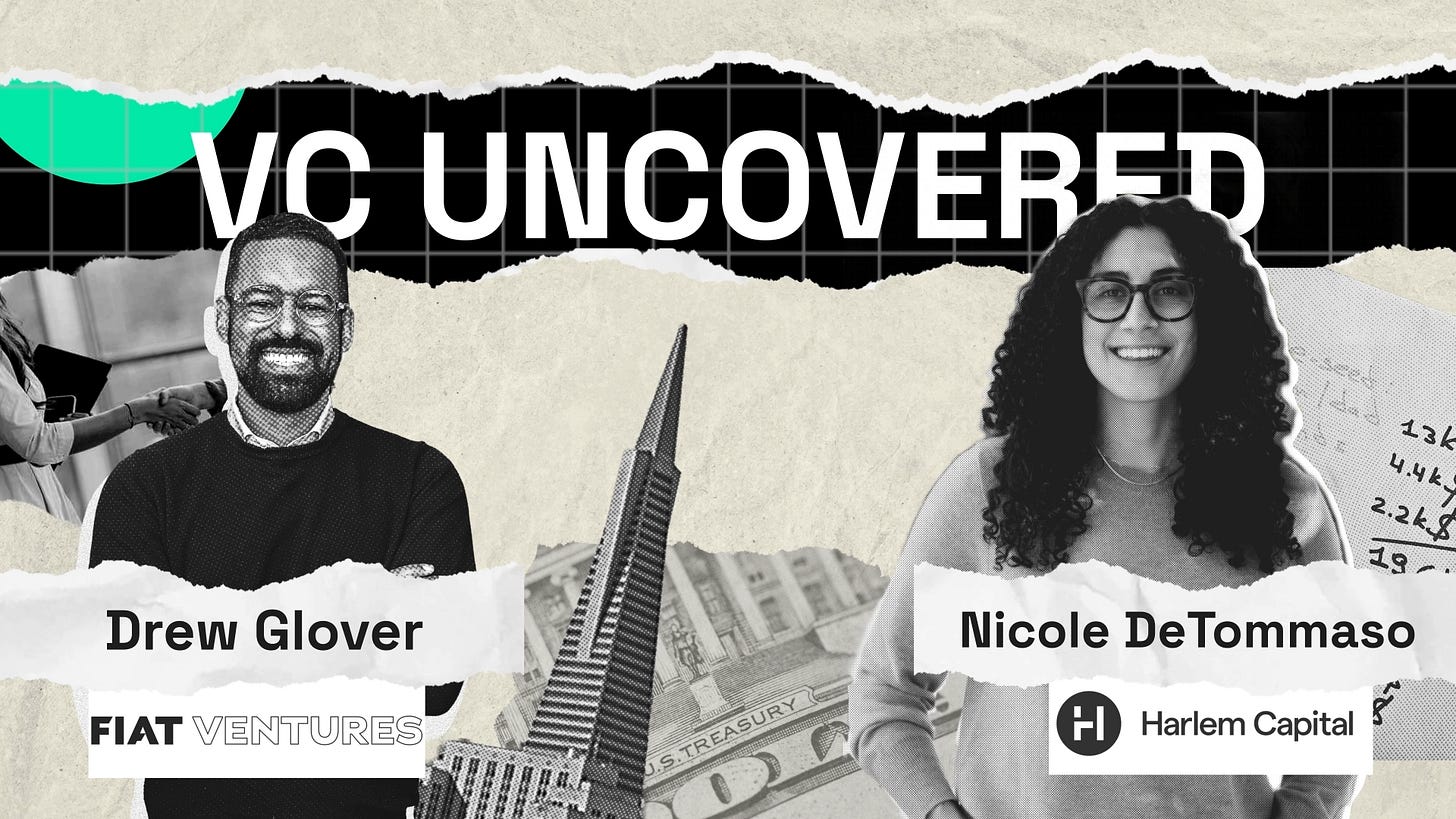
There is a pattern inside Harlem Capital’s investment philosophy that shows up everywhere: in the founders they back, the industries they target, and the market conditions they treat as opportunity rather than obstacle. Nicole Tommaso, a principal at the firm, put it plainly during a recent episode of VC Uncovered: “The best returns come from investing in market inefficiencies.” That single idea shapes how she reads a founder’s character, evaluates a company’s defensibility, and decides where the firm will focus its attention when everyone else is looking somewhere else.
Meet Nicole and Harlem Capital
Nicole joined Harlem Capital as an intern and fellow at the tail end of Fund One. Five and a half years later, she holds a principal seat at a firm that has since moved into Fund Two and grown into something that resembles, by her own description, a startup finding its growth stage. “Similar to a startup, everybody was doing everything in the beginning,” she said. “As you think about growth stage, everybody kind of has to focus on what they’re good at.”
Harlem Capital operates as a generalist, early-stage firm writing seed checks between $1 million and $2.5 million. The firm prefers to lead rounds because it wants to stay close to its portfolio companies and provide real operational support. Its recently launched tagline, All Winners Welcome, captures a founding principle that has not shifted even as the broader market conversation around diversity and inclusion has cooled considerably.
“We hate to see what’s happening,” Nicole said, referencing the retreat from DEI commitments across the industry. “But we stay steady. We’re going to do what we did from the beginning.”
Reading the Founder Before Reading the Business
Harlem Capital’s evaluation process at the seed stage leans heavily on character over financials, partly because early-stage companies often don’t have much in the way of financials to evaluate. Nicole described the firm’s approach as one that tries to understand a founder’s internal wiring before ever digging into the business plan.
“Markets are volatile and you need the person who is able to pivot and make things work regardless of the external factors,” she said.
The firm asks founders about their personal histories, how they grew up, and what shaped their thinking. One of its signature questions is deceptively simple: what is the earliest entrepreneurial endeavor you can remember?
“You’ll be surprised that people bring things back to being like 10 years old,” Nicole said. “They’re at recess and they’re selling candies. You know that it’s kind of innate and it’s in them.” The firm also tests for what she calls a “high slope of learning,” the ability to absorb new information quickly and do something with it. In a market where the relevant knowledge base shifts constantly, that quality matters more than any specific domain credential.
She was candid about the risk Harlem is trying to avoid: founders who have jumped onto a moment without a deep-rooted reason to see it through.
“This journey is a lot harder than you think,” she said. “We want to know that this is something that has been so deep in your bones that it’s inevitable.”
Where Software Never Landed
Harlem Capital has developed a formal investment theme it calls “leapfrogging legacy industries,” and it reflects a bet that some of the most durable opportunities in the current market sit inside sectors that traditional software never penetrated.
Nicole explained the logic directly. Many legacy businesses, from trucking to home services to skilled trades, never adopted enterprise software because the learning curve was too steep and the operational disruption too disruptive. They ran on relationships, paper, and phone calls. But AI tools, which generate outputs without requiring users to learn underlying systems, are now reaching these businesses in a way that software never could.
“They could have skipped over software, but now they’ll do AI because it does it for them,” she said. “It doesn’t need them.”
Harlem has already backed one company built around this thesis. Trash Lab is building an AI communications center for truckers, essentially a system that handles dispatch and route optimization through a phone call rather than a dashboard. “Truckers are never going to adopt software,” Nicole said. “They were never going to be on their computer inputting data. But now if they could just pick up the phone and call, AI comms does it for them.”
She also pointed to a broader generational shift. Baby Boomers are handing family-owned and small businesses to Millennials and Gen Z, who are far more comfortable with technology and more willing to invest in AI tools that produce measurable outcomes. That transition, she argued, opens a wide window for venture-backed companies to enter markets that were effectively closed to them a decade ago.
What Makes a Moat in a Zero-Cost Build Environment
Nicole was direct about how the economics of company creation have shifted. The cost of building a product has, by her description, fallen to near zero. Anyone can ship something. That reality changes what a defensible position actually looks like.
“What you have, ultimately, is speed,” she said. “Velocity of learning, velocity of shipping product. And you have data.” Proprietary data access, in her view, is one of the last remaining structural advantages a startup can hold. A competitor can replicate a tool but cannot replicate the training data behind it if that data came from years of specialized industry experience or exclusive partnerships.
The firm is also watching revenue per employee as a meaningful signal at later stages. Nicole cited Lovable as an example worth studying: the company reportedly scaled to $100 million in revenue in a single month with a staff that generated more than $1 million in revenue per person.
“We’re kind of making up new metrics to underwrite businesses now,” she said, “because the landscape has changed completely.”
On the ongoing debate between investing at the application layer versus the infrastructure layer, Nicole took a pragmatic stance. Foundation models will not solve every industry-specific problem on their own. Applications that fine-tune those models using specialized vertical data, she argued, serve a real purpose and deserve serious consideration. The deciding factor, as always, is the founder and whether they have done the customer research to know what they are actually building and for whom.
Building for the Long Game
Nicole closed the conversation with a few personal notes that illuminated how she operates day to day. She uses Claude as a thought partner and pairs it with GenSpark for presentations. Internally, Harlem is building custom Claude projects to automate recurring processes like deal memos, allowing anyone on the team to move through standard workflows without reinventing them each time.
Her wellness habit was equally straightforward: she reads for 30 minutes before bed instead of scrolling. “It turns off my brain,” she said. “It helps me fall asleep pretty instantly.”
The simplicity of that habit fits the larger approach she described throughout the conversation: clear inputs, disciplined habits, and a willingness to go where others are not. When asked what industry she would invest in outside of Harlem’s current focus, she picked consumer and pointed to beauty as a sector that is easy to underestimate and hard to time but powerful when it catches. “When consumer hits, it hits big,” she said.
That instinct, to see value where the math is harder and the outcome less predictable, is what runs through everything Nicole and Harlem Capital are building. The best opportunity, as she sees it, has always been the one that everyone else decided was not worth the effort.
This season is supported by SVB. Silicon Valley Bank, a division of First Citizens Bank. Member FDIC. SVB is a trusted collaborator for the founders pushing boundaries and the investors who back them. We’re proud to have them as our sponsor. Please note, this podcast is for informational purposes and is not investment, financial, or legal advice. The views expressed are those of the speakers and do not necessarily reflect the position of SVB.
Read Nicole’s VC Uncovered Profile
More from Uncovered Media





Read the full transcript
0:00 The cost of building a company has gone to zero, right? So anybody can, anybody can build it, right? Previously, you needed to be tactical to build a company that's not even true. So what you have, ultimately, at the end of the day is you have speed, right? Like velocity of learning, velocity of shipping products, and you have data.
0:17 Welcome to VC Uncovered, the series where we highlight the next generation of investors who move faster, take bigger risks, and build shoulder to shoulder with founders. I'm your host, Drew Glover, co-founder of Theot Growth, and general partner at
0:34 Theot Ventures. Nicole D. Tamasa, thank you so much for joining VC Uncovered. I feel like we have had super-story past. I like you're the one of the first people I reached out to be on VC Uncovered. I've leaned on you multiple different times just to get your take on different
0:51 things going on in the VC market, but it's a true honor to finally get you on the podcast. You are a busy, busy woman, and it's for all the way because you put the work over all the other shit that's going around. Also, an incredible follow-on LinkedIn if no one's following.
1:06 But Nicole, can you just kick this off by just giving us a little bit more background on you, what you're focused on, and what you're doing at Harlan Capital? Totally. So for those of you who don't know, I'm Nicole, my principal at Harlan Capital. I've been with the firm now for five and a half years.
1:22 I actually started as an intern and a fellow, and Harlan Capital is an early- stage firm focused on backing the next generation of winners, and we primarily invest the seed. Writing checks about one to two and a half million, we like to lead because we
1:38 actually like to be value-add investors and stay close to our portfolio companies. And we are, generalists, just looking for exceptional founders who are best in class in this. Love it. Love it. Yeah.
1:53 I've been a huge fan of Harlan for a long time. You have also really scaled up in a meaningful way in a fairly short period of time. Can you give me a little bit more insight on what that journey has been like? Because you were very early in all of Harlan Capital's journey.
2:10 Yeah. Yeah. I mean, I joined at the tail end of Fund One, and now we've done Fund Two, and so that's been a journey. I would say that we're sort of at our Series A, Series B, and just like
2:26 startups, venture firms have to scale. And so lately, I would say over the last year or two, we've really honed in on our focus areas, what everybody spikes on. And I think everybody was doing everything in the beginning, similar to a
2:43 startup. And as you think about the growth stage, everybody kind of has to focus on what they're good at. But we have sort of data and years of working together. We know where people need to lean in and where maybe they should pass it off. And so I think that's kind of where we're in the phase now, where it's like,
3:00 let's just optimize what we're good at. Let's create processes, let's double down, similar to a startup, right? Like that's how a venture firm works. And so yeah, that's kind of the phase we've been in now. And you've probably seen us on social media.
3:16 We launched our new slogan, all winners welcome, which is basically this idea that, you know, we want to back the next generation of winners, the people who might look different to the people who were previously successful. And that's always been our mission from the jump.
3:31 Yeah. No, I love it. I was told just, you guys are constantly, and I feel like in this market right now, investing in the early stages is like the toughest thing to do. Because the good thing is, innovation isn't an all-time high, but risk is that an all-time
3:46 high? Because so many people are building right now. And also, there's a lot of people building things that just aren't venture-back able. Everyone's trying to package them up like they are venture-backable. And one thing that we've talked about with you in the past is the ability to
4:03 bet on character, the ability to bet on really incredible founders, but doing that all on really limited data, because of how early we're investing in some of these companies. And I'd love for you to share a little bit of your insights on how you are evaluating risk with amounts of data.
4:20 Yeah. I mean, this is why we're primarily focused on founders at the end of the day, right? It's like, markets come and go. I should say, hot markets come and go. What's in sort of the cultural zeitgeist, what's in the VC purview changes
4:37 every year, every few years, right? But what doesn't change is the founder, ultimately, right? And I think that markets are volatile, and you need the person who is able to pivot and make things work, regardless of the external factors, right?
4:55 And so ultimately, when we're looking for founders, we want founders who are doing this for the right reason, who truly are motivated to get to the end. And I think in markets like today, you get a lot of people jumping on a hype train who might not really be in it for the right reasons, right?
5:11 And so it's important. And when we think about risk, we're looking for the long haul, right? Like, we want to know that this is something that has been so deep in your bones that it's inevitable, right? We don't want you to just have discovered AI and you think to make it quick, right? Because this journey is a lot harder than you think.
5:28 And so when we're talking to founders, a big thing that we do is we ask them a lot about their personal journey, right? How they grew up, right? Where they lived, things like that. And it doesn't matter their answers, it's just you get to know somebody's
5:44 motivations and who they are as a person by asking them about their experiences. And that's more telling than talking about a business that's three months old, right? And so, you know, big question we also ask is, you know, what's the earliest
5:59 entrepreneurial endeavor that you can remember doing? And you'll be surprised that people bring things back to being like 10 years old, right? Like they're at recess and they're like selling candies, you know? And so you know that it's kind of innate and it's in them and they've found problems and they've solved them.
6:15 So that's how we de-risk some of our investments at the early stage. Yeah, that's super helpful. And then, I mean, how are you thinking about, and this is just such a topical thing that I feel like every VC is asking around like, what is your moat, right? Like how do you become into, how do you become defensible in a market that is
6:33 pretty much indefensible, but you know, sitting on something where, you know, for example, if sometimes with us, I feel like because I have such a growth marketing mind, I'm constantly like, what is that one thing that you have today, even if it's like pre-seed that
6:48 gives you an unfair advantage? Maybe you came from 25 years of gathering like lending data and you were building this lending startup or it could be, you know what, like I've sold 50 enterprise deals in this market before and I know all the decision makers.
7:03 So I know how to get to $3 million in revenue, but maybe what are some of those specific things that if any that you guys are kind of like really leaning into, you're somewhere in the moat conversation, like the moats that you're obsessing about right now? Yeah, I mean, ultimately, I think there's a couple moats that you can look at
7:19 in this type of market, right? Like the cost of building a company has gone to zero, right? So anybody can build a company, right? Previously, you needed to be technical, it's build a company that's not even true anymore. So what you have ultimately at the end of the day is you have speed, right?
7:34 Like velocity of learning, velocity of shipping products, and you have data, right? So if you're able to get like proprietary data access, it doesn't matter if somebody can whip up a tool, they don't have the data to train the tool the same way that you do, right? So it's sort of asymmetric access to information, right?
7:53 Or data, and then it's your velocity to ship. And I think it's really important too that the founders have a high slope of learning. So we also test for that because in a market that's ever changing, what you know, what you knew yesterday, it might be completely different to what you need to know
8:10 today to be successful, right? And so making sure that you have a founder that's able to ingest a lot of information and do something with it, which leads to sort of faster product velocity. Totally.
8:25 I think speed is an underrated one. It actually took me a little bit of time in this market to realize how important speed was. But then you start realizing that, hold on, like I love this space, anyone can build in this space, but you guys are moving at 200 miles an hour, you're moving at
8:41 100, two months from now, they're going to be two wildly different companies. But I also think there's something really interesting and I'm curious how you guys are underwriting this is scaling really lean. Like everyone's talking about a billion dollar company with two employees, but like you can
8:56 just do so much more, you said it yourself, like the cost of building is zero now. And more than ever, being really shrewd with your capital is really, really important. Yeah. And I feel like that's always been something very tough to underwrite unless
9:12 you've just done it multiple times before. Totally. Totally. I mean, everybody is talking about the revenue per employee number now, right? Like that's a big number that's happening in the ecosystem, not as much as necessarily at the preceding the seed because you're not that scaled, but I think lovable
9:29 just came out, they scaled like a hundred million of revenue in a month, right? And then somebody broke it down and they have like a million plus dollars of revenue per employee. That's insane output. That's insane output. And so, yeah, I mean, to your point, we're kind of making up new metrics to
9:46 underwrite businesses now, right? Because the landscape has changed completely. A thousand percent, it's something that everyone's obsessing about. And I don't think it's a trend.
10:01 I think it's something that's going to be like really important to keep an eye on just in general, because, you know, as a, I mean, for myself as a pre-seed and seed investor, I want to know that a million and a half or two million dollars can go for three, four years to profitability. Like the amount of conversations I have now where founders are coming to me
10:18 saying, maybe we'll never raise again. And my immediately answer is like, that's the wrong answer for someone like me who's a power law investor that's investing in generational businesses. But the fact that that can happen in six months versus three years is really fascinating.
10:33 It makes me want to just like switch the conversation a bit because, you know, you talk about this concept of the ripple effect of just like a single yes on some of the investments that you make that Harlem capital makes and the ripple effects of what those
10:49 investments mean for the world from an inclusivity perspective, from an impact perspective, I know when Harlem was initially born, it came in this like very like inclusivity era, this DEI era and same for fiat ventures. But I'm curious how you've been able to maintain and stay really close to the
11:06 laurels you were founded on as the market has shifted away from that. It's just like a topical, the topical really important pillar in the market. Totally. I mean, for us, it's like you lean in when others lean out, right? Ultimately, at the end of the day, that that's how you win, right?
11:22 It's like you find these, um, you find these spaces in the market that others are overlooking, right? And so for us, it's not, it's not a problem with people lean out, right? That doesn't mean we're going to lean out. We're going to lean in. Everything we're going to lean in harder because we've realized that actually
11:38 you're missing a big opportunity, right? And so for us, it's business as usual, right? Like we're going to do what we do. We're going to do what we did from the beginning and the same now. We're just ultimately, and we've always said this from day one is like, we're backing the best founders. The best founders happen to look different to who others back, right?
11:56 But at the end of the day, they are the best founders. The first qualifier is they are exceptional, right? And so for us, that doesn't change. It doesn't change at all. And I, you know, we hate to see what's happening. It's horrible. But, you know, we say steady.
12:12 Yeah. And I mean, these are these are your words. But of course, like every decision we make is never compromising returns, right ? Like, I'm the biggest believer, like you can do good. You can do well. I'm the biggest believer that my background growing up in East Oakland has
12:29 positively impacted how I approach every single deal in the market and brings a very unique perspective on how I underwrite a founder, think about a market, understand its scale and beyond. And so I agree, I think the market is, it is, it's lost sight in a lot of
12:45 really strong opportunities that I mean, I love it, that, you know, Harlem, I talked to Cape port Capitol. We were chatting with them the other day, very similar, but just like that ethos of, it's good for us because we're able to find opportunities where no one else is
13:02 looking. Exactly. To your point, exactly. Exactly. And these gaps or inefficient, it's really just market inefficiency at the end of the day, right? And so it's like leaning in to the market inefficiencies and ultimately the best returns come from investing in market inefficiency, right?
13:19 Like in any issue you think about it, right? It's always the market inefficiencies where people will gain the most. And so for us, you know, they's the same. Yeah. Amen to that. So I am curious, getting back into some of this, like some of like the
13:34 technicality of where the market is right now, how are you feeling on like the app layer versus the infrastructure layer from an investment standpoint? You hear all the time people being like, oh, we invest in the picks and shovels , right?
13:49 Like, but yeah, I'm curious how you're approaching that. Yeah. It doesn't matter. Are you just looking for talent? I mean, we're, we're founder focused in general, right? Like we trust the founders, we back. But I guess, you know, the way that we look at it is it's, we'll invest at the
14:06 app layer because we also do believe you have the foundation models, right? Like we don't want to invest in things that are going against the foundation models because that's just a hard, that's a hard build. That's a hard sell. But the foundation models in and of themselves are not built to, to help the
14:25 edge cases, right? Like, they'll get you 90% of the way there, but they're never going to build in a specific industry specific vertical to get that product to be 100% of what you need to do, right? So, so it requires these sort of applications, if you will, to fine tune the
14:44 model based on that industry's data, right? And perfect it. So I'm not like, you know, I'm not against those. Maybe those could be classified as infrastructure, it depends. But for me, ultimately I'm trusting the founder to know what they're doing and
15:02 have done enough customer research, that's important, to know that they are not only trusting their gut, but they're also, it's data driven in some capacity. So at the end of the day, you know, I think there's just a lot of opportunities
15:17 , whether it's app or infra, you just have to find the right people who actually uniquely know what they're building and have, again, access to asymmetric information. It's true. It's true. Yeah. And one thing I think is interesting is, you know, and I'll be a little
15:34 vulnerable here. One thing that used to hold me back from investing in a ton of infrastructures because I wasn't a technical, I was never a technical operator. And so I think that's shifting quite a bit now as I spend all, I spend all my time all
15:49 the time, I just been watching TV with my wife once my kids were in bed. And now I'm like second and third screening at building my own technologies and it's giving me the ability to become a really good underwriter because 90% of the technology that's being written is on top of a lovable or a versatile or one of the platforms that I'm
16:08 vibe coding on. Completely, completely. Well, it is interesting to me, right? Because like back to the point on revenue per employee, that is probably higher than it's ever been, right? But I saw a stat that said the JDs on Indeed for software engineers has never
16:30 been higher. Which is interesting, right? Because everybody's like a software engineer, you're not going to be able to have any more software engineers. Everybody doesn't need to be technical, but I actually don't think that's true, right? It's like you do need somebody who actually understands what they're coding,
16:47 right? Because that might work for zero to one, but when you start going one to ten and beyond, it's like that code base can blow up, you know, and like I've spoken to my brother about this who's an engineer and, you know, it works to a certain point. But then when you don't have the actual technical talent to be able to audit
17:06 the code, it becomes a problem, right? So, you know, go figure software engineers, you know, said they were going to be obsolete. I don't know if that's happening. Yeah. Well, I mean, yeah, you think about like the groups, like companies like cursor exists, right?
17:21 Like just to make sure that you can always like have like a big brother on top of code, but I'm the biggest believer and I say it all the time. I talked to my team and come in on Mondays being like, I spent like nine hours like in the middle of the night building stuff. Now I need an actual engineer to like complete the last mile delivery of my
17:38 product. Exactly. It's like, it's done. What do I do now? It's sitting in some, like I published it, but like now I need to make sure that whatever I get in the hands of people isn't going to just break on day one. Totally. Because at least on Mr. Claude.
17:53 Exactly. And I imagine, you know, I can't say I can't say this for sure, but I imagine that it's probably similar in that you can get you 90% of the way there, but that last 10 % requires specialty, right?
18:08 Yes. Higher skill in that field, right? And so I do imagine that, you know, software engineers are going to be needed in order to actually ship and scale companies at any, you know, like it in order to ship
18:27 and scale the companies to the level that people expect, you are going to need people who have that scale, right? You can buy your way to probably one, but not. - Yeah, I would say, me and you are the extreme example, but I do believe that a lot of, for example,
18:45 I think that a lot of like QA engineers could probably become like engineers now. There are a lot of like fringe engineer roles that can now be engineers, which is exciting because I mean, where I'm like, you know,
19:01 let's hire that person because I can tell that that person has the mind of an engineer, they could be an engineer in our company. So, yeah, so I think it's super interesting and I do love it, like the underwriting technical talent,
19:19 like that gap is closing a bit, but I still think the need for technical talent, to your point is just like, it's only going to grow, it's only going to grow. But the good thing is, if you spend enough time, if I spend enough time, we could all have technical talent, but it takes hours, it takes time.
19:34 - I mean, we can have technical talent in that we can prompt, right? But we can have technical talent in that we can read the code, right? And I wonder where the gap will be in that, like if that will close. - I agree, do you feel like you can underwrite
19:53 or do you feel more confident in this market, investing in founders that don't have a technical, a technical leader or co-founder? Or like, technical, non-technical? Yeah, what are your thoughts on that? Is that changed at all? - I can't say for sure across the entire firm
20:12 that we have like a stance on that. It's actually a really good question. We've done a couple of deals where they didn't have a technical lead yet, but they have since hired and we've helped them hire.
20:27 I still do think right now, it is important to have a technical lead. Like, I'm not sure that we would back somebody who fully was trying to buy a code there and hire a star. - Yeah, I would agree with that.
20:42 I will tell you, my biggest fear, and maybe I'm wrong in thinking this, is to your point earlier, the importance of speed in this market. I feel like there's a mixture of this non-technical person that's obsessed around like kind of coding their way
21:00 with whatever, clogged code. Like, that is optimized for speed. And then having someone else that's making it so you can go as fast as you can, but also move as slowly as possible. So you're doing it in a responsible way. But like, I wanna optimize for speed and I do feel like some of the traditional engineers
21:16 sometimes are actually slowing us down a bit because they're used to an old way. - Well, it's a trade off, right? And I think that you wanna move as fast as possible, but you're gonna hit a wall at some point, right? And so it's like, you do have to balance the risk, right?
21:33 Where it's like, yet, you know, you could scale and your code base is a little shoddy, right? Because you buy, coded it and you haven't really been doing the audits and you don't have a technical lead, whatever it is. But at some point, as you keep adding to the code base and adding to the code base,
21:48 you're gonna have a ton of technical debt, right? And with all of that technical debt, then somebody has to come in and sort of revamp it. Then it doesn't break and your product breaks when you try to, you know, change that base. I don't know, right?
22:03 I'm not technical. So this is all just-- - Yeah, same. - Thoughts? - I know. We're just going here. - Yeah. - We're just going here. It does. I wanna get out of this because I am not technical, but obviously I've nerded out and just done things. So now I think I'm technical. - Yeah, exactly right.
22:18 - But last question here, 'cause it's an important one, 'cause I think we're aligned on this. And you've talked about this before. It's really just like modernizing the old guard, meaning everyone's heard it like, oh, now we're modernizing HVAC system. We're modernizing, you know, advertising agencies.
22:36 Basically this like old guard of like 20% margin businesses now have the ability to turn into 80% margin businesses, putting the right technical infrastructure underneath it. We saw some companies try to do this within finance.
22:51 And I think it was a little before it's time from an AI perspective. So some like raise the time massively failed, but I do feel like we're in a really interesting time right now to truly bring some sex appeal to some of these old dusty industries. And I'm curious how you're approaching it
23:06 from an investor. - Yeah, I mean, ultimately, I mentioned this when we spoke last time, right? Is like we are in a huge generational shift of businesses. Family owned businesses, small businesses, right? Like all of the boomers are passing their businesses
23:25 down to their children, right? Millennials. Millennials are way more tech forward, right? I think Gen Z's probably more tech forward on the AI front. We're probably better with software, we're learning. But with all of that said, I think there's a huge opportunity here for AI
23:43 to permeate these legacy industries, if you will. And at Harlem Capital, we actually have a theme called the frogging legacy industries. And it's this idea that there are these industries that never even adopted software. They completely skipped over software
23:59 because it was too much for them to learn. And it required them to just that learn the software and use it themselves. But now all of those people can use AI, which is not, they don't have to learn, they just get outputs, right? They don't need this new inputs.
24:15 It runs by itself, right? And so they're more willing to invest and pay for the outputs, regardless of learning it or feeling like they're not tech savvy enough, right? Because it's able to just produce outcomes, right?
24:30 And so I think that when we say leapfrogging legacy industries, that's what we mean, right? Where it's like they could have skipped over software, but now they'll do AI because it does for that. It doesn't need that, right? And so that's where we see the real opportunity here.
24:47 And that comes in the form of, for example, we invested in a company called TrashLab and they're doing sort of an AI comm center for truckers, right? Truckers are never gonna adopt software. They were never gonna be on their computer inputting data for you to optimize your route, right?
25:03 Something like that. However, now if they could just pick up the phone call, right? And like, you know, they have AI comms, it does it for them. It puts it in and it optimizes, right? But it doesn't require them to learn anything. They just have to get on the phone, right? And so it's like little things like that
25:19 where you're able to penetrate these industries that were so unpenetrable before. - Yes, yes. Yeah, I think it's interesting, right? Like AI is helping with what used to be heavy lifts and businesses like that. Like change management was like a nightmare.
25:35 Like, again, you can flip a switch with AI and all of a sudden like everyone's an expert in like whatever you need them to be an expert in. And also those legacy industries, a lot of those companies, because they weren't as scalable, like tech scalable, they were operating off balance sheet
25:52 because they weren't venture backable. And so the investment in technology was so burdensome to them because they were like, oh, we'll just be, we'll be operating in the red for five years and just keep fundraising. Like, no, we need to be profitable
26:07 so we can pay bonuses, so we can pay salaries. And that's changing now, which just makes them so much more exciting from a venture standpoint to invest, join that ride and like help them push through that as a challenge. Really, really love that insight. Really love that insight.
26:23 Let's round this out with a couple of speed questions. - That's right. - Like literally like answer them in one word, one sentence, whenever you want. The first one, are you an inbox zero person? Or are you like leaving a couple hundred laying in there just so you don't forget them?
26:39 - I'm in between. I'm not inbox zero as much as I would love to be. I probably sit at 15 to 20 a day. - Oh, that's good. - Unread. - That's good. - It's not bad, it's not bad. - Yeah, that's not bad at all. Dude, I'm like, I'm double it. Sometimes triple that depending on how it is. I'm also like, I'm also horrible at filter.
26:57 Like I mean, I just need someone to come in and I was on superhuman, whatever, I'll stop talking. I was on superhuman for a bit and you know, I jump back. - Yeah, super human. - What's the biggest? - Yeah, it's great, I need to get back on. Short cuts for the win. What is your number one AI tool hack
27:16 that you should share with the world? - Mm, AI tool hack, let me think of an interesting one. - You can just be a tool too. - Yeah, I mean, this is so not original. Maybe I'll say a couple.
27:31 I use Claude like a co-worker. Like truly, I use Claude like it is an assistant. It is an amazing thought partner. I also was a big, big, big Gen Spark user, which is presentation. So I would use Claude and Gen Spark together.
27:48 Claude would be like the person who can parse through information and then spit out instructions on how to do a presentation. Because Claude presentations are chaggy between presentations. Gen Spark creates an amazing presentation. So it's kind of like, you know, for that type of stuff.
28:05 And recently internally, we've started building our own Claude projects to automate all of our process. So basically that means anybody can come in and intern can come in and we'll have like our full memo automated. So you just put in a deal, you put in a website
28:20 and it's all automated. Obviously you'll still have the loop and stuff, but we're building out custom Claude's for all of our recurring philosophies. - Love, love. Yeah, we're doing something similar. I feel like there's a lot of stuff that we have to do
28:36 is VCs that obviously can be easily optimized. - Completely. - It's a fun project 'cause we have all the data, right? And that's the fun part. It's like how can we feed it into the output? It's just clean and crisp and engaging.
28:51 - Awesome, and then if you could not invest in any of the spaces you currently invest in, what is like one, what other industry would you invest in? - Ooh. - solely, if you had to.
29:07 - If I had to, is it because I like the industry or is it because it's good returns or like what's the? - I think that's up to you. - Interesting. - I honestly think that we don't do consumer.
29:22 I would do way more consumer because I think when consumer hits, it hits big, right? And so I think a big space is like, this is probably a cherry and it's like, beauty is like one of those things that-- - Wellness, wellness and beauty.
29:37 - Yeah, it is inherently, if it hits big, it is a recurring business. If I use your, you know, face moisturizer, I'm using that until the day I die and I'm ordering it consistently every month, right? Like, it is recurring, but it is recurring, right?
29:54 Like, look at Rogue. - Yeah. - Like Rogue, right? - Whoa. - And so I think-- - Shadowed to Haley Bieber, yeah. - So I would do, I would probably invest in more of those spaces that are in and of themselves harder to underwrite because they're not ventures,
30:09 scalable at the same rate, right? But like, that's incredibly interesting to me 'cause it also plays on human psychology, a lot of consumers, right? Like you have to be a bit deeper to understand whether it's gonna go viral or not. And I kind of love that.
30:25 - That's true. A place that is a space where speed and distribution are literally everything. - Totally. - I always say, I've like, dude, Sephora should have the biggest venture fund on earth. They got the craziest pipeline of data. Like, I would be, I would be,
30:40 I need deploying a billion dollars a year, like crazy. - And they have a distribution. - That's what I'm saying. They have everything. It's virtually integrated. - Yeah, absolutely. Yeah, you're right. I'm like Sephora. - Yeah, another lifetime.
30:55 We'll chat offline, we'll chat. Cool, and then on that same topic, last question. What's your greatest wellness hack? - Oh, my greatest wellness hack. I really try at the end of the night
31:10 to read instead of looking at my phone. It helps me fall asleep pretty instantly. It turns off my brain. And I think it's just really bad to continuously scroll. And so, I'm a big believer in reading at the end of the night for like 30 minutes. - You know what?
31:27 Everyone should hear that. Read before you go to bed. I'm saying it to myself as well. - Yeah. - But that's, that's awesome. That's awesome. Nicole, Dee Tommaso, thank you so much for spending time. Always appreciate it. This was awesome, thank you. - Brilliant, thank you so much for having me.
31:44 This season is supported by Silicon Valley Bank. For decades, Silicon Valley Bank has been a true partner to the innovation economy, helping both founders and funders grow. Silicon Valley Bank, a division of First Citizens Bank, member FDIC.
32:00 Please note, this podcast is for informational purposes and not investment, financial or legal advice. The Views Express are those of the speakers and do not necessarily reflect the position of Silicon Valley Bank. (upbeat music)
Transcript generated automatically; it may contain errors.
Questions this answers
What stage and check size does Harlem Capital invest at?
Harlem Capital is an early-stage, generalist firm that primarily invests at seed, writing checks of about $1 million to $2.5 million, and it prefers to lead rounds so it can stay close to portfolio companies as a value-add investor.
How does Nicole DeTommaso evaluate founders with limited data?
She says Harlem Capital focuses on founder character over financials, asking about personal history and a founder's earliest entrepreneurial experience to judge whether their motivation is deep-rooted enough to survive a difficult, long journey rather than driven by a current market hype cycle.
What does Nicole DeTommaso see as a startup's moat today?
She argues that since the cost of building a company has dropped to near zero, the remaining moats are speed (velocity of learning and shipping product) and proprietary data access that competitors cannot replicate even if they copy the product.
What is Harlem Capital's 'leapfrogging legacy industries' thesis?
It is the idea that industries which never adopted traditional software, because the learning curve was too steep, can now adopt AI tools that produce outputs without requiring users to learn a new system, citing portfolio company Trash Lab, an AI communications center for truckers, as an example.
Has Harlem Capital changed its focus on diversity as market sentiment on DEI has shifted?
Nicole DeTommaso says the firm's mission, captured in its tagline 'All Winners Welcome,' has not changed, and that Harlem Capital continues to back founders who look different from those traditionally backed because they view underrepresented founders as an overlooked market opportunity.
Originally published on VC Uncovered · By Drew Glover