Haley Bryant
Hustle Fund
The most important early-stage signal is no longer pedigree or product, but how fast a team can learn and move.
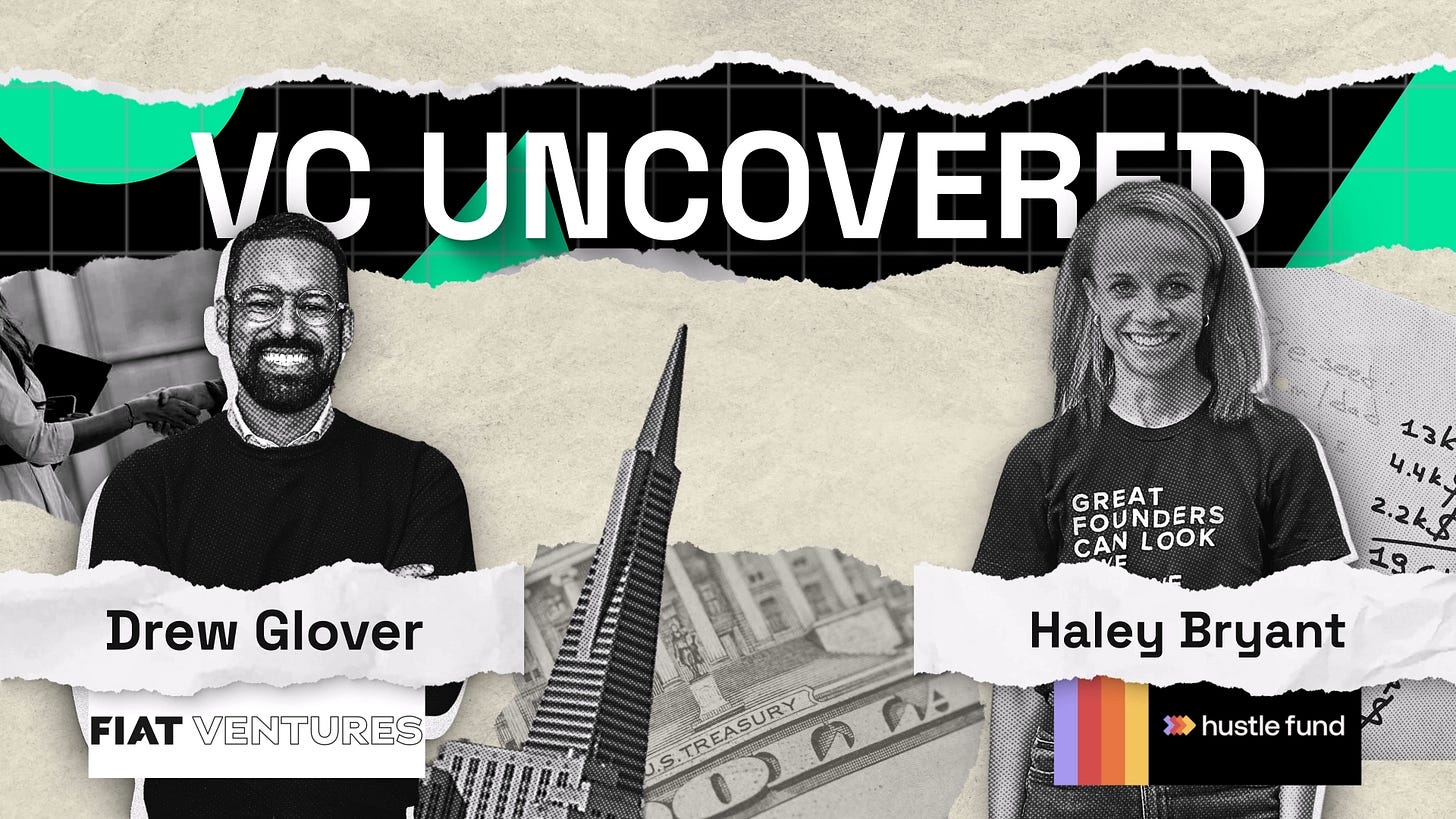
There is a moment in this conversation where Haley Bryant, partner at Hustle Fund, describes almost passing on a company because the founder openly admitted he had no moat. His argument: in a world where software rewrites itself every few months, execution velocity is the only defensible position left. He saw that as a vulnerability. Haley saw it as exactly what she invests in. "I don't agree," she told him, not with the execution velocity point, but with the idea that it wasn't a moat. Execution velocity IS the moat. "That's our thesis. I'm writing you a check."
That moment captures the core tension running through this entire conversation. The traditional frameworks for evaluating early-stage companies (domain pedigree, proprietary technology, clearly defined moats, etc…) are dissolving faster than most investors are willing to admit. What fills the gap is less tidy but, as Haley argues, more honest: a bet on how fast a team can move, adapt, and learn.
The Investor Behind the Thesis
Haley did not arrive at venture through a conventional path. Before joining Hustle Fund, she was angel investing while building a company, advising startups, and working at content agencies and early-stage technology businesses. She describes her early days in venture as a period of real discomfort, specifically around the question of whether to be a generalist or a specialist. “I don’t know if I’m good at shifting focus so much and trying to be kind of the master of none,” she recalls thinking.
What resolved that tension, at least partially, was leaning into something she had always done naturally. Haley grew up overseas, attended a tiny international school where her graduating class included students from roughly 27 countries, and spent her career sitting at every lunch table rather than committing to just one. That instinct toward broad curiosity became a professional asset. At Hustle Fund, where she has now invested across more than 60 companies, it manifests as a portfolio with a clear spike in vertical artificial intelligence, a strong position in small business infrastructure, and a growing focus on capital-intensive markets in the Washington, D.C., region, including cybersecurity, dual-use technology, and energy.
Hustle Fund, for those unfamiliar, operates at the earliest possible entry point. Haley describes it simply: they are the first check in about half of their investments. The fund is generalist in structure but increasingly deliberate in practice, with Haley carving out specific sub-theses she can defend with real pattern recognition rather than informed guessing.
Execution Velocity as the New Underwriting Framework
The most direct expression of Hustle Fund’s current investment philosophy comes from a reference by Vedika Jain at Weekend Fund on the concept of slope. A pitch deck, as Haley frames it, is just a snapshot. What a VC is actually trying to measure is the rate at which a founder moves from one point to the next. “How quickly did they get here, and how quickly will they get to and through the next thing?” she asks. That question, more than any market size slide or competitive landscape chart, is what she is trying to answer.
Roughly 30 percent of companies that receive a first check from Hustle Fund pivot after the investment, and Haley expects that number to accelerate. The implication is uncomfortable for anyone who spent years underwriting businesses on the strength of their initial product or market position: the thing you invest in today may look entirely different in 18 months, and that may actually be a sign of health rather than instability.
She has been deliberately spending more time with teams before making a decision, specifically to observe pace. One example she raises is a company heading into a major fintech conference that she has been tracking for about six weeks without yet signing paperwork. The speed at which they have updated both their product and their investor materials is itself the signal she is watching. “That’s what we’re looking for,” she says.
On the founder character side, Haley is clear about what she is not optimizing for. She wants intensity, but she also cares about emotional intelligence, customer centricity, and the ability to build relationships. Her view is that not every transaction will eventually be executed agent to agent, and the founders who can only operate in automated environments will hit walls that relationship-builders will not.
Fintech as Infrastructure, Not Category
In the conversation, Drew frames fintech not as a vertical but as the invisible operating system running underneath businesses that do not present themselves as fintech companies at all. Haley builds on that and shares her excitement around vertical AI and the idea that once a company gets embedded in a payment flow, the switching cost becomes structural. “Once you’re in those payment flows, it’s a lot harder to rip out,” she notes.
This framing has specific implications for how both investors think about moats in the current environment. Data and distribution still function as defensible positions. Team quality matters more than ever. But what Drew identifies as particularly underappreciated is the unsexy, deep-infrastructure layer of fintech, the parts of how money moves that most generalist investors would not even know to look for. His argument is that those overlooked systems, historically unscalable, are now capable of becoming high-margin, fast-growing businesses precisely because the tooling to build and distribute them has dropped in cost dramatically.
Haley adds a related concern about the era of neo-bank proliferation, where copycat models with slightly differentiated go-to-market strategies crowded every available niche. She and Drew agree that AI has accelerated that pattern across all categories, making it harder to distinguish genuinely venture-scale companies from polished imitations. Haley has started picking up small signals in founder conversations: a founder who talks only about search engine optimization without mentioning answer engine optimization, for instance, is quietly revealing how current their thinking actually is.
Building Pipelines Through Community, Not Hunting
Haley has shifted meaningfully toward community-driven sourcing over the past year. For her, this means socializing deals more openly with trusted co-investors rather than holding a position close until a term sheet is signed. “A few years ago, I wouldn’t have done that,” she admits, explaining that it used to feel risky to signal interest before committing. The logic has reversed: in a market flooded with AI-assisted companies that are easy to build but hard to evaluate, additional perspective from people she trusts reduces risk rather than creating it.
One framework she has become genuinely enthusiastic about is what she calls the consortium model, referencing an unannounced portfolio company. The concept is straightforward: early-stage founders in adjacent spaces form a deliberate network, effectively bringing a complementary ecosystem to enterprise customers rather than showing up as a single point solution. The distribution advantage this creates, particularly in complex markets where trust and relationships drive procurement decisions, is something she expects to see more founders pursue intentionally.
She ties this back to her time before venture, when she was thinking about how to connect customers within a network so they could all benefit from each other’s momentum. “Everything is a network,” she says, and it is the lens she applies to portfolio construction, talent introductions, and co-investor relationships equally.
What Comes Next for Early-Stage Investing
Haley ends the conversation in a reflective mode, acknowledging that six weeks prior, she would have described the investment climate as genuinely unsettling. The question she keeps returning to is both practical and open-ended: what happens if the pace of change accelerates 50 times faster than current projections? What does ambitious even mean in that scenario?
Her answer, at least for now, is to keep orienting toward businesses with real barriers to entry, whether those come from founder networks, proprietary data, or deeply embedded infrastructure. A recent commitment she made to a satellite communications company in D.C., focused on laser-based data transmission as an alternative to radio frequency, reflects exactly that logic. The founder brings rare industry relationships and a specific technical hire that would be nearly impossible for an outsider to replicate. The market is enormous. The why-now is visible to anyone paying attention to where compute is moving.
That combination (a team with genuine access, a problem that requires earned knowledge to even identify, and a market that is large enough to matter) is the kind of bet Haley is increasingly drawn to. The tools to build companies are now available to nearly everyone. The ability to find the right problem and move fast enough to matter remains, for the time being, a genuinely scarce resource.
This season is supported by SVB. Silicon Valley Bank, a division of First Citizens Bank. Member FDIC. SVB is a trusted collaborator for the founders pushing boundaries and the investors who back them. We’re proud to have them as our sponsor. Please note, this podcast is for informational purposes and is not investment, financial, or legal advice. The views expressed are those of the speakers and do not necessarily reflect the position of SVB.
More from Uncovered Media





Read the full transcript
0:00 Moats almost aren't a thing anymore, at least in software, and my belief is that the only moat is execution velocity. Like a duck is a snapshot, right? Like we see a founder at a certain point in time, and so much of what we're trying to evaluate is how quickly do they get here and how quickly will they get to and through the next thing? Welcome to VC
0:17 Untovered, the series where we highlight the next generation of investors who move faster, take bigger risks, and build shoulder to shoulder with founders. I'm your host Drew Glover, co-founder of C.O.T. Growth, and general partner at C.O.T Ventures. Haley Bryant, so excited to have you here on VC Uncovered. You were one of the
0:36 very first folks that we had on the VC Uncovered newsletter, and this is morphed into a huge community, but also a podcast, and so excited to get you back on so people can hear from you, see that face, see that the energy you bring, and so I would love to just kick
0:52 things off by you just sharing a little bit more about who you are, hustle fun, just so we can get that context, and then we'll jump into things. Awesome, Drew, thanks so much for having me first on VC Uncovered. I love that you launched this and created a platform for more people to get
1:07 discovered, and just learning more about your own experience, not just breaking into venture, but like building a venture to break into venture, and the platform you build for other people is just so inspiring. So thank you for your work. Congrats on the progress, not
1:23 surprise each turn this into a huge media business, and excited to hear more about the fly wheel and how it's all going. Quickly on me, I'm Haley, I'm a partner at Hustle Fund. Hustle Fund is a super early stage fund. We still invest hilariously early in startups. First check, 50% of
1:38 the time, lots of B2B, lots of FinTech, lots of health tech. A year ago, I probably would have said B2B SaaS. I feel like that's changed a little bit, so maybe we can get into it as we get through the conversation, and I think we're also exploring more. I'm DMV-based. What's been
1:53 really cool over the last year has been kind of finding my feet in the DMV and on the East Coast specifically. We're really lucky to be awarded some capital from DC, and to spend more time finding and building with founders in DC, which means being more connected to critical industry, so
2:08 I'm spending more time in cyber and dual use and energy, and that's been fun. So lots of change happening before BC. I was angel investing while building a company and just kind of learning as I went, doing some advising. I worked with a couple of startups before that content
2:23 agency, and yeah, it's been a whirlwind adventure, but excited to be here and to chat with you. Love it. Love it. Such great background. I'm sure you guys can hear just for how eloquent and like smooth and quick and detailed. Haley just laid that all out. She is a
2:38 natural born executor, like full-on executor. You can feel it and the energy. I want to just jump back to something you said earlier, just as you were just laying all that out. You said we invest hilariously early, and it reminds me of another podcast I had a guy, Jeff Becker, over at Antler Ventures, and he always said like, you know, without saying we
2:58 invest hilariously early, he was like, we invest in like, idea stage, and we invest in absolute, maniacal, maniac founders. And one thing I got from that podcast was the only, like you're investing so early, the only way you can underwrite a business is off the founder DNA. And so I'm
3:18 curious, like, at Hustle Fund, also in this age of AI, and just like us trying to as VCs understand, what a moat even is anymore. Like, how are you approaching investing hilar iously early?
3:34 Oh my gosh. It's such a good question. And Jeff is amazing. I love their pre-ac celerator concept that they just look for super smart, driven people, help ideate with them and build with them. And I think that's a great place to be. I would say we're not quite that
3:49 early, although we have underwritten founders only. And I feel like we're kind of doing that right now to your point. Like, moats almost aren't a thing anymore, at least in software. And we see that after we write our first check, about 30% of the time founders pivot. And I think
4:05 that that will accelerate this year and beyond, because people are going to have to change and adapt so quickly with the pace that software's changing. I almost passed on a company last year because of this exact point around the moat. And the founder was like, you know , I agree, we don't have a moat. And my belief is that the only moat is execution velocity
4:23 . And I was like, I don't agree. Like, that's our thesis. I'm writing you a check. Like, where should I wire the money? And it's been so cool to see him execute sense, building a really interesting business in physical AI that started in the fintech space and kind of expanded from there. But just the pace of change
4:38 of the product, the, the deck, the customer discovery, it's a moving target. There's a great piece from Vedica at the weekend fun where she talks about slope and this idea that VCs only see
4:53 a snapshot. Like a deck is a snapshot, right? Like we see a founder at a certain point in time. And so much of what we're trying to evaluate is how quickly do they get here and how quickly will they get to and through the next thing? Yes. I think that's the big thing that we're trying to underwrite right now. Another company you may meet next week. I have to send
5:09 you an email after this on some excited about. Maybe we'll chat about agentic commerce, but a company that's heading out there next week. We have not signed paperwork yet, but I've been talking to the team for a month and a half and just seeing how quickly they're executing on both
5:24 the business and the deck is like that. That's what we're looking for. So I am spending more time getting to know teams than I was maybe a year ago, really to get a sense of their pace. And I wouldn't say maniacal. Like, I, I love a like slightly crazy founder, but but I do, I do care deeply about
5:44 EQ about customer centricity still about people who can build great relationships because like in reality in the real world, at least not everything will be sold agent to agent, right? So I do think it matters, but I'm all in on execution. So I'm curious about you because you got to kind of
6:00 cherry pick from working with great clients and where you're sort of focusing and if that's changed in the last year or so. Yeah, well, first thing I'll say is that I will, you know, plus 100 to what you're talking about speed and execution. I am just very similar. There were a couple
6:16 different deals that I was looking at. And I was searching high and low for the moat. And of course, I was asking the founders and they were just like, our mode is speed, like no one can catch us. And then internally, on our team, I keep talking about like, I was like, I'm only only investing in Formula
6:34 One founders. Like, I need founders going 200 miles an hour. Like, that's all day, all day. Like, I am. It's so important getting from point A to point B faster than the other person. It compounds over time. And the next thing you know, like, you're you're in a different state while
6:49 they're still there, they're there at a gas station somewhere trying to figure shit out. Also, I think with speed, conviction, and in like moving in the direction of like just making fast decisions is just so important. What I'm seeing right now, it's, you know, obviously we're very much
7:06 focused in Fintech. I will tell you, is this something I was saying a long time ago? And I feel like I was saying it more from like, from marketing lingo. And now I've actually grown into the statement where the best, the best Fintech or the best generalist investor is a Fintech investor. And that's very much because
7:21 Fintech is now like the invisible operating system of all businesses. If you talk about, you know, there's a lot of businesses out there today that don't look like a F intech. But if you lift up the hood, like they're operating on all Fintech infrastructure, and that's what's driving the majority of their revenue, that's what's driving the majority of their
7:39 entire, call it, client or user customer journey. And so I get really excited because when I first started in Fintech, you know, I was looking for the next neo bank. And now I'm looking, I mean, I take, you know, three of the last nine investments we've made have been in agent to
7:56 commerce because now, you know, the what Amazon used to own in the one click purchase is now something that is universal. And right now, the way you purchase and make payments is something that is, it
8:11 can be done at light speed. And it can also be done through really interesting workflows, really interesting data. Again, I do think that there are still some moats that exist today. At least ones that you can come in with a pitch deck and still be unfair. I think data, I think, sorry
8:27 , I think data, I think distribution, obviously, team is still one. And I hate to say this, but capital is a moat today. Like if you're moving at 200 miles an hour, and you can fundraise that $ 20 million round and your competitor is still working off their first $2 million seed round, you
8:45 have won. And it's going to be very hard to catch. And so, you know, I find myself going back to where we started here, investing in speed, but also investing in the invisible infrastructure layer of
9:00 FinTech. Yeah. I want the front of your business to feel like something that to look like an F1 car, but I also want to know that when I look under the hood, all the things no one can see is this like FinTech infrastructure that is powering your business. Okay, so much
9:16 cooler than a mullet, but I love this sort of business model for the types of companies you look for. And I totally agree. I think a month ago, just everyone kind of reckoning with the SaaS apocalypse and what was happening is everyone sort of acknowledged, including the public markets was
9:33 crazy. Oh yeah, like, moats actually might not exist in like the cloud age and the open cloud age. And one of the things that I really appreciated was an analysis on, well, some of the moats are exactly what you said through around the team, around the data, around the speed and around Fin
9:49 Tech. Like, FinTech or infrastructure are deeply embedded. Once you're in those payment flows, it's a lot harder to rip out. So I do think that's interesting. And I guess there's like a little bit of validation because I've been so excited about vertical AI for so long with the belief that these businesses could get into the flow of payments. So I've been really excited there. And I
10:08 love to hear kind of how you're thinking about the founders that you're excited about right now. Yeah. Well, I think it's really interesting, right? Like there's B2B and there 's B2C,
10:23 there's B2B2C. There's lots of different types of founders. I'm really happy that we're in a place right now where I'm more excited about a founder that's just obsessed with solving a problem than what I used to look for, which is like, oh, I'm only going to invest in a
10:38 lending company if they work for J.P. Morgan Chase for 10 years and they were head of lending, right? Like, I'm looking for the founder that's obsessed with solving a problem because education is no longer a moat and the cost to build is zero. And so a lot of the folks that I'm
10:53 meeting today are, you know, they have some personal thing that happened to them where this has become a problem that they've been obsessed with solving and now they're looking to solve it. And I'm investing in those types of founders. It just so happens that like also you don't need to have crazy FinTech
11:09 background to be a really great FinTech investor, mainly because a lot of embed because the wave of embedded FinTech has passed us. Now you can embed FinTech in all these different parts of the business if you can figure out distribution and if you know how to use
11:26 proprietary and public data in really unique ways to deliver it back to the customer in ways that drive value to their business or to their life. And so I need people that are kind of masterminds of solving
11:41 thousand-piece puzzles really fast. And, you know, when I land on those type of minds and you 're solving a problem that's really exciting, I'm pretty locked in. Oh my gosh, I love so much of what you said there and it's interesting. You shared a few kind of like hot takes but glossed
11:57 over them. So the era of embedded FinTech is behind us, really interesting take. Don't disagree but hadn't thought deeply about it. And then also this piece on what you look for in a FinTech founder evolving. I think I'll have to update my mental model because the way we thought about it
12:12 historically is like FinTech is so hard, especially if you're in lending or in anything it's going to end up being to your point super capital intensive. Like Bill Gurley told us last summer that the capital battles are beginning. We've seen these mega rounds get raised. I was thinking about them
12:28 very much on like the LLM side from the huge model providers but we've seen it in every category, right? So I totally agree and I think what that creates is a raise to the bottom. If we do think more and more will be purchased by agents, my belief is you have to get to economies of scale to be
12:43 able to win which means that the margins will be really tight and you have to raise capital which is like wild in some of these spaces. So yeah, I'm like, okay, this is good. I'm rewiring my brain a little bit on the FinTech side. I super appreciate that. And then with the mission driven founders and I
13:02 know you're not saying mission driven in terms of impact necessarily but just strong ties to the mission is your sourcing process changing at all in this environment. And are you finding yourself missing in different at different stages at all? We are very much wedded to pre
13:19 -seed and seed with call it like 90% of our investments being leading sea rounds. So we're writing anywhere from $750 to $1.5 million checks. I would say for us the way we are sourcing founders has significantly
13:35 shifted and it's really moved away from let's go find something really interested in and just like just go just go game hunting. You know, like I am I very much moved it over to a community centric way of sourcing founders where my goal is to shine these really bright lights
13:56 and just try to get people to attend everything that we do. So as I told you before we're offline, like the growth our growth consultancy, we started an events as a service business because last year we were doing we did over 60 different events across across dinners and and summits and a
14:12 number of different things and every single one of those events were super thoughtfully curated. They were curated with the founders we wanted, the VCs we want to co-invest with, the topics that excite us most. And so from our from our perspective, we are big believers in building niche
14:28 communities around the topics and the things that excite us most. And we put those lights up in the sky and we see who attracts to it. But also it's this network effect, right? So obviously if me and you Haley are talking once a week like we're naturally going to be sharing
14:44 everything in our pipelines and I'm a big believer more than I ever have been. Hence like a lot of the reason why I leave this VC uncovered effort is building really strong relationships with VCs at this point in this crazy AI market where frankly we probably see five times the amount of deals we saw
15:02 five years ago because anyone can start a business if they have a crazy idea at 10 p.m. and go to bed at 1 a.m. and actually have an MVP built that like I need as many layers of of risk analysis and like validation
15:18 on a founder and a company and I need to make it so when something lands in my when a founder lands in my lap is because you know Aaron it collides sent it to Haley and then Haley sent it to Drew and I know and and Haley saying hey I just spoke to Aaron he thought it was
15:35 cool I think it's super cool it's a fintech company can I get your fintech brain on this but like these different layers like sharing cap tables with really strategic partners is more important than it's ever been I completely agree with that like completely agree with that on both the VC side and on the
15:50 founder side so when I love that you're spending more time trying to curate community and just find great founders not just by hunting but really by building relationships and I've been doing this more I picked it up from a friend a few years ago but I've been doing a
16:06 lot more recently it's just the idea of socializing deals to your point where it's like hey I'm I'm leaning in on this I would love your perspective and I think a little of years ago I wouldn't have done that because it felt a little bit too risky like oh I'm I'm saying I like this deal and like
16:21 what's Drew gonna think if I send it or you feel like you gotta get a write a term sheet first or something and then you're like now I can share at that point and you're just you're into yeah I think that there's a lot like I wrote something about the idea of your investor term which I don't think a lot of founders always consider when they go up to fundaries but what is the total number of VC
16:39 s you could go after and then like who could you win today specifically which I think is pretty important especially in competitive spaces especially in sexy spaces or spaces that feel like maybe like now is not the right time what's kind of interesting though that I've noticed and I've now
16:55 made one investment agenda commerce our teams made me five and I'm about to make another is these these markets that seem way too early that you might get negative feedback on actually the why now window arrives so much faster which comes back to your point on speed and and then thinking about like
17:10 what tools our teams using to accelerate both themselves and what is everyone else using it could accelerate a market but I think on the founder side to this point of being community first something I'm trying a lot more thoughtful about is what is my right to win a deal based on the resources that we have
17:26 at hustle fund yeah and then specifically within the portfolio that I've been lucky to spend time with where I can't say that I have like earned secrets because all founders hard work who happen to be friendly enough to be like yeah I write a sub stack every week that no
17:41 one really reads but like I am the deepest on this space and like here are 50 people I could interview you on this topic where I can get off a call and say okay here are the five investors I would definitely enter you to and here are the 10 portfolio companies that are going to be strategic but like I do think
17:56 and I actually take this from a founder who's building an agent to commerce and I won't say the name I'll send it to afterwards because you'll probably meet them at least two this week and they're about to announce their their round but um they're in a consortium and I actually think that's a really interesting model for building businesses going forward and
18:13 getting a distribution edge this idea that you you can't be out there like lone wolf you know hangover style you have to have a bunch of friends around you who are supporting what you're doing and make you seem not more important but like you can deliver more value to customers faster especially at
18:30 the enterprise level where it's like yeah you're building what looks like maybe a point solution today but there are all these other companies in the ecosystem who can make interest for you and can amplify your product and complement your product and I think we're going to see more of that
18:46 so that's what I've been thinking a lot about and build my portfolio explain I love that explain the consortium model yeah so um and I don't know this is like a thing necessarily but I just think it's fascinating so a team joined a consortium with a few other founders in
19:03 their network who are later staged than them that are building in adjacent spaces spaces so they could be complementary to almost create like a protocol for a specific industry and when you think about a lot of industries and I've seen this with an angel investment I made a long time ago
19:20 before I knew anything really about web 3 into a company called rain I think they're really powerful in this stablecoin infrastructure space in saying look like it's us and then it's our partners it's our friends that we're bringing the whole party to whatever business that we pitch
19:35 to and that's really compelling so yeah it's kind of establishing those partnerships as a way to get distribution leverage that I think will be more and more common moving forward so starting to flow that I know I love that I saw brek brek's launched this thing that I totally
19:53 stole from them they called it the day zero stack it's for just like really early stage companies it 's just like need a tech stack specifically a financial tech stack through through the idea of brek's but in my head I'm like this consortium model to me is just like every company every leader in
20:12 the market they have five other companies that with them create a really great stack for whatever space they're in and I love that idea of them being able to commercialize each other yes in a partnership like that right that's the business in itself whoever is going to start there
20:27 yeah these other businesses these other relationships and then that accelerates your go to market and that's how you win potentially so I'm thinking a lot of that's the distribution mode yes exactly exactly so anyway that was like a run-on sentence um but something else like we've talked
20:42 about throughout this conversation through is this idea of pace of execution one thing I'm curious about when you think about evaluating not just business models under the hood but companies under the hood is how you're thinking about how they're building their business in an AI first
20:57 way um and if anything's working in evaluating that or yeah well first and foremost whoever moves the fastest is the person that fails the fastest as well which I don't think we talk about a lot but like all I'm really asking for is I'm asking for founders that are willing
21:13 to fail really fucking fast really cheap really cheaply I want cheap failure like as often as possible I'll put it this way um even on my team at fiat they they all have either access to like the most expensive version of chat GPT or the most expensive version of cloud and one
21:31 thing I say is I don't care what the fuck you're doing on either of these I want to know that you are running out of credits multiple days a week yeah and I actually think that like any founder that says like we're AI optimized like like and they actually are that's what it is I I wish I could
21:49 sit here and say that like founders that are moving at the speed of light founders that are like AI optimized we've all had access to this AI world just as long as they have it's about the person that's putting in the work and like absolutely trying to like obsessively make something
22:06 better obsessively fix something and you can only do that by like testing testing testing testing yeah like I want you I want you to run out of credits every day and I know if you're doing that then you're doing your job from an AI standpoint and so to me I think a lot of folks are like oh
22:21 well they need to be this they need to be AI that sure there's like the occasional company that might have some AI engineer that was like doubled down on this shit two two decades ago but at the end of the day if in the last 36 months you've been running out of credits every single day guaranteed like
22:37 you you have that DNA that I want to invest in if it's an AI company that's trying to do AI things that's going to be a really special I think that's a great threshold like are you running out of credits like are you using the tools at your disposal to the best of your ability and just getting better every day and it turns out it's such a fun time I think like six
22:56 weeks ago if we'd have this conversation I probably would have been you know hood up like it's all me like just you know looking down because I don't know there's like so much doom and gloom out there for investors for founders like for the world and it's been a little bit a lot of it
23:12 troubling but now I'm just in this like wow this is all so exciting and I think the question I keep coming back to is what happens if slash when everything accelerates like 50 times faster than we think it is today
23:28 and that's the challenge like that's the shift you know talking about rewiring my brain to get your latest thinking on FinTech which is great because you're so in it with so many founders but it's like what is even possible like like what is ambitious enough I think
23:43 is one of the things I'm really like trying to wrap my arms around right now well I will tell you this um and this is this is me looking at it with the glass half full I'm I think about moats when it comes to me
23:58 being a VC like what gives fiat a moat I also think about what gives FinTech a moat and I actually feel like FinTech is the ultimate moat when you think about different there's a couple of them I think health care is one of them too um I think FinTech is definitely definitely emote as well I mean these
24:16 are things that exist regardless of how fast we accelerate right and that's the question I constantly ask myself so one is I'm incredibly thankful that I'm in FinTech but what I'm not thankful for is like even during the neo bank craze every single company that launches like oh
24:33 I'm a neo bank for you know the ARP community I'm a neo bank for the LGBTQ community I'm a neo bank for African Americans like I go we got a list here but it was just a copycat world for Fin Tech um and AI has
24:49 made it so easy to just like copy other models with like slightly different go- to-market strategies so the hardest part of what I'm doing right now if sifting through what is VC what is venture backable and what is not venture backable yeah the other the other one is is
25:05 and this is across all all markers is I don't believe that there will be a pre-seed seed series a series b series see like this this will die this will die and right now we're living in a market where
25:20 and I think I think hustle funds in a really good place here where what are you giving me beyond capital capital is a commodity like there's enough VC funds out there if my idea is great and I'm a strong enough founder for me to go get money like can you help me scale my
25:35 business can you introduce me to 50 different potential clients that'll get us from five to 20 million dollars in ARR like outside of that if you have a couple hundred thousand dollars you can seed your business to a growth round this is why I keep people keep
25:52 talking about I was the next billion dollar single employee company you see companies like level able going to 50 million dollars in revenue and in in two months right like you don't need VC money for that and so you know for me on on the on the FinTech side and you talk go back to this idea
26:08 of invisible FinTech there are there are specific things in FinTech that are so deep deep in FinTech like if you haven't been in FinTech for the last two decades like you'd never even know to look for this shit like I'm looking for the unsexy historically unscalable models that are now
26:29 able to become high margin fast growing businesses and and there are a slew of them that are deep in the rails of how money moves in the stablecoin space you know like I could go really deep here if we really wanted to but I find myself living in the unsexy right now because right now
26:47 those are the spaces that the highest upside for fast growth but are also the ones that frankly like I'm sorry I find it sexy the rest of the world finds it unsexy so I'm walking around and I have
27:02 x-ray vision on of like who the cool cats are sure that's really I love that that's so cool there 's there's so much I want you to write about because you have so many great kind of one line takes from the F1 founder like I just I hope that you write more uh was the the TLDR there F1
27:20 yeah it's great it's great no I I totally I love that take um love invisible FinTech and love the focus on the unsexy pieces of FinTech that you are so deep that you can find those opportunities
27:35 even even in our newsletter I mean I remember you talking about these these like modernizing legacy service businesses you know like and like to me this is a thing that a lot of people are talking about but I think what people typically run to is like the ones that have been front facing to us like
27:51 how do I go find the next like censure or McKinsey yeah but like there's so many different or what everyone's talking about right now is like whatever landscaping or HVAC but like how are you viewing this space yeah um so I
28:06 think a lot comes back to team right like betting on great teams and really ambitious teams who want to go out and just like run and take take the market I think I'm spending less time focused specifically on FinTech as you know we're fairly generalist so we're kind of
28:24 opportunistic investors with prepared minds where it's like okay I've seen five 10 20 companies in this space and I think you're the best team relative to what else I've seen so I'm comfortable making a bet here um so it's less focused on FinTech specifically I am definitely spending more time on
28:42 problems that have barriers to entry because of the skill that's needed and the network that's needed to access the customers so I just committed to a company based in DC that in the satellite
28:59 industry and they're basically trying to create like the Twilio infrastructure for satellite communications via laser because traditionally satellites create a communicate and send data to ground stations through radio frequency which is really slow really expensive not very
29:19 secure and it's bandwidth constrained at a time where if there's more and more data being created and that needs to be transmitted and like if everything goes right with AI right we hear Elon talking about what's next and all of these like data centers and space and all the AI he's sending out
29:34 into orbit um there's just going to be more and more demand there and what's interesting about the space is you cast me deeply network so the founder comes from a background at a satellite manufacturer at a ground station manufacturer has deep connections throughout the industry has found the
29:51 right phd to hire to be the the chief engineer there so I think those sorts of ideas are really interesting and potentially very high acv right in these kind of underserved but humongous markets you think about this base economy I know you would laugh at a tam slide that has a two trillion dollar
30:08 number on it but um so I was spending more time there I think um just where there's that clear barrier to entry and the why now again that's becoming more and more important to me so not trying to be trendy by any means but just thinking about okay is this a good business or is this a
30:24 good business with that clear kind of bill gross underwritten why now when yeah you know yeah why I love that and I'm telling you like I I value so much that we are focused on fintech because I
30:40 feel like if I was truly a generalist investor which I feel like your general approach is like I'm here and you invest in a gintech commerce fintech and then like you know like orbital technology and so like that gives me a ton of anxiety I also in this this this might be a hot take and
30:59 and and I want you to obviously you will combat this I feel like the future of venture capital is a hyper specialized fund and I'm curious why that's wrong I don't know that I would disagree with
31:18 you necessarily I also don't know that the future of venture capital is like venture capitalist I definitely see more and more happening in algorithmic investing although I agree no at the stage that we both like to invest I think it's a lot harder right like the algorithm we are connected to are like
31:34 come back once there's revenue to underwrite right like then it becomes easier to do via algorithms I guess what I'll say is it gave me a lot of anxiety like one of the biggest conversations I had in my early days in venture and I'm still in my early days let's be honest but my first
31:49 couple of years was like I don't know if I want to be I don't know what it's like I don't know if I'm good at shifting focus so much and trying to be kind of like the master of none I don't I just I don't know but I guess like throughout my entire life I just loved meeting really interesting people
32:04 like I grew up overseas I went to a tiny international school I think my graduating class had people from like 27 different countries and I think back to the friends I still keep in touch with from there and they were at every lunch table do you know what I mean I wasn't like I'm sitting with this group of people every day it was like oh like I'm gonna sit
32:21 with the IB students today I'm gonna sit with my friends that I go out with on the weekend today I'm gonna sit with the Americans tomorrow and it was just kind of like you know I just always mixed it up and I think I've enjoyed that throughout my professional career too not being overly focused on any one group and just finding ways to connect dot so what I feel lucky about now is being in a
32:38 place where it's like okay I've invested in over 60 companies at hustle fund I have a very clear spike on vertical yeah I know like I'm like so pumped um very clear spike on vertical AI I have this very clear spike on like small business and then this idea of market expanders that are rebuilding
32:55 the middle class so think about fortify education that's lending as a service for trade schools to help more people underwritten to get into the trades at a time when everyone's talking about it 's case shape what I mean right and I wouldn't say I would regard for oh my god they're
33:10 amazing I'm like getting goosebumps like I'm gonna I'll send you sending the deal um you know whatever the next raise uh coral care which has raised up $13 million series A to help practitioners in speech therapy and occupational therapy help kids with developmental delays and I think like those are
33:25 two clear sort of areas that I focused on and then I still really like I'm a consumer of tech I got into tech because I was really excited about Steve Jobs and Apple and the iPhone and I love of course the play and so I still angel and best and there are things that I
33:41 can't underwrite from a fund perspective but there are definitely things that um are super scalable and I'm really excited about in the consumer space so while I'm not a specialist and while I largely grew the hyper specialized idea I think this kind of comes back to the beginning of the
33:56 conversation on pace and yeah the reason I came to hustle fund was this idea of getting a lot of experience quickly and bringing this network lens that I built while I was at animals and thinking about how we connected our hundreds of customers to each other to help them get leveraged help them
34:13 all rise together going back to this consortium model um everything is a network so that's what I 'm thinking a lot about I think strategically and building my portfolio supporting founders um and that that's between companies that's with talent that's with angel investors VCs and uh it's all
34:30 starting to kind of gel which is cool yeah no it's um yeah I one thing I'm always admired about you is like your energy and like what you bring like there was something that really was really hard for me when I when I started when I started as a VC um which I think probably just came natural to
34:47 you is I grew up being really interested in what interested in me and one thing I learned in VC is I just need to be interested I just need to have like pure universal diversified curiosity and
35:06 sometimes early on if it didn't interest me I'd be like oh this but I'm a party of one right and I can tell like I can tell you even how you grew up in everything like you were just curious like pure curiosity and that is like such a valuable tool probably the most valuable tool as a VC for you to
35:23 be able to walk into any room and be like all right like unbiased I'm leaning in I just want to learn see what special about you so um shout out to you for being you that means a lot thank you so much I just have my dad who I have somewhere on my bookshelf the Zen Mind Beginners Mind
35:38 still is like one of my all-time favorite books I I've been like sending people books lately and part of that repeat that again what is it called oh it's called Zen Mind Beginners Mind and it's like core concepts in in Zen philosophy and um I go back and reread it and listen to it all the time
35:56 but it's really all about having that beginner's mind and curiosity which I don't think you could ever master but it's a cool idea just because to your point like there's so many businesses that would not have succeeded a few years ago that could succeed now that's right so I love that you're so curious about
36:11 a specific thing and the opportunity to learn from you and um and then just curious people in general I I've been sending books out shout out to Peter at Stellation Capital because I chatted with him recently and he mentioned he really cares about people's
36:26 curiosity and their reading habits and I'm like oh yeah I gotta I gotta get back to the the book game and talking to people about books so anyway there's all this audible count is reading yes is this a hot take okay good have you listened I feel so guilty I feel so guilty when I say I read
36:42 a book and I'm like what but it was audible like people are people might not exist for our kids so like good like I'm glad you're still you're you're listening guys if you're getting the information I'm an avid reader then what what's something you've read or listened to recently you 've liked oh dude
36:58 oh my goodness one second I'm pulling out my audible right now because I got a way to see the receipts let's go yeah um so right now I'm reading um 1929 it's it's about the the crash of 1929 and it's basically just going through like all like the robber barons that like
37:15 were that were affected like the people that were moving markets the people that were like like the amount of it was just a crazy world the amount of capitalist that in these moments with the like literally like JP Morgan and all these people like into a room and be like we're gonna bail
37:32 like no banks banks weren't strong enough at that point we are going to bail out the market it's crazy and so it's like this behind door action pack it's gonna find my phone so I can add it to my book or I love that all right sounds very stressful but it's good I read a lot of Tiger
37:50 Woods books because I just love the way he's he's wired but I just read the Tiger Slam which is great the right of a lifetime by Bob Iger who was you know just like he literally started out as like a marketing specialist at uh at I think ABC and then you know became the CEO of Disney um
38:10 through acquisition the other one I have a lot but I'll end it with a unreasonable hospitality which I probably like twice a year at this point I just sometimes let me just listen to like a chapter of unreasonable hospitality it's so good oh my gosh that looks so good uh I love all these
38:26 recommendations the ride of the lifetime has been on my list for a while so I have to read that now it's good it's good I'm gonna add the the 1929 book that sounds awesome thank you for the recommendations yeah of course of course good so we're at the end here I always end this with a couple speed
38:41 questions and then we're done cool yeah um first and foremost tell the world what you do as a as like a side gig because I think I love it and with that what is your wellness hack for the world to hear okay I teach souls I go classes for fun and for community time and I love it I'm gonna teach
38:59 one tonight at 6.30 I teach it just a couple a week now um but it's super fun and wellness hack is n apping like the 9 minute nap is the go to I took I literally have taken two naps today because I got up at like 3 a.m. to code and I am so grateful for the 9 minute nap so I think we're gonna have a
39:18 renaissance moment with napping that's my bet I mean yeah if it didn't take me 20 minutes to go to go to sleep I would really love 9 minute okay we got to get into nap coaching that's the next business line that is yeah exactly okay um what's your biggest AI hack right now biggest AI
39:37 hack is definitely whisper like just being able to talk to the computer is it's just I mean it's like so boring but um that's been really huge and then all of the like self improving skills so e-vow is really hot right now um but having agents learn and then I think someone released like
39:55 a hyper agent's framework on X maybe last week so that agents can learn and then continue to improve their skills that's been really really cool love that love that if you could be the best athlete for the next decade in any sport what sport are you choosing wow that's so hard can
40:14 people answer that quickly some some have I've only asked this you're the second person I've asked this one too but I'm on it right now I mean I think like running's an easy one because it seems like maybe achievable like not achievable but but something I've always enjoyed just have never been
40:30 great at interesting interesting you don't you don't you you're not chasing fame or anything huh no it's just for the love of the sport definitely I've the last I spoke to bookey it over over an anthemis uh last one and we both said tennis I grew up a huge tennis fan in
40:47 playing tennis but also just there's just like uh there's an elegance to the sport I just I would love to win Wimbledon and my tennis whites on grass like there's no I can happen who knows who knows
41:02 you got time yeah there you go okay last question can't be in or actually your your general's investor you got you have to be the CEO of a fortune 500 company what company are you the CEO of oh my gosh
41:19 like no I would not want to be the CEO of a fortune 500 company I'm sorry I'm not even going to answer that question what no like I have no I have no interest in doing okay how about this the company one thing right it's like the Paul Jarvis framework it's like do people want to go politics of sorry that's not a good answer I'm good I'm no no it's good it's
41:38 good we can we can go back to the drawing board it's not a big deal it's not a big deal if um if you had to start a business let's say 10 10 million dollars in in funding guaranteed you had to start a business in a vertical what vertical you starting it in um I move yikes these are really
41:59 good and really hard questions I probably would do something in education which I know is terrible like a terrible idea but I think I think a lot of systems are going to be really way too slow to adapt to what's coming and there's an opportunity to build something there so I would
42:17 agree I would agree my daughter Coco at my wife's like oh we got to say for college I was like dude she won't be going across who knows rightly okay wow there there's something 529 for the record has expanded quite a bit because they understand this is coming so still and still put money in your
42:35 529 definitely not not quite that kind of advice don't worry yeah yeah but uh but uh but uh but yeah no that that's a good one um I love it. Haley, Haley with hustle fund thank you so much for joining this is always a pleasure I can't wait to hang out more and uh I appreciate your time. Thanks
42:50 Drew have a good one. Thank you. This season is supported by Silicon Valley Bank. For decades Silicon Valley Bank has been a true partner to the innovation economy helping both founders and funders grow. Silicon Valley Bank a division of First Citizens Bank member FDIC. Please note this
43:10 podcast is for informational purposes and not investment financial or legal advice. The views expressed are those of the speakers and do not necessarily reflect the position of Silicon Valley Bank
43:30 .
Transcript generated automatically; it may contain errors.
Originally published on VC Uncovered · By Drew Glover