Sabrina Bainbridge
Spring Point Partners
From STEM to Social Justice: Using the "Whole Toolkit" to Fix Broken Systems
In this Episode
You’ll learn about Sabrina’s personal journey from a STEM background to impact investing, a path shaped by her experiences in Teach for America and at Oxford. She details her core philosophy that economic systems must be fixed to allow communities to thrive and that those with lived experience are best equipped to solve complex problems. You’ll get an inside look at Spring Point Partners’ “whole toolkit” approach, which combines grants and flexible, risk-tolerant investments to advance social justice, and learn how the firm navigates the tension between social impact and financial returns. Finally, she shares her candid perspective on AI, noting her concerns about its effect on startup defensibility and the mentorship pipeline, and provides actionable advice for General Partners on managing long LP timelines.
Key Quotes
“Talent is distributed evenly, but opportunity is not.”
“People who have the lived experience are going to be the best people to solve that problem.”
“I think I always understood at an innate level the power that financial access, inclusion, or education really provides.”
“Your impact should match your return profile.”
“I like to operate with the idea that honesty is kindness.”
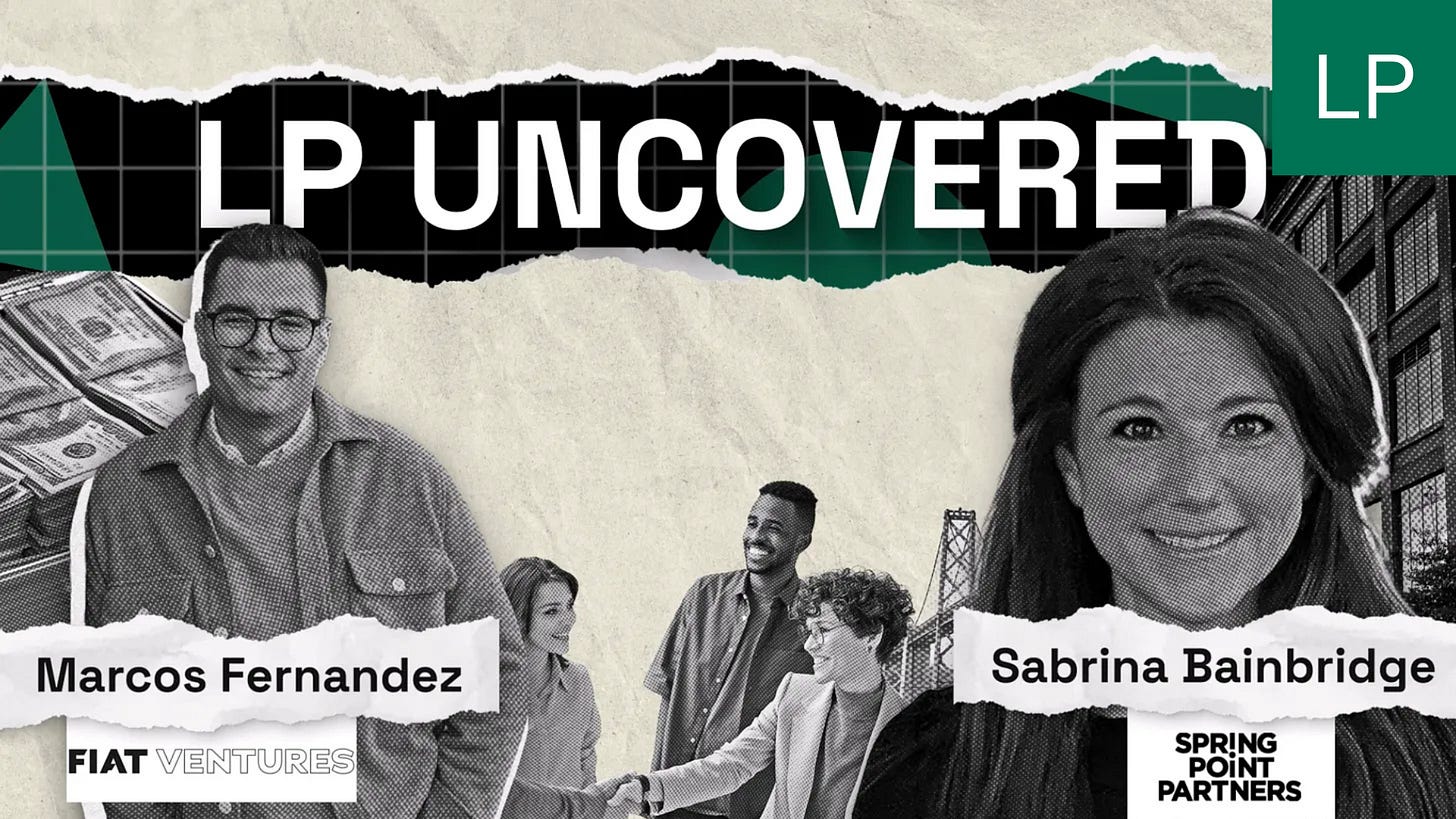
About Spring Point Partners
Spring Point Partners is a social impact organization based in Philadelphia dedicated to fostering community-driven change and advancing social justice. The firm takes a collaborative approach by investing in transformative leaders and solutions, using grant-making, impact investing, and organizational development to support its partners. Guided by a commitment to equity, Spring Point focuses on key areas including leadership, economic justice, youth development, and animal welfare.
What led you to the intersection of “doing good” and impact investing?
I grew up in Oklahoma City, and I think that really shaped my worldview. Oklahoma’s economy is pretty one-note; it’s really focused on one major industry, which is energy, oil and gas. That has a lot of pros and cons for the state; it’s kind of a boom-and-bust economy.
When I went to undergrad at Oklahoma State, I was a STEM major. I always actually thought I was going to be in STEM, but through that degree program, I started to notice all these trends about my home state around the lack of educational access, in particular for people of color and for women in STEM fields.
I became really passionate about “How do we shift this? How do we fix this? How do we get more representation in science and in industries that I think are going to be really high-paying jobs in the future?” That led me to TFA (Teach for America) and then long-term into business school and the work that I do now.
At the end of the day, money is a power and a tool. How do we better leverage and flow these capital systems to make sure that we’re maximizing value for the most people?
What did your time with Teach for America (TFA) teach you?
I taught high school science; biology, chemistry, and physics. Teach for America really opened my eyes in a lot of ways, both to the difficulties and complexities of education, but also to the fact that this is a system that fundamentally needs a lot of shifts and changes.
As a 22-year-old with a lot of hubris, I thought: “If we have better access to education, we can fix so many things.” I still firmly believe that, but I quickly realized that we need to fix economic systems around our communities if we really want students to survive and thrive.
In terms of professional skill sets, I gained so many. High schoolers are wonderful, really harsh people. Being heckled for years by 16-year-olds in front of them every single day really gives you a lot of confidence to get up on the stage or to do podcast interviews, knowing that it’s going to be a slightly friendlier audience.
I also learned so much about stakeholder engagement and how to meet people where they are. With our work at Spring Point, we sit at the intersection of so many different tables. We’re meeting with GPs, we’re meeting with other LPs, we’re meeting with folks who maybe have an impact mandate, and people who couldn’t care less but want to see outsized returns. I learned a lot about adaptability and how to tailor messages through that work.
What gave you the vision that long-term sustainability is also about the economics behind it?
I think it actually started a lot earlier than even my TFA experience. My mom has been in commercial banking my entire life, and she was a really big role model for me. I grew up in a very finance-forward household. I didn’t realize that it was abnormal that I had a fake checkbook that I was balancing while growing up.
I think I always understood at an innate level the power that financial access, inclusion, or education really provides.
I started to look at economic opportunities, economic growth, and economic mobility. I quickly realized that money needs to be different. When I take off the impact lenses, the way money flows is capital-inefficient. That creates instability in our economy; we see booms and busts constantly happening. Are there ways that we can create better systems and processes to make financial markets a little bit more stable?
When I left educational work, I questioned what my role was: “What is authentic for me?” At the same time, I was consulting with a lot of educational and tech startups and I realized I like startups, “there’s some interesting stuff happening here.”
That led me to the path of business school.
How did getting your MBA at Oxford shape your trajectory, and where did you land afterward?
I chose that program specifically and intentionally. I wanted to go abroad. I had spent the majority of my life in the middle of the country. I wanted to expand my worldview and I wanted to understand global systems and global markets. Oxford was a great program for that, and they also had an interesting investment program for career pivoters like myself.
It was fantastic. There’s a difference when you go to grad school and you’re actively taking yourself away from earning a salary. I said to myself: “Okay, we need to maximize the return on this investment.”
For the Oxford MBA, you sit in the Saïd Business School, but you get access to the broader Oxford University. Oxford and Cambridge are set up like Harry Potter, where you have your program but then you have your college or your house. I was sitting at dinner with people who are researching subatomic particles and, as a science nerd, I was really excited to get to have those conversations. We had people from 64 countries in my program, so I gained a global perspective that challenged my worldview in a productive and healthy way.
That led me to post-MBA. I ended up working at Plan International. I had a dual mandate. I was setting up an in-depth pilot in Kenya where we were running an accelerator and incubator and doing direct venture-style investing. Then I also acted as an international consultant across the federation. We had an endowment we were setting up in Europe, a debt bond facility in India, and we were doing direct social entrepreneurship work in Southeast Asia as well as Latin America. It was an interesting experience to get to try different financial tools in different geographies.
Was there any pattern recognition from working across those different regions?
The biggest takeaway I had is that people who have the lived experience are going to be the best people to solve that problem. If you’re an entrepreneur and you have experienced that pain point, you’re going to have the grit and the tenacity as well as the actual experience to be able to solve that problem.
It is so hard to launch a company, so when I see founders or GPs that are “bandwagoning” onto something they know is an industry trend, my assumption is they’re not going to have the grit or the tenacity, and honestly, the insights to do it best. They’re not going to hit product-market fit quickly enough.
I think that rings true in any geography that I’ve worked in, and I definitely see it here in the United States, especially as we’re seeing this proliferation of new technology as AI hits.
How did that global footprint shift into your current work at Spring Point Partners?
It’s been an absolute joy. Spring Point has been set up for flexibility, learning, and to develop systems and structures in order for markets to survive and flourish. It’s been the privilege of my career to work with so many thoughtful, wonderful, amazing people, both on our direct side and on our fund manager side.
Everything seems so linear and perfect, but I also want to flag for people who are maybe going through career switches that there are a lot of vulnerable moments that go into that. When you’re on the other side, you see: “I went to business school and I’ve got the job I always wanted to have.” But there were a lot of nights at home where you question: “Can I do this? Am I good enough? Do I have the right skill sets?”
I don’t know if there’s a perfect script other than continuously believing in and betting on yourself. You have to do the hard work. Don’t shy away from it. For example: I needed to learn accounting. Continue to bet on yourself, figure out what your strengths are, figure out what your deficits are, and continue to grind.
Tell us more about Spring Point Partners
Spring Point was founded in 2017. We’re a Philadelphia-based social justice organization. We do grants and investments. We have a really robust grants side of the house and that sits alongside and complements our investment strategy.
Our core mandate is around economic justice and creating future growth markets that are more stable and altering perceived risk. We have a lot of tools at our disposal to do that. What I love about the way we are set up is we have a whole toolkit. For a lot of folks, they only have a hammer and if you have a hammer, the only problems you can solve are related to nails. When you have a screwdriver and a saw, there are so many other things that you can do.
We’re really focused on how we use this flexibility, this agility, this risk-tolerant capital to create a more inclusive economy.
What programs do you have in place for emerging managers?
This is something we’ve done a lot in collaboration with a bunch of other LPs as well as our GPs. Obviously, we have our core investment strategy where we mostly act as a limited partner across various asset classes, and then we have a pretty robust directs portfolio.
We also offer potential grants. We’ve offered grants for research and development for new fund structures to be developed. Innovative financial structures that we see as “ecosystem building” plays that actually allow for the market to be more efficient.
We also have done recoverable grants for smaller businesses that can’t access traditional bank lending. For example, if they don’t have the collateral.
Then, we are constantly thinking about technical assistance and building out that support offering around both GPs and LPs: how do we better upskill and educate and create community between both parties?
Our investment thesis is looking for ways to create economic opportunity and economic justice. We have an employee ownership strategy that looks at how we can challenge who owns parts of companies. Most of our checks out the door right now are focused on our emerging manager program, where we’re looking at ways that we can help to back some of the best and brightest in their asset class. That strategy is sector- and asset-class-agnostic, but I would say it’s heavily weighted in early-stage venture.
How do you incorporate your vision and values into investment decisions?
This is, I think, one of the biggest tensions in impact investing. The way I like to say it, and the way we think about it here is: Your impact should match your return profile.
For instance, for our emerging manager program, if those aren’t top performers, if you are not a top-decile fund, then the impact strategy actually doesn’t work. For those funds, I want to see you returning at the same rate as, if not higher than, your peers. I want to see the best in your vintage. We hold you accountable to that.
I want a shrewd steward of capital who’s the best and brightest in their asset class.
We don’t require our fund managers to be impact-focused. I’m looking for people whose judgment I can trust, who will outperform and who will operate in a way that I feel like is values-aligned to our ethos here.
Now, if we’re giving a recoverable grant to a small business, that’s a very different return profile. I’ve priced in what we call the “impact premium” into that return profile. It’s never a situation where we feel like there’s tension in the return expectations, financial or impact. We just are making sure that they’re in alignment.
What other assets do you invest in, and how do you think about balancing the venture category?
It’s a tough market right now, and I really feel for GPs that are in pursuit of the ever-elusive liquidity and DPI.
I really appreciate that the ethos here is really long-term. We’ve been set up for that, we were budgeted for that, which is such a gift. The best way to win is to have steady deployment. So we’re not pulling back. We want to continue to double down in this space. We’re continuing to actively deploy in venture and emerging managers. These are going to be some of the best vintages that we’re going to see. Pricing discipline has come back, founders are being really cash efficient. If you can be patient in this moment.
In terms of our broader assets, we have quite a bit in real assets for a few of our different strategies: We have some water, some farmland, some forestry, as well as later-stage growth equity and some debt.
On the LP side, we look at our portfolio and ask: “How do you balance some of these things out? How do you allow for a potentially higher-risk, higher-return asset class to be balanced out by some of these others?”
How are you looking at AI and your investment exposure to that category?
I have so much angst, good and bad, about AI. I read about it, I get excited, and then I read about it again, and I get terrified. There’s just so much hype, and it’s so hard right now to know what is real, what is not.
I’m a huge history dork, so I’ve also been looking at some of the quotes whenever we go through these big technological advances. In the past economists have said: “Well, now that we have electricity, no one’s ever going to have to work again.” It’s about knowing and acknowledging that this is revolutionary. What is real and what is not real?
When I put on my investor hat, how do you even create anything that’s defensible right now? With the level of development and shift and change, defensible moats are really challenging. I really feel for founders, I really feel for GPs. It’s complicated.
I think some of the initial buzz is starting to wear down around things that I don’t think were actually super value-add, but were really cool. I think we’re starting to see, potentially, an over-leveraging of technology in ways that are pushing people to more in-person interaction. I heard somebody say that a year and a half ago and I thought, “Oh, I don’t know if that’s true.” Now I am considering, “Yeah, that’s actually true.”
How do you see AI impacting talent and the future workforce?
Internally, I would say we’re not a super technology-first adopter. We are leveraging it for things such as reporting, internal processes or automations but nothing too crazy yet. I do see and hear some of the stuff our fund managers are doing and it is so exciting and so fascinating.
But for talent, I get really worried.
For folks that are more established, for senior, mid-career, senior leadership, it’s awesome. You can get so much done. But so much of that is to the detriment of young professionals or interns. I worry about the lack of internships or mentorship opportunities because it’s a lot easier to tell a chatbot how to do “X” versus managing somebody who’s in their first job out of college. I worry about that on-ramp and the potential gap that it’s going to cause us in five to ten years.
What skills should young professionals focus on in the age of AI?
Make sure you don’t outsource your critical thinking. I can’t imagine going to college with this at my fingertips. That would have been so tempting. Every time you’re thinking or problem-solving or putting yourself through the gauntlet that is education, you’re forging new neural pathways and your brain is getting better and more efficient. Do the hard work. It’s going to be really tempting to have ChatGPT write your essay, but make sure you’re not shortchanging yourself.
Make sure you’re pushing yourself on the social side of things. There is going to be a world where a lot of the “quant of finance” will be quicker and easier for ChatGPT to adopt than some of the interpersonal relationship and trust-building pieces that can only happen human-to-human.
Any final perspective or advice you want to leave people with?
I would ask, especially for all the GPs and LPs: How are you making sure that you’re operating in ways that use the most people-centered approach and with the most grace and transparency and candor?
In this moment when we’re going through a crazy market cycle, how do we stay grounded in respect and communication with each other? How do we keep people at the center of financial markets when it’s easy to look at numbers? We must think through to the people behind them.
What’s your advice for GPs on managing LP timelines and communication?
I really have a lot of empathy for the GPs right now. It’s a really tough market. The biggest thing is: Be okay with LP timelines. They’re longer than yours. LP timelines are six months, at a minimum.
I know right now it’s crunch time. It’s the end of the year, and bombarding or trying to get too much time on LPs’ calendars can be detrimental. Respect that some of the conversations you’re having right now probably will not come to fruition until Q1 or Q2.
This is tough because it’s LP-dependent. For me, I love touching base when something material has happened, one way or the other. If there was a specific milestone I asked you to hit, hit it before we talk again. Because we’ve all sat on those Zooms where nothing material has changed since our last conversation.
This is also something for both LPs and GPs to think about: “How do we create better communication and alignment around whether people are actually interested or not interested?”
I like to operate with the idea that honesty is kindness.
Is there an example of a GP that you feel really got it right?
Anyone that we’ve invested in.
The ones that are doing it really well are finding ways to leverage their co-investor network as well as their LPs that they might have relationships with already. The more you can get people talking about you when you’re not in the room, the better.
One of my first screens that I do, if I’m looking at a manager, is back-channeling with my GPs. They’re my most trusted advisors in the space. I learn so much from them.
Then, give yourself the time to build the relationship. It does take a while. You’re selling trust. It takes a while. We’re hoping when we cut a check, we will be with you for multiple funds. That’s a multi-decade relationship. I ask myself: “Is this somebody I want to be in business with for 20-plus years?”
How can folks get in touch with you?
I’m on LinkedIn and I actually do check it, so feel free to ping me there. I am doing many of the Emerging Manager LPGP conferences. I will be at Raise, Grosvenor, EMC, so all of the above. I would love to see you there.
More by Uncovered Media


Read the full transcript
0:00 Am I good enough? Do I have the right skill sets? Can I do the things? Um, so I would say like, I don't know if there's like a perfect script other than just like continuously believe and bet on yourself. And do the hard work. Don't shy away from it, because there are things you really need to learn. Like, I needed to learn accounting.
0:16 Like, that was like something I really had to learn. And it was, you know, like I had to do it. But like, don't, don't feel like just because you hear the polished, perfect, resume style version of people at cocktail parties or things that like you're less than is just continue to bet on yourself. Figure out what your strengths are. Figure out what your deficits are and just
0:32 continue to grind. In the world of venture capital, where the conversations often focus on either the megaphones or these mega unicorn companies, there's a huge piece to the equation that's missing. And that's the limited partners in the allocators that provide a lot of the
0:49 capital to this ecosystem. And I'm your host, Marcos Fernandez, to provide a little bit of visibility to this ecosystem. I'm fortunate to be one of the co-founders and the managing partner Fiat Ventures and emerging manager. And on LPN covered, we want to give a voice to these crucial investors. The goal of this is to help you get a better sense of the people who are
1:05 leading this innovative industry. So on this episode of LPN covered, we've got a really special guest for you today, Sabrina Bainbridge. She's from Springpoint Partners and she's one of the directors of the Impact Investing at this organization. And Sabrina has a really unique background. She doesn't come from traditional,
1:21 you know, allocating her all career. She actually started and teach for America, which gave her a lot of visibility to how the world works. And from that, did a lot of impact investing in actual venture, investing and incubating across a global setting. We're super lucky to have Sabrina on the show and I'm excited for you to learn
1:37 a ton because I certainly did. All right, let's get started. All right, today on LPN covered, we're so grateful and lucky to have Sabrina Bainbridge with us from Springpoint Partners. Sabrina, thanks so much for joining us. Thanks so much for having Marcos. Really excited to talk with you today.
1:53 Yeah, absolutely. And I know the listeners, they just got a background of who you are and your past experiences and efforts. But I think one trend that we saw really replicate itself across your career is just this intersection of doing good, doing well and impact investing.
2:08 So I'm curious of like what in your life or your foundations really led you to this path and, you know, maybe some insights over time of how you've continued to scale up your investing in this space. Yeah, definitely. No, really excited to chat with you today. And yeah, learning a little bit more about your work in you as well.
2:25 So I grew up in Oklahoma and I think that really shaped my worldview quite a bit. So I grew up in Oklahoma City, which is a pretty urban area, all things considered for the state. But just really noticed that Oklahoma's economy is pretty one note.
2:40 It's really focused on kind of one major industry, which is energy, oil and gas . And that has a lot of pros and cons for the state, kind of a boom and bust economy. Part of which my parents were involved in. And then when I went to undergrad at Oklahoma State, I was a STEM major and a
2:55 huge science dork. I always actually thought I was going to be in STEM. I was a physiology and microbiology undergrad and was just really passionate about what science can offer for the world. And through that degree program, though, I started to notice and started to figure out all these trends about my home state around the lack of educational
3:11 access in particular for people of color and for women and STEM fields. And just got really passionate around like, how do we shift this? How do we fix this? How do we get more representation in science and in industries that I think are going to be really high paying jobs in the future?
3:26 And that's what led me to TFA and then long term into business school and the work that I do now. And I'm still really passionate around that. How do we create better systems and processes to get more brains at the table to solve the world's biggest problems? And as much as I love anything that has to do with math, and I think that's
3:43 part of what attracted me to finance and investments in particular. But at the end of the day, money is a power and is a power and a tool, right? And how do we better leverage and flow these capital systems to make sure that we're maximizing value for the most people? Yeah, definitely. And so many things I love there that we'll kind of get to on the finance side.
4:01 But before jumping in for anyone who's unfamiliar, talk about TFA is teach for America. It's something that you jumped into. So kind of take me through your thought process of, you know, growing up in Oklahoma and seeing this, getting a STEM education and then kind of shifting over to teach for America. What did you teach? Where were you teaching it?
4:17 And what did that kind of really inspire you with and teach you about what you do today? Yeah, I taught high school science. So I kind of ran the gamut biology, chemistry, physics, and that's what I was studying.
4:32 So I was like, oh, this is, you know, what I was actually really passionate about. I never thought I would be an educator long term and teach for America. Actually, like really opened my eyes in a lot of ways, both to the difficulties of complexities of education, but also just how this is a system that fundamentally needs a lot of shifts and changes.
4:49 And I think as a 22 year old with a lot of hubris, I was like, oh, we just like have better access to education. We can fix so many things. And I still firmly believe that, but quickly realized that we need to fix economic systems around our communities. If we really want students to survive and thrive. So that was a big, a big learning from that.
5:05 I would say, you know, in terms of professional skill sets that I gave from that. So, so many high schoolers. Are wonderful, really harsh people. And so much of my job now is stakeholder management and public speaking and engaging and being heckled for years by 16 year olds in front of every single
5:24 day really gives you a lot of confidence to get up on the stage or to do podcast interviews. Knowing that it's going to be slightly friendlier audience than a room of 40 or 30 16 year olds who are wonderful, but have a lot of opinions. And yeah, so I would say like, you know, the public speaking piece, the, and then also just really thinking about stakeholder engagement and how to meet
5:41 people where they're at, you know, especially with our work at spring point. We said at the intersection of so many different tables, right? So we're at meeting with GPs or meeting with other LPs. We're meeting with folks who maybe have an impact mandate, people who could care less, but want to see outsized returns and so much of those different
5:57 motivations and learning goals come to every single conversation we have. And I learned a lot about adaptability and how to tailor messages through that work and teaching students. I love that even even hearing the word high school makes me a little bit anxious, like my palms are sweaty a little bit and I was like, you know, I was
6:13 a math and science dork. I studied STEM and studied that in college. And yeah, hearing hearing that you did that is props to you. I don't know if I'd ever go back to 16 year old, but myself because of that, but I'm sure it thought you a lot of grit and how to get in front of any audience.
6:28 Definitely. Yeah, I love that. And you mentioned spring point, but even before we kind of jump into what you're doing today and in the broader missions that, you know, for me personally, there was a time like you where I was like, no, I'm doing things that are not finance at least at that moment.
6:43 I did not put together the connection between sustainable solutions and finance and economics, you know, kind of focus at least for my own journey was was state local government cap and trade systems and implementation around that sustainable programs. And at some point, I realized, you know what, the rubber meets the road where
6:59 there's sustainability around economic structures and systems and that you need to make sure that there's long term viability around that. It sounds like you got some of that early insights from Teach for America, but was there anything else that you did after that that really gave you that that vision of, you know, long term sustainability is not just about the model, but
7:16 it's also about the method and the economics behind that. Yeah, what a great question. I didn't know that about your background Marcos. It's always so fun. I feel like you learned so much about folks in these conversations. So thank you for sharing. You know, I think it actually started a lot younger than even my TFA experience . My mom has been in commercial banking my entire life and she was a really big
7:34 role model for me and I grew up in a very finance forward household. Like I didn't realize that it was abnormal that I had a fake checkbook that I was balancing since infancy. So I think I always kind of understood at an innate level, the power that at least it was more personal finance education, but just the power that financial
7:52 , I don't know what the word is, financial access, inclusion or education really provides to folks. And so I think that was something that was innate and ingrained inside of me from a pretty young age. And then as I, you know, started to intern to my career and started looking at, you know, economic opportunities, economic growth and economic mobility really
8:09 quickly realized that actually money needs to be different. Like right now, if you even, you know, when I take off impact lenses, like it's actually just really capital inefficient the way money flows right now. And that's actually creates instability in our economy. I think we see booms and bus constantly happening.
8:25 And are there ways that we can actually just create better to your point, better systems and processes to actually make financial markets a little bit more stable? And that's where I think a lot of our work comes in. So I, I don't know if there was one major, aha moment, but when I left educational work, I was really questioning about like, what is my role?
8:43 What is authentic for me and what do I want to do? And at the same point in time, I was working and consulting with a lot of educational tech startups at the time. I'm just kind of at a hawk and was like, Oh, okay. Yeah, like startups, there's some interesting stuff happening here. And that led me to the path of business school.
8:59 And then after that, you know, some roles before coming to spring point, but I 've kind of kept that same thread. Yeah. And so saw that you went to Oxford for your MBA, which, which is a really incredible program. I'm curious, how did that shape, you know, your trajectory and what you thought ? Did you go in with the thesis and did you come out on the other side
9:14 differently and maybe walk the listeners through? Where did you land afterwards? And how did that progress to where you are today? Yeah, I picked that program very specifically and intentionally. I wanted to go abroad. I have spent the majority of my life at that point in, I don't know, people,
9:30 there's a lot of debate on this, like what region Oklahoma is in. But let's just for the sake of the argument, middle of the country. I don't know if we're going to go southern or midwest, or it's contentious, depending on who you talk to. But, you know, it's been my entire life, middle of the country. I really wanted to expand my worldview and I wanted to better understand global
9:47 systems and global markets. And Oxford was a great program for that. And they also had a really interesting investment program and extracurriculars for career pivotters like myself. So I felt like the infrastructure was there to allow me to feel confident and comfortable in the classroom. And it was fantastic. I didn't expect to get out as much as I did.
10:05 And I, you know, I think there's one, there's just a difference. I'd always been very nerdy in academic, but there's something different when you go to grad school and you're like actively taking yourself away from earning a salary. You know how much you're paying per credit hour. You're like, okay, we need to maximize the return on this investment. And also just the people and the curriculum and the content that I got to
10:24 experience, there was just phenomenal. You know, the Oxford MBA, you sit and say, you business school, but you could access to the broader Oxford University. And so I was going to lectures about things I never thought I would learn about . You have college dinners. I don't know if a lot of people know this, but Oxford and Cambridge are
10:40 actually set up like Harry Potter, where you have your program and your classes, but then you have your college or you're like your house. And those are cross curricular. So I was sitting at dinner with people who are researching subatomic particles. And, you know, just all these things that were fascinating.
10:55 And as a science nerd, I was really excited to get to have those conversations. So I think it's something in ways that I didn't expect. And we have people from 64 countries in my program. So I just got this global perspective that challenged my worldview in a really productive and healthy way,
11:11 given the types of roles that I wanted to see. And that led me to post MBA. I ended up working at Plan Internationals for my full-time position. I had some internships through the program, but that was my first job out. And that was an interesting role because I had a dual mandate. So I was setting up a in-depth pilot in Kenya, where we were running an
11:29 accelerator and incubator and doing direct venture style investing. But then I also acted as a international consultant across the federation. So we had a endowment. We were setting up in Europe, a debt bond facility that we were creating in India. We were doing direct social entrepreneurship work in Southeast Asia, as well as in Lat AM.
11:44 So it was just this really interesting experience to get to try a lot of different financial tools and different geographies and see what potentially can best benefit the communities. Yeah, I love that. So you went from Midwest, Southern US, and really kind of geographically
11:59 focused to global mandate and then really focusing in that and practice. And I'm sure in a lot of ways, it's always different once you're in those markets and are able to really get a sense of it. But I'm curious, was there any pattern recognition in between working through
12:14 these different regions of things that you saw as being just real needs of individuals? And again, shaping who you are and into what you do today, I'm curious if there's any pattern matching, even though they're very different geographies and regions and cultures. Yeah, no, definitely.
12:30 And I think that's hopefully what we're all doing as investors, is we're trying to look at what are some lessons learned, what are some things that we can link to and create through lines through, we'll also acknowledging the differences in every situation. So really appreciate that question. The biggest takeaway I had is that people who have the lives experience
12:48 are going to be the best people to solve that problem. You know, like if you're an entrepreneur trying to solve X, I don't feel like that's super revolutionary, but still capital is employing that way. If you really experience that pain point, you're going to have the grit and the tenacity, as well as the actual experience to be able to solve that problem.
13:05 You know, when I see a lot of founders who are, or you know, even GPs, I would say, that are kind of band waggening onto something that they know as an industry trend, they're not going to, it is so hard to launch a company or a firm. You're not going to have the grit and the tenacity. And honestly, you don't have the insights to do it best.
13:21 You're not going to hit product market thick quick enough, and you're not going to be able to accelerate that on ramp and at the speed that you need to in order to be competitive. So I think that rings true in any geography that I've worked in. And I definitely see it here in the States, especially as, you know, we're seeing this proliferation of new technology as
13:36 AI hits, we're really starting to see the need then for people to be able to design those systems and processes appropriately to really attack those problems. Yeah, absolutely. And I know we'll dive a little bit into AI later and what that means for the impact sector. But I couldn't agree more, right? It's something that we call founder market fit. And sometimes what you'll see is a solution looking for a problem.
13:54 And especially, you know, right now it's stable coins right now. It's AI, you know, a little bit within health care. But what you're really trying to find is like someone who has a deep understanding of a core problem and they have a unique skill set to be able to go out there and to find that and what a cool experience for you to be able to work in that,
14:09 really incubating and investing and having that hands-on experience to be able to do that. And maybe even kind of shifting from that now. And I was kind of explaining in the intro, but if you could write up a background on someone who's progressing to where they are today,
14:24 I don't know if you can really plan it out any better than how you've done it just with the breadth of experiences that you've done. But I'm curious from that hands-on global footprint, how that shifted into the work that you do, you know, most recently and then kind of shifting into spring point partners, really kind of sitting even one level back on the allocator side
14:40 and working with so many programs and tools. Yeah, it's been an absolute joy. You know, spring point has been set up for flexibility, learning and to develop systems and structures in order for markets to survive and flourish. And I, it is such a, it's been the privilege of my career to be able to work
14:58 here and get to work with so many thoughtful, wonderful, amazing, both on our direct side as well as on our fund manager side. It's just been an absolute joy. And I learned from really smart people every single day, both internally and externally. So it's been an absolute joy. You know, I think this is like something I was talking to a couple of my
15:14 friends about recently. And, you know, when you, everything seems so linear and perfect and intention ality. But I also just want to flag for people who are maybe going through career switches or who are starting a new company or a new fund that there is a lot of vulnerability and moments that go into that.
15:29 And, you know, it's like, oh, when you look on the other side, you're like, oh, I went to business school and I, I've got the job I always wanted to have. But there were a lot of nights at home, like, in terror, like, can I do this? Like, am I gonna, am I, am I good enough? Do I have the right skill sets? Can I do the things?
15:44 So I would say, like, I don't know if there's like a perfect script other than just like, continuously believe and bet on yourself and do the hard work. Don't shy away from it because there are things you really need to learn. Like I needed to learn accounting. Like, that was like something I really had to learn and it was, you know, like,
16:00 I had to do it. But like, don't, don't feel like just because you hear the polished perfect resume style version of people at cocktail parties or things that like you're less than is just continue to bet on yourself, figure out what your strengths are, figure out what your deficits are and just continue to grind. And then you'll hopefully find your, your spring point when you're ready for it
16:18 . I love that. No shortcuts. It's, it's a combination of a lot of hard work and a lot of luck and it's definitely kind of proved out for you. And I'd say maybe for people who aren't as familiar with spring point, maybe give, give folks an introduction on the organization as a whole and some of the broad things that you do. And then we'll narrow it down to some of the investment programs that, that you
16:35 have more of a hands on role in, in, in participating in. Yeah. So spring point, we were founded in 2017, we're a Philadelphia based social justice organizations. We do grants and investments. We have a really robust grants side of the house and then that sits alongside and compliments our grants or our investment strategy as well.
16:51 So the investments team is myself and three of my colleagues to our other investment professionals, as well as our program coordinator who is the backbone of our team. And we are, yeah, we have a couple of different core mandates, but we, the way our investment strategy works is we can invest across any of our other social justice
17:07 strategies. So those are some things like education, young adult mental health and culture and a few others. But our core mandate is really around economic justice and creating future growth markets that are more stable and altering perceived risk. And we have a lot of tools at our disposal to do that.
17:24 What I love about the way that we were set up with the intentionality of our founding family was that we are, you know, I, I like to say we have a whole toolkit, you know, for a lot of folks, they only have a hammer. And if you've got a hammer, the only problems you can solve are related to
17:39 nails. But when you've got a screwdriver and a solve, there's so many other things that you can do. And I think that flexibility both in our approach to, you know, we have really risk tolerant capital, but also we have a lot of tools at our disposal and the green light to experiment and learn and really, you know, we're a learning based organization.
17:57 So how do we bring those things back? So all those things to say, we're really focused our investment practice is focused on how do we use this flexibility, this agility, this risk tolerant capital to create a more inclusive economy and how do we create opportunities for others to grow,
18:13 survive and thrive with the current economic systems we have. Yeah. And I also love the analogy around the toolkit because it's, it's so true, right? That's one of the things that I've been most impressed with, with, with you and the organization that you're at is that you've got the drill and the screwdriver, maybe the hand
18:28 saw on the sander and all these different tools at your disposal. So it's, it's a lot more than just allocation of capital and updates with intentionality, but also ways that you can support. So if you don't mind, maybe tell us a little bit more about some of the programs that you have in place, especially for emerging managers outside of just looking at fund
18:45 investing to really kind of help them, them, them scale their firms. Yeah, definitely. So this is something we've done a lot in collaboration with a bunch of other L Ps as well as RGP's and other fantastic DPs throughout the market. We love getting feedback and bringing people together. So in terms of, you know, kind of our programs and things that we offer, we
19:01 obviously have our core investment strategy where we do, we mostly act as a limited partner. We do have some directs, but we have funds across various different asset classes, real assets, venture, growth equity, private debt, a couple others as well. And then we have a pretty robust directs portfolio, but we also offer potential
19:20 grants, like we've offered grants for research and development for new funders to be developed. So innovative financial structures that we see is what we call ecosystem building plays that actually allow for the market to be more efficient innately. And those are some really interesting ones.
19:35 We also have done recoverable grants for smaller businesses that, you know, maybe can't access traditional bank lending for whatever reason. Maybe they don't have the collateral to get, you know, a good opportunity there . So we have some recoverable grants as well.
19:50 And then we're always constantly thinking about technical assistance and how do we build out that support offering around GPs and LPs both, right? So we've noticed as there's a lot of inefficiency and potential friction in the ways that GPs and LPs, especially on the emerging manager side, interact and how do we better
20:06 upskill and educate and create community between both parties while decentering ourselves knowing that we don't have all the answers, but that we want to learn and grow with everyone. Oh, and I'm realizing I didn't fully dive into economic justice and what that means to us. Do you want me to dig into that? Let's do it.
20:21 Absolutely. Yeah. So kind of our core focuses right now on our investment thesis are around, you know, we're looking for ways to create economic opportunity and economic justice for folks across a couple of different key areas. We have an in employee ownership strategy where we're really looking at how we
20:39 can challenge, you know, who owns parts of companies. So we've invested in some ESOPs or EOTs, which are employee stock ownership plans, employee ownership trusts, so funds like APIS and Heritage, but most of our checks out the door right now are really focusing around our emerging manager program, where we're
20:56 looking at ways that we can help to back some of the best and brightest in their asset class. So that's that strategy is sector and asset class agnostic, but I would say it 's pretty heavily weighted in early stage venture. That's where we see a lot of great entrepreneurial funds that are being launched.
21:11 We think there's a lot of great talent in that space. And I'm curious as it relates to, you know, economics incentives and kind of bridging these gaps, I listened to a wonderful podcast from the team over at Capricorn who they kind of position as like impact is a lens that we bring into investing, but we're
21:27 not sacrificing returns for the ability to do that. I'm curious of how you approach it. We always say do good, do well. It's not about what we are investing in is what we're not and making sure that that impact to end consumers is something that we are constantly asking ourselves because when these things succeed at scale, we want to make sure that it leaves the world in a
21:43 better place. I'm curious for you as you're looking at managers or at asset classes. Are you incorporating your vision and values into those key decisions? Is it really up the funnel or do you bring that all the way down to to that final IC? Yeah, this is one of the biggest tensions, right, and impact investing and the
22:02 way I like to say and the way we think about it here is your impact should match your return profile. So for instance, like for our emerging manager portfolio, if those aren't top performers, if you are not a top decile fund, then the impact strategy actually doesn't
22:19 work. So I'm not trying to, like for those funds, like I want to see you returning at the same if not higher than your peers, like I want to see the best in your vintage and we hold you accountable to that. Our fund managers are killing it, they're fantastic, they're some of the most
22:34 thoughtful people and the way I like to think about that is when I'm looking for managers on the emerging manager side and I'm trying to think about a better way to say this. So if you have better language, help me out here, but I want a shrewd sort of capital who's the best and brightest in their asset class, who's not an asshole.
22:50 Like that is my highline culture. I think that's it. I think that's it. I'm trying to call it the workiest way to say it. But you know, we have no asshole policy for our founders too. You want to work with people who want to work with you. It's not just about, you know, attitude and yeah, absolutely.
23:05 Exactly. And you know, we don't require our fund managers to be impact focused. That's not something that we require on that. Like I'm really looking for people who I trust their judgment, who I think are going to really outperform and do the best that they can with their investments and that are going to operate in a way that I feel like is values aligned to our ethos here.
23:22 You know, for some of our other things, like for instance, if we're giving a recoverable grant to a small business, like that's a very different return profile, but I 've priced in that impact, what I call the impact premium, what we call the impact premium into that return profile. So it's never a situation where we feel like there's tension in the return
23:38 expectations financial or impact. We just are making sure that they're in alignment with what we want to see. I love that. I love that. So no hard lines, no hard man is, but you want to make sure that people are vision and values aligned. The ownership of those underlying entities is a huge consideration.
23:54 And I think one of the trends that we've seen right is even though there's lack of representation and venture more slowly creeping our way better, there still remains a huge lack of representation on investment committees and on ownerships of those underlying firms, which has a real impact on where you think about allocating capital because to your point, you
24:10 don't have those shared experiences from either growing up in those communities or having an understanding of the real challenges. Now I think the biggest catch here is that's good investing because we're all investing in a world a decade from today, which is naturally a little bit more diverse to segments of populations
24:25 who don't have goods or services or products. And so you want to back founders who understand those challenges and it's going to be managers who understand that too. And then even more so allocators like yourself and spring point who have empathy to understand the journey of that. So I can appreciate the way that you're thinking about that and certainly trust
24:42 . Trust is a huge component that you mentioned, I cannot emphasize that enough. One of my early mentors is I was entering this space. She said, Marcos, what are you selling? She's a phenomenal fund manager. I was like, oh, good returns. Focus on this sector. She's like, no, no, you're selling trust. People need to know that they can trust you with their capital and it really
24:59 hits home. So I appreciate you kind of really diving in on that and sharing your own components. I'll probably kind of shift you over from this particular, but maybe a little bit of a high level up across, you mentioned you invest in a bunch of different types of
25:14 assets outside of just emerging managers, although that's a specialty. I'm curious of what are those other assets at a high level and then how do you think about their emerging manager and venture category within it? And maybe even into like this denominator problem, right? There's been a little bit less liquidity in exits, how have you thought about
25:30 rebalancing the venture category within all these other segments? Yeah. It's a tough market right now. And I really feel for LPs and GPs that are in pursuits, you know, we all are ever elusive liquidity in DPI right now, you know, I think we're, we, I really appreciate,
25:47 you know, the ethos here is really long term and we're really thinking long term. So I, we've been set up for that. We were budgeted for that, which is such a gift right now in particular of, you know, how do we make sure that we, the best way to win is to have study deployment. So we're not pulling back.
26:02 We think that, you know, we want to continue to double down in this space. We're continuing to actively deploy and venture emerging managers. I think these are going to be some of the best venture advantages that we're going to see. Pricing disciplines come back. Boundaries are being really cash efficient. Like, you know, there's all these things that I think are really positive
26:19 indicators if you can be patient in this moment, but also acknowledge that there, you know , people have had capital title for a while and it's a, it's a long, it's a long time horizon in the venture space. It's a really illiquid. So that just takes time, you know, in terms of your question on our broader
26:34 assets, we have quite a bit in real assets, you know, for a few of our different different strategies. But we have some water, some farmland, some forestries, strategies. as well as later sewage growth equity and some debt. And I think that's been some of the most
26:49 interesting things as you get onto the LPs side as you're thinking about portfolio. How do you balance some of these things out? How do you allow for potentially higher risk, higher return asset class to be balanced out by some of these others? Those are things we're always considering . I think one of
27:04 the nice things too is some of our investments in more of the real asset side are a little bit more mature. So that gives us a little bit more flexibility as well as we continue to deploy and venture right now. Yeah, I love that. And I'm curious. Well, one thing you mentioned is just liquidity within it, but full alignment that right now we're seeing the best
27:21 vintages that we'll see over the decade, 24/25/26. Because of expectations around the problem solving like we talked about founder market fit, you're solving a real problem, discipline around entry points and valuations. And certainly, from an allocated
27:36 perspective, that's why you invest across vintages and not just lump in when times are heavy. I think all these roles hold true except for two letters in the alphabet, which are A and I, which is throwing this whole thing off. And I would not be a good podcast host and also VC if I don't bring it up. I'll
27:54 kind of preface with like, we are of the proponents that this is a big moment. This is a internet.com or an iPhone moment. This is not an Uber and Airbnb. Pandora's box is wide open in the way that we intersect with technology will never be the same. That being said, I think
28:09 people get really excited about the implications and possibilities, but way overestimate how quickly it takes to actually have these at scale. And I think we're starting to see a little bit of this rub, especially with some of these larger AI companies who are almost creating these self funding like viral loops. And that's not what this discussion is about, but I'm curious for
28:27 you. How are you looking at AI? How do you think about that within your investment portfolio? And then maybe we'll switch over to how do you think about that within jobs and the impact community as a whole? But initially, thoughts on AI and how you're thinking about investment and exposure
28:43 to that category. I have so much angst. Good and bad about it. I feel like I'm just like constantly like I read about it and I get excited and then I read about it again and I get terrified. And there's this kind of like pendulum. Yeah. And that fluctuates throughout the day, right? So
29:01 there's just so much to your point, Marcus, like I, there's so much hype and it's so hard right now to know what is, what is real, what is not, you know, I, I'm a huge history dork. So I've also just been looking at, you know, some of the quotes whenever we go through these big technological
29:16 advances, which this one definitely is, you know, this is probably the biggest one we'll see in our, our lifetimes, potentially, unless AI creates another one really quickly. That, you know, there's so much that, you know, people like in the past economists are like, oh, well, now that we have electricity, no one's ever going to have to work again or, you know,
29:31 all these things. So it's just like this knowing and acknowledging that this is revolutionary and this is going to fundamentally change our lives in ways that we can't even perceive what is real and what is not real. So that's kind of the, like, the one question I'm kind of constantly going in. When I put on my investor hat, my, I, how do you even
29:49 create anything that's defensible right now? You know, with the, the level of development and shift and change, defensible modes are really challenging. I really feel for founders, I really feel for GPs and as an extension for us, but other LPs that are allocating in this space
30:05 is complicated. I do think, you know, just some quick initial trends that I'm starting to see, I think some of the initial buzz is starting to wear down around, you know, things that I don't think we're actually super value out, but we're really cool. You know, they were just like fun, cool uses of technology.
30:20 I think we're starting to see potentially almost like an over-loveraging of technology in ways that's pushing people to more in person. I heard some mates that out on a panel, like a year and a half ago, and I was like, oh, I don't know if that's true. And I'm like, yeah, that's actually, I think so. Like, I, you know, I'm, I'm noticing myself, I just feel
30:36 bombarded with emails right now. So I'm like, oh, I'll see you at a conference. It's easier and more efficient that way. So I think I'm starting to see some shifts in that. But, you know, in terms of more broadly, I don't know if I have a super strong opinion on where it's going to go yet. I think
30:51 we're, we're still in the grand scheme of things really early stages. There's a lot of good and bad that are coming from it. And we'll just have to wait and see. I think you specifically asked a question about talent, is that? Yeah. And yeah, I'm curious around,
31:07 like, how, maybe even like, how are you utilizing these tools internally for, for what you do for what you're able to share? And, you know, how do you see this impacting, you know, talent, particularly within, within the industry that you spend time in, both for investing and allocating, but also
31:22 just broadly foster experiences from TFA to impact investing. Yeah. And the, how we're using it internally, a couple of different things, you know, we're, I would say we're not a super technology first
31:38 adopter as an organization. We're part of a broader institution that we have, you know, a lot of implications we have to balance. So we are leveraging it for mostly for things like reporting or internal processes, automations, things like that, but nothing too crazy yet. I know there's, you know, we see and hear some of the stuff our fund managers
31:54 are doing and it is so exciting and so fascinating and really cool. I get really geeked out when they start to share some of the ways that they're implementing this in their diligence processes. And then for talent, I get really worried, you know, I think for folks that are more established for , you know,
32:09 senior mid career professional, senior leadership, it's awesome. Like you feel bionic and you can get so much done, but so much of that is to the detriment of young, young professionals or new interns. And I worry about the lack of internships or mentorship opportunities
32:24 because it's a lot easier to just tell a chat about how to do X versus managing, you know, somebody first job out of college. So I do worry about that on ramp and the potential gap that that's going to cause us in like five to 10 years if we're not training new young
32:41 professionals to enter the space. Yeah, I'm in full. I agree on many things that you say. But kind of on the talent side, it's making sure that we're training ourselves. There's a term Jarvis paradox that came about during the Industrial Revolution, where there's the introduction of coal and
32:57 people were terrified that it is going to completely shift the way that that we, we, you know, have a labor market. And the result of it is that railroads exploded because there's more efficiency around transport in that created old vibrant manufacturing industry for us. And you see this
33:12 input enter with any new technology. It's you can supplement now energy for compute. And the unfortunate side effect is that it uses a lot of energy to do that. But we're seeing a lot of that now as like, how do we change us? How do we use these tools? And what does that mean for the future? Even looking back
33:27 at the adoption of smartphones, which gave way to a whole bunch of things. I always like to remind people we did not realize just a few years from that moment that we'd be getting in strangers cars to spend the night at a stranger's home. And so who knows what doors are being opened up. But at least the moment that we're in right now is is still a little uncertain
33:45 until there's there's more adoption of this and we see it rolled out. And I think one thing that you had also mentioned is just around in-person interactions. Like we feel very much the same where we 're doing a whole bunch of in-person events because that's one of the things that you just can't supplement. You can't automate my emails to people like Sabrina and your responses to those.
34:02 Those are all getting automated. You see that in recruiting all the time in different industries. But that's what you can't supplement. Maybe looking forward of anyone who's starting out their career. Take yourself back to 18-year-old Sabrina coming out and getting ready to go into a STEM education. Any skill sets that you really would recommend to people or things that you
34:21 feel like they should spend more time trying to learn as they're getting ready for this next transition in talent. I think my biggest concern is make sure you don't outsource your critical thinking. I can't imagine, I don't know about you, but going to college with this at my
34:38 fingertips. That would have been so tempting. But this is super gritty. But every time you're thinking or problem solving or putting yourself through the gauntlet that is education, you're forging new nerves and abs and your brain is getting better and more efficient and you're learning and
34:54 you're shaping how you can problem solve. Do the hard work. It's going to be really tempting to just have chat GBT write your essay and go hang out with your friends. But make sure you're not short-changing yourself. Believe in yourself enough to do the hard things.
35:12 And then the other thing I would say is this is also really make sure you're pushing yourself on the social side of things. There is going to be a world where a lot of the quant of finance in particular, that's easier for chat GBT to adapt more
35:27 quickly than some of the interpersonal relationship and trust building pieces that can only happen human to humans. So just continue to build out your trust, continue to create strong relationships with folks, but also make sure you're still thinking for yourself. Yeah, it's so smart because
35:45 now you can prompt something and it takes critical thinking outside of it. So the theme, even with your earlier career is like put in the hard work, put in the time, build out that skill set. And I'll tell you, I go to social events all the time and I still get like that nervous feeling of like, do I really want to go to this? I can just kind of like, but there's always
36:02 like the way I think about it. It's like there's always one or two people. I may have 10 conversations, but there's one or two like where I'm really glad that I went. And to your point, especially as it's easier and easier to find virtual worlds or between TikTok and Instagram and all these things that you can easily dive into is just making sure that you take time to build those real
36:19 interactions. And I'm grateful that we've been able to do that and that we see that in the industry that we're in before I jump into the lightning ground and really kind of asking you a few of these key questions. Anything else that you feel like we didn't talk about that you want to make
36:34 sure that folks come away with either about you, about springpoint or just kind of any perspective or advice that you want to weave people with? No, I don't know if there's any like major words of wisdom. I would just say for especially for all the GPs and LPs, just like how are you making
36:51 sure that you're operating in ways that are with the most people centered approach and with the most grace and transparency and candor, either if you're a GP to your founders or back to your LPs or LPs to GPs. I think in this moment where we're kind of going through a little bit
37:06 of a crazy market cycle, like how do we stay grounded and respect and communication with each other? That's just something that's top of mind for me right now is we're going kind of into the tail end of the year. So I don't know if that's like any major words of wisdom, but I think just something that I'm constantly thinking through is like, how do we keep people at the center of
37:24 financial markets when that can so frequently not, when it's easy to look at numbers but thinking through the people behind them? Yeah, absolutely. The authenticity and kind of back to that trust of really making sure that you're bringing your best self to those conversations. I think also when we tell our founders this all the time, you don't have to be perfect. We want to see the
37:41 challenges that you come across if we can help in those challenges. But part of our under writing is seeing not just that you can run through walls, but you know the right walls to run through. And so being candid and transparent is something that's helpful for everybody across it. So I appreciate you sharing
37:56 that. And with that, we'll jump right into kind of a lightning ground of quick questions. I'll throw them out of your way, but feel free to take as much time as you want with each. But first one, what is one thing that many people believe that you either don't think is true or something you think is true that many people don't believe? Is there some sort
38:14 of antithesis that you have, either professionally or in how you invest? I don't know if people don't believe this or not, but I think it's just nice to bring to the forefront of folks that talent is distributed evenly, but opportunity is not. And I really want people to think through that a lot and how they're
38:30 operating in their systems of like, how do you challenge perceived risk? And what is actual risk versus what is something that's within your selection and criteria? And how do you push yourself on that? So just really thinking through, like, if you had to have a tagline of your challenging your systems and processes, like, how are you thinking through equally
38:46 distributed talent and making sure that you're getting access to a pretty wide net in your network? I love that. I love that. My answer would have been that chocolate is not a very good dessert, which for that is way better. I know it's so controversial. It is. It is. I always say, I will eat chocolate. I will not seek chocolate.
39:05 But I'm going to have to update my answer. Yours is. Okay. Well, we're going to go for a fun one. There is, there is no wrong form of consuming a potato. They're all fantastic. Like, I love any type of potato. I am here for it. I don't disagree. That is so true.
39:23 Twice bake, French fries, you know, stopping them up in the cubes. It's yeah, that. Yeah, I'm just hungry. Yeah. That's it. That's it. Awesome. I'll keep it running. What is one thing kind of putting your LP hat on? What is one thing that GPs do and that you've
39:39 seen a pattern on that you just wish would kind of stop? What are what is maybe one bad behavior that you just, you're not a big fan of? Yeah, I really have a lot of empathy for the GPS right now. It's a really tough market. I think like one of the biggest things is be okay with LP
39:54 timelines. They're longer than yours. Like, and it's not you did, you know, it's just, I think it's so tough. When I hear how quickly term sheets are, GPs are getting the matter how, you know, how quickly we got the palpableness on the dress I before, I totally appreciate it. You're like, I can do diligence. I can get a cut like all this stuff in like under a week.
40:10 And then LP timelines are like six months at a minimum. So just, you know, you think like the one thing is just being, I know right now, especially it's crunch time, it's end of year, but bombarding or trying to like get too much time on LP's calendars can be detrimental almost. So just,
40:25 you know, making sure that you're building the relationship over long term, but also respecting that, you know, some of the conversations that you're having right now, they're probably not going to come to fruition until Q1 or Q2 and just like owning that that's probably a reality, which is tough. Yeah, I love that in any advice on cadence. So what is too much versus not
40:42 enough when it comes to communications and maybe what are one or two things that you love hearing from or hearing about? Yeah, this is such a tough one because it's so LP dependent. I know for me, I love touching base on something material has happened one way or the other. You know,
40:58 hopefully there's clear enough communication around, you know, these are the milestones or things we'd be looking for. I will say, unfortunately, for a lot of it, it's just like, we need to get to know you better, we need to see you in market longer, which isn't anything great. But if there was like specific milestone, I asked you to hit before you get in contact and like hit it before
41:15 we talk again. Because otherwise, you know, I think we've all spent on those zooms where you 're just like, oh, that's great. I'm really excited for you. Like, you know, so I think it's just like making sure that material updates are changes. I think ways that you can create authentic opportunities to meet
41:30 the better. You know, I know this is tough because conferences and travel can be so expensive, but it is a little bit more organic and can actually, I think, be a little bit easier and take less pressure off of the GPs. Yeah, and then I would say in terms of like best practices,
41:45 I think this is also something for both LPs and GPs to think about is how do we create better communication and alignment around, you know, if people are actually interested or not interested and being a little bit clearer on that. You know, I like to operate with the idea that honesty is kindness. So how can we create better and clearer communication on that?
42:02 Because I don't know if I have like specific advice for GPs other than the milestone piece, but other than just like, it's opaque and it's tough. And I don't know if like anybody's like perfectly executing or nailing it. It's just, it's really challenging. And every LP has a different system or
42:18 processes that you might have insight to or not. Yeah, I think that's helpful to know that there's there's no perfect answer. There's no silver bullet and everyone's different. And so probably asking that in your conversations of what is that it is in making sure that you know it to your point, there might be certain milestones that you're looking for, but that's
42:34 different than someone else. And maybe on that topic, like, is there maybe one example of a GP that you feel really got it right? Like what either through a particular type of communication or through a particular type of event or something that a surprising delight factor that,
42:50 that, you know, stands out to you? Well, I think I have quite a few, like anyone that we've invested and I feel like nailed it. As well as the quite a few others, you know, there's a lot that like for whatever reason, either like we were over allocated in that sector that year or timing or, you know, whatever, but there's a lot of folks that are just phenomenal. I think the ones
43:07 that are doing it really well are finding ways to leverage their co-investor network, as well as their LPs that they might have relationships with already. So I think that's like super, super helpful. The more you can get people talking about you when you're not in the room, the better. Like I'd say like one
43:22 of my first screens that I do, you know, if I'm looking at a manager that has a similar or operates in a similar space to some of our others, as I back channel with my GPs, like they're my most trusted advisors in the space, right? I learned so much from them. So I'd say like the folks that I've seen like really nailing it are thinking through how they're playing, you
43:41 know, how they're like on the same team with their with their co-investors and are creating really quality relationships with LPs that extend past them being present. And then in terms of like other strategies, you know, more explicitly, I would say just giving yourself the time to build
43:57 the relationship. It does take a while to your point. You said earlier, Marco, it's around like this is your selling trust. Like it takes a while. Like we're hoping when we cut a check, we want to be with you hopefully for multiple funds. And so that's a multi-decade relationship. So I totally get the actual real time pressures of like you need to, you know, get moving, you need to invest.
44:14 But there also is some, you know, when you put like the other hat on the motivations there, like is this somebody I want to be in business with for 20 plus years? So just knowing that like three months might feel like horrendous right now. But when you're thinking through that timeline, it's really, it's kind of
44:29 a rounding error at that point, but also having empathy that there are real, real budget and business implications for folks to get close on capital efficiently as well. So I think that's like part of that tension there. No, that's all really helpful. And I think some of the takeaways, there's it's so fluid. It's so dynamic. It takes trust. It takes time to build
44:47 those relationships. Sabrina, thank you so much. I'll leave you with this one, which is more fun. But you know, picture yourself now many years into the future. You know, you're doing what you love, not because of any financial need and not to say that you're doing it today, but all at 60 to 70
45:03 year old Sabrina, you've been successful. You put in your dues. Where do you spend your time doing it at that point in life? I love mentorship. I love creating on ramps for new folks. I love creating opportunities for people to survive and thrive. So I, you know, I think that at some point, I
45:20 would love to be supporting new talent and new entrance into the into the sector into the field and making sure that they feel empowered to operate in ways that, you know, ways that we can't even perceive quite yet, but in a financial market that is built for them to survive and thrive and that
45:35 their voices really matter. So wanting to be stewarding the next generation and I love that. I love the term that that I like to use for that is a wake setting. So you're you're creating a wake for others behind you and for every door that's open for us, you're turning around and opening up another two or three and that's so much more admirable. My answer would have been, you know, reading
45:52 a book out in some mountain scenery somewhere that yours is you're this much better than mine on that one too outside of just chalk chalk my chocolate answer. No, I think if I'm if I'm taking off like any professional hat, I if I can ever be in like in a forest area or in a lake, like that is my
46:09 my jam. I am a fresh water girly. I be just don't. Yeah, I would much rather be swimming than doing anything else. That's what we'll have lake houses down the street. We'll be all buddies and animal catch up then. But Sabrina, thank you so much for your time today. I've learned so much
46:25 from you like I do every time but no shortcuts. Put in the time, build that trust, be authentic, spend the time getting to know people and understanding their them individually and their processes and leave this world in a better place than how you found it. Anything else that you want to
46:40 leave us with otherwise I will let you go and give you some time back. No, I just want to say thank you so much Marcos for being you and for all the ecosystem work that you were leading and just so constantly impressed with everything that you do and just really appreciate the opportunity to learn more about you and your work today. Thank you. Thank you. I'm fortunate where we got
46:58 several teams and people that that make me look a lot bigger and brighter than myself. And yeah, yeah, so shout out to everyone at Fia and uncovered media. Thanks so much Sabrina for joining us today. If anyone wants to get in touch with you or to meet you at different events, is there any good way to reach out LinkedIn or any particular events that you
47:15 like to meet people at? Yeah, I'm definitely on LinkedIn and I actually do check it. So like please feel free to ping me there. And then, yeah, doing lots of lots of the emerging manager LPGP conferences over the next couple of weeks. So I'll be at race, Grovesner, EMC, so all of the above would
47:31 love to see you there. Awesome. Perfect. Thanks so much Sabrina and appreciate you joining us today. Thank you. And that's a wrap for this episode of LPN covered. I'm Marcos Fernandez. I'm one of the co-founders and managing partners. If you have ventures and we appreciate you listening.
47:46 We'll see you next time as we continue to uncover this world of limited partners and allocators that place such a key role in both the founding and funding of these world-changing and innovative ideas and founders. To explore more insights, you can find a lot more related to this publication and other publications on lp uncovered.com.
48:04 And I encourage you to take a look at a whole bunch of the different things that we have going on uncovered media. Get to know the teams, the thesis, the founders, and everything that's driving the industry around this. We'll see you on the next episode.
Transcript generated automatically; it may contain errors.
Originally published on LP Uncovered · By Uncovered Media