David Roos
Core Innovation Capital
D2C FinTech Isn't Dead: How AI and Automation are Quietly Saving the Category.
The short version
David Roos, general partner at Core Innovation Capital, explains why smaller strategic funds outperform mega-funds for early-stage founders and details Core's thesis of investing in fintech, healthtech, and infrastructure to build wealth and health for the mass market. He argues direct-to-consumer fintech is not dead but entering a new wave driven by AI-powered personalization and automated finance. Roos also describes Core's decision to modernize back-end financial and healthcare infrastructure and shares the firm's goal of creating a trillion dollars in net new worth for everyday people.
- David Roos moved from four years as a fixed-income trader in New York to venture capital because he wanted to have more direct impact than benefiting from market volatility.
- Core Innovation Capital runs roughly $100 million funds, takes 20 to 30 bets per fund, and aims for about 10% ownership so each investment is meaningful, unlike mega-funds where seed checks act as mere option bets.
- Roos looks for founder intensity, ability to attract capital and talent, and a mix of past accomplishments with self-awareness when underwriting early-stage deals.
- About 25% of Core's portfolio is direct-to-consumer and 75% is infrastructure, because scaling access and affordability requires modernizing back-end financial and healthcare systems.
- Core tracks a 'trillion dollar metric,' aiming to create $1 trillion in net new worth for everyday people, and has saved consumers about $325 billion over 15 years, a pace that could hit the trillion-dollar goal in five more years.
- Roos argues direct-to-consumer fintech is very much alive and entering a new wave shaped by AI-driven personalization, automated finance, and services once reserved for the top 1% becoming available to the mass market.
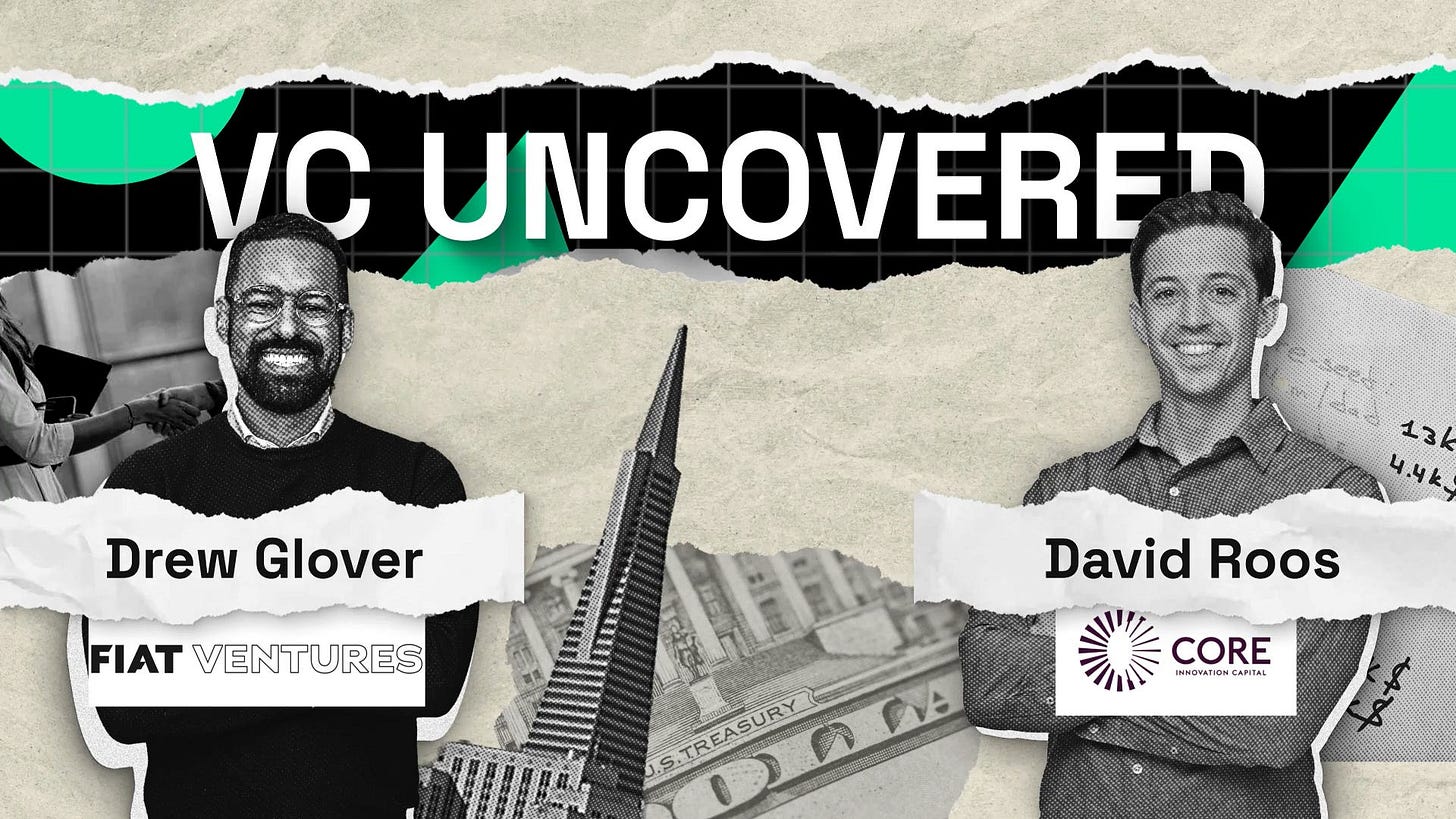
David Roos - Core Innovation Capital
Read his VC Uncovered Profile: https://www.vcuncovered.com/p/david-roos-core-innovation-capital
Podcast Summary:
Drew Glover (Fiat Ventures) talks to David Roos from Core Innovation Capital on the power of the "anti-mega fund" and investing to "do good and do well". David details his journey from a lucrative but unfulfilling career in fixed-income trading to venture capital, explaining why he believes smaller, strategic funds are better for founders. He argues that mega-funds often treat seed rounds as mere "option bets" and are incentivized to play a "management fee game" , while his ~$100 million fund takes meaningful ownership and is truly aligned with building fund-returning businesses.
The conversation gets really interesting when David explains how Core quantifies its impact thesis. He introduces their "trillion dollar metric" —an audacious goal to create $1 trillion in net new worth for everyday people by investing in companies that save them money or help them earn more. He also offers a provocative take on Direct-to-Consumer FinTech, declaring it "very much alive" and poised for a new wave driven by AI-powered personalization and automated finance.
Sponsor:
This season is supported by SVB. Silicon Valley Bank, a division of First Citizens Bank. Member FDIC.
SVB is a trusted collaborator for the founders pushing boundaries and the investors who back them. We're proud to have them as our sponsor.
Please note, this podcast is for informational purposes and is not investment, financial, or legal advice. The views expressed are those of the speakers and do not necessarily reflect the position of SVB.
More from Uncovered Media


Read the full transcript
0:00 I think the democratization of intelligence that AI is bringing actually will create this new consumer fintech wave. Well, you heard it here, folks. Fintech is directing consumer fintech is not dead. I 100% agree with you.
0:15 Welcome to VC on Tupper, the series where we highlight the next generation of investors who move faster, take bigger risks, and build shoulder to shoulder with founders. I'm your host, Drew Glover, co-founder of Theot Growth, and general partner at
0:32 Theot Ventures. Today, I'm sitting down with David Ruse, general partner at Core VC, a firm focused on the essential but often looked over systems that power our everyday lives, finance, healthcare, infrastructure, and real estate. Core doesn't just chase
0:47 hype cycles, they back founders who are modernizing foundational industries that frankly can 't afford to break. We talk about what it takes to win legacy-dominated markets, how to build credibility with non-obvious customers, and why some of the best venture returns come from boring categories
1:05 if you know what to look for. David, thank you so much for joining VC Uncovered. I've known you for years, been a big fan, a big fan of core innovation. Thank you guys for doing something super special, and always love getting the opportunity to dig into what you're working on and
1:24 talking with someone on the team that's really in the trenches trying to bring a lot of the shit to life. So with that, we'd love to kick things off just by you telling us a little bit more about you, what you're working on at core innovation capital, and then we're going to dive into some questions. Yeah, awesome. Well, thanks for having me, Drew, and likewise, huge fan of what
1:46 you're doing at fiat, and been fortunate enough to work on some companies together that have done well with your BDR up by their side. So yeah, really, really love the strategy over there. My
2:01 background, I am originally one of those few originally from Southon Valley, so I grew up 30 minutes south of Sanford, Cisco, and grew up in and around the tech scene. I think there is one
2:17 point in my middle school where we had the three top executives sons from Apple all in my class. So that was kind of the scene that I grew up in, and then stuck around home,
2:34 went to Sanford, studied engineering there, but actually spent, was always interested in politics and policy, and spent the summer at the Treasury Department in DC. And while I was there, I spent part of my time in the market room, and I just got hooked on markets. Really, I hate being
2:53 bored. I love the fast pace. It was kind of a great mix of politics, policy, and then always was adept at math, and so you know, it was a very quantitative business as well. And got hooked on
3:08 markets and so went to be a fixed income trader after college and traded interest rates in New York for four years, super different lifestyle from the venture world. But, you know, it was great in a few aspects. One,
3:24 it was kind of like you were solving a puzzle every day. The market's changing. What's new? How am I going to react? And then two is you could make a lot of money, and it 's never bad to make a lot of money. But by the end of my time there, I just was feeling unfulfilled
3:43 with the job itself, you know, really sitting there every day, being all right, what is the relative value of this, you know, 4.9 year treasury bonds relate to the five year treasury bonds, and
3:58 whether I want to buy and sell. I was like, all right, I don't know if I'm making that huge difference in the world just sitting here behind my trading desk. So I kind of pivoted back towards the tech scene, and went to went to business school, and a couple early stage startups. One was
4:17 in the political tech space, and another was a fintech startup, actually in Nigeria. And so went over to Lagos and worked on basically the firm for Nigeria. And that's where both those companies were less than 10 people. I got hooked on this early stage environment, the power of
4:34 technology to really create change in the mass market. And then that's how I ultimately found court. It was a kind of combination of all of these interests, the early stage, the, you know, betting
4:50 on big global changing businesses, and, and, and, you know, loving investing as well. Very cool. And so you get into trading, you are on a path to make trading type
5:07 of money, which it's, it's a lot of money, right? And very different culture from the VC culture as well. Can you talk a little bit more about those things that you felt, those twinges you felt when you were starting feeling that need to make the transition away? Because I, I know a
5:26 number of folks that have made a very happy lucrative career in the trading space. They're happy. Who knows? But I'm curious from your perspective, what was that evolution like? Yeah, thank you. You know, what really happened was you're seeing, we're seeing all of these, this anxiety
5:46 in society, from a social perspective. You know, it started in, in, in 2016, people protesting. You're seeing just research report after research report about the inequalities in society. It
6:02 just felt like everyone is upset with, with the path that we were heading on. You know, it's, it's, it 's becoming extremely costly for the bottom 95% of, of Americans. And I'm sitting there at my trading
6:25 desk really interested in, in the policy and the politics of it all. But at the end of the day, I was benefiting a lot from, from any type of volatility. And I wasn't having a difference in any of it. And so it kind of just came to a heading where I was like, there are a lot of
6:46 ways to make money in life. And so I was, I was doing one of them sitting at a trading desk. But no one said you can't make money in venture. And that's right. And I realized like, there is a path to make life changing amounts of money, create a ton of enterprise value
7:07 while also, you know, investing in businesses that, that changed the world for the better. And, and I think that's what venture and tech is all about. And, and that's what really drove me to define
7:22 something new. Totally. And you talking about in the trading world, making money off of volatility, and the people that are most at risk, very much reminded me, I used to work on
7:37 the commercial business insurance face, specifically employee benefits. And I always got a boss that said, when disasters happen is when we make the most money. And it hit me in a similar way than what you're kind of talking about, right, where there is a way, and this is the
7:53 story that you guys, which is I think that, you know, Fiat it in core, I've always been close is like, you can do good and do well. And you don't have to sacrifice one for the other. So I generally just love that as a thesis in terms of investing and also just like building a platform around it
8:08 . I think one thing that's also just like interesting, if we kind of like move through this and something that you brought up when we spotlighted you on VC uncovered is your concept around an anti mega
8:23 fund. And you talking about building really strong VC platforms, especially in this AI age, it don't necessarily need to be, you know, tens of billions of dollars for you to be able to still reap
8:38 the rewards of of really strong financial outcomes while still making a positive impact on the world. And as you see, if you see today, a 16 Z and silver lake are trying to buy a 80 % stake in tick talk and like these multi multi-million dollar fund trying to literally move
8:56 markets where I feel like core has done a really great job at staying at this level of venture, where you catch people early to make generational businesses. And so we'll love to learn a little bit more about how you think about fun construction and why you think this like anti mega fund
9:13 theory and thought is the way to go. Well, there's some breaking news, core will not be participating in the tick talk deal. So you heard it here first on this podcast. The anti mega funds, it
9:32 really has that over the last decade, venture has changed so much. And it really is over the last five years, even that I've been a part of it, the money is all being funneled into these
9:48 massive funds. And then you have on the other side, these strategic funds where core plays, you know, around 100 million dollar funds that are focused on specific verticals and can
10:04 bring expertise to the table really punch above their weight relative to the fund size. And then you have a lot of generalist funds that are kind of in between that are struggling with figuring out where to go in this market. And it's not a great, not a great, great thing for
10:25 founders or early stage businesses. The reason being is when you have a mega fund with, you know, tens of billion dollars of assets under management, that, you know, two to five million seed rounds really just
10:40 becomes an option bet for them. All of a sudden, you know, they're, they're putting in dollars, but it's meaningless to them. Whereas they really just want the optionality of investing a lot more over time. And they're incentive is to get money out the door, because now all
10:58 of a sudden they're playing a management fee game, rather than a rather than a carry game in terms of aligning incentives around building a big business. And for the most part, you know, ironically, it may
11:13 end up working out for them, but not for the those early stage founders. It seems like all of their returns right now are going to come from open AI and anthropic. And a few of these really large AI businesses that are, you know, the returns from the rest of their
11:30 portfolio are going to be meaningless, when it comes to stroke DPI and their funds. Meanwhile, for us, 100 million funds will take 20 to 30 bets out of this fund. Each one, we aim for 10% ownership,
11:47 where that's a meaningful bet for us. And so you're going to get someone who is dedicated to your business. And we're not living off of a ton of management fees at our size. And so we
12:02 really are banking on these businesses doing well over time. And and we we want to invest in in fund returners. But you know, the when you're when you're raising a two to five million seed round,
12:17 instead of 50 million seed round, the expectations also are drastically different. Now with the 50 million seed rounds, and then the expectations for what comes after that, you, you now are just
12:33 playing in a different ballgame where if if you aren't a unicorn or deck unicorn, you are a failure. Whereas we've had plenty of great outcomes in between. And so so yes, it's just it's a tough
12:49 environment for for founders. You know, the other thing I'd say is, is we've seen this time and time again, where founders will will take a lot of dollars from one of these mega funds early on, before they've really proven our product market fit. And if you have dollars,
13:09 you're going to spend the dollars. There's, you know, very few examples. Sometimes second or third founders will be, will be more cautious about spending those dollars. But most of the time, they 're going to spend the dollars. And and that means like they're going to spend the dollars
13:27 on whatever hypothesis they have around their product market fit. And so if you haven't quite figured that out, you're going to spend way too much on that first theory, as opposed to really testing
13:42 and iterating around a bunch of different ideas. And then finding the idea that actually clicks, and then you can pour money into that idea. So yeah, you know, I, I, it's a tough market to convince founders not to take money. It's always, it's always hard. But it's
14:00 time and time again, as I've seen it work out poorly when you take too much money early on. As a marketer, I have, you know, I'm, I'm someone that has witnessed many times . If you have the money, you will spend it. If you have less money, you'll get a lot more scrappy , a lot more strategic in terms of how you steal your business. So I'm right there with
14:18 you in terms of being a huge proponent of smaller rounds. How can we really, really thoughtful about it? And really, let's start seeing those big rounds once product market fit is hit. Because at that point, you want to be able to walk into any VC and say, if you gave me any million dollars tomorrow,
14:33 I know exactly how I spend it and how I make money on it. We want to optimize for inexpensive tests to figure out what's wrong, faster. And so, obviously, like, yeah, it is one step below core, which I think why we have such a good relationship is, you know, when we see
14:49 something that's great, we can pass it over. One, one thing that, that kind of stood out to me is, is also, historically, smaller funds have always done better than big funds. And the
15:04 biggest funds, when they were in their early years, did the best, you made a great call, like, for a two and a half million dollar seed round for a 10 billion dollar fund, it is truly an option bet. It's almost a spray and pray type of model with less money and less shots on goal. Can you talk a
15:21 little bit more about how you guys are underwriting opportunities? Because obviously, each shot means so much to the core to core's deployment strategy, because you only have 20 plus of them for an entire fund. So us, I'd love to just learn more about how you guys approach that.
15:38 Yeah. Well, I will say, you know, it's probably super repetitious with what other venture funds say on this podcast and everywhere, but it really comes down to the team at the
15:55 early stage. I think I was listening to one of your podcasts, or you mentioned that 80% of the time, the idea that the founder funds product market fit with is not the idea that the nail
16:10 pre-seed investor invested in. So you have to believe in the founder. And I look for a few different things. One is, you know, an incredible intensity of the founder. It has to be obsessed with a
16:26 certain vision and not necessarily a direct path to get on that vision, but a willingness to, you know, just grind it and break through walls to get there. You know, one thing I always underwrite at the early stage
16:42 is like, how responsive is that founder? How compelling is the content that they're creating? Is there a track record of going super deep into this field? Those are just because there's only so much you can learn about a person when you're spending, you
16:57 know, a couple weeks with that person, but there are just certain signals you can take away from how they interact with you. So that's one. Two is being a complete magnet for attracting capital and talent.
17:13 You know, you have to be able to tell an amazing story to your investors, but then also to hires, especially in this environment when so much money is being thrown
17:28 at the top talent for AI. You have to convince people to take less money. You really have to be able to spin a vision and get people that irrationally believe in you. And
17:44 then really looking at both accomplishments and self-awareness. I want the founder to have incredible past achievements, but then also be super aware about where they need to go around themselves. And so those are like first and foremost, what I'm looking for in terms of
18:04 underwriting, in terms of like portfolio construction, we still want the first check we write in, write into a company to be a fund returner. So that's something we have talked about a lot over time is like, we're not just looking for a 10x investment when we first
18:22 invest. We want to see like this one to four million check can actually return the fund. And obviously that's very different than what a big mega fund will have. Because if you're writing
18:41 out of a 10 billion dollar fund in a seed round, even if you own 20% and there's no dilution over time, you're looking at a 50 billion dollar outcome. So this is one where I think it provides option
18:57 ality for that ultimate outcome for both us and the founder. That's great. And when you talk about talent in today's world, and you think about this age of AI and all these companies think
19:12 super lean, everyone attempting everyone saying it, how do I make it so I make a billion dollar company of 20 employees or five employees, some crazy people even say it one. How are you thinking about how founders are going to have to shift in terms of what the super flowers are? Because I 100%
19:27 agree. I still believe talent is a moat. I think data is a moat. I think distribution is a moat. Distribution says like, how can you drive revenue? But talent as a moat, when we're no longer living in a world where a billion dollar company is 650 employees, and now it's
19:44 potentially 50 or even 20. And also knowing that people like Facebook are spending hundreds of millions of dollars just to like acquire a really good engineer. How are you kind of underwriting founders based on how they can bring a really strong team around them that are going to get them so
20:02 far in their growth journey? Totally. And it's very ironic because you see these AI deals of AI native and specific companies that are raising so much money and hiring a ton. And so it's a counter narrative
20:18 to the idea that AI is actually creating the ability for lean teams to get so much further. But we're seeing it across our portfolio in terms of teams just reaching milestones with smaller teams up front. Interestingly, it's not so much the AI specific
20:37 businesses. It's really more of the businesses that are using AI on the back end, but sticking with their feces and their hypotheses on the front end. And so it can be a traditional Fin Tech company that is using AI in the background to get to these milestones much faster
20:57 rather than being some like AI specific leases. And so it really does come down to the team mentality. It's one thing we try to assess early on is one just how scrappy is this
21:14 founder. Questions I try to ask is time spent like really digging into the industry, getting to know the industry. What are you doing as a founder to understand
21:29 your customer? For example, we did one that was a while back that was trying to disrupt pawn shops and he worked in a pawn shop for six months. Things like that are that are, that guy is just going to be very scrappy when he's building a business might not work out, but that's a
21:46 very cool story. And it's also the, you know, where I think it's helping out a lot is kind of the generalist, non-technical founder can now go so much farther. So it's good for all of us
22:03 business school grads, just in terms of being able to now we can like generate a prototype still breaks on the back end. So you're going to need that engineer to come in and fix your vibe coding. But all of a sudden, you can, you can fill the prototype, get in front of customers, have so many
22:21 learnings before you're really spending a ton of money on the back end engineering side. And so that's where we've seen just like the prototyping, the ideation, the being a thought partner to these generalist founders
22:36 has been super impactful. Yeah. And how are you as an investor engaging with this whole AI space? And then I'll preface it with, I think a lot of people, all outsiders
22:52 looking here like go away, like every inductance, if you look people for the next open AI, the next anthropoc. A lot of times I'm saying I'm more obsessed with, I'm looking for a founder that is obsessed with the problem a little bit more than, or I think problem market fit
23:08 versus founder market fit. I think it's like really just because everyone goes so much further with this like advent of AI, but at the same time, how are you underwriting these founders, how they engage with AI? Because I think that this AI first mentality is kind of the bedrock of what's
23:26 coming next. All right. Yeah, totally. I think the, it's just, there's so much hype around this. And I'll caveat all of this with, there's absolutely no way we can just go up
23:42 into the right the entire, the entire way towards like full automation. And so I'm sure the trough of disillusionment is coming at some points. And that will be pretty painful across the, and not just the industry,
23:57 but across public markets too. And they don't, public markets are being totally dropped up by AI right now. So every, it'll touch everyone. So I'll caveat that while also saying, you know, there's a reason why every single CEO is saying this will be an integral part
24:13 of our business. You know, we just had CEOs of Fortune 500 businesses at our AGM talking to us. And it was hard to get anything bearish about AI out of them, because it's just fundamentally
24:28 changing, changing the game for how you build a business. And so I do think this is, you know, for sure, in my lifetime, the biggest, the biggest hack wave that I've been a part of and
24:44 probably will be a part of. Now how I'm looking at it as an investor, the foundation, you know, there are parts of the sack that just will never make sense for us. And this is where, you know, maybe I'm glad that those mag funds exist, because the foundational layer and the hardware infrastructure
25:02 , like that's just going to require a ton of capital there. And we've seen it play out. The winners are probably already crowned. And so that's not where I want to I want to participate. Interestingly, you know, there's an information article that came out earlier this week, where
25:21 it was a breakdown of open AI's ownership. And don't get me wrong, I would love to have a piece of open AI right now. But the the early investors in open AI now on just 2% of the
25:37 business. And and so you see like what it means to have a business that requires a ton of capital from a dilution perspective. Now part of that is they sold 50% of the business Microsoft. And so maybe they didn't need to do that in
25:53 hindsight. But anyway, you know, this is it's it just goes to show like we don't want to be investing in businesses that will require a ton of money over time because that's not good for seed investors. And so so instead like I'm looking to stick
26:10 to core theses within FinTech and health tech, where I play particularly spend most of my time. And so still looking for like really understanding a specific domain, working within
26:26 you know, specific workflows, and then using AI on the backend. And so really still like I'm asking every founder in those first 30 minutes, what is their almost it's obvious? What is their AI strategy? And you can tell the difference between ones
26:43 that are, you know, fundamentally building their team and the product with AI and ones that where it's just, you know, on the side. And and we want some AI strategy with with everything where we're investing is. Yeah, obviously, I I am a FinTech
27:02 investor, but I love to learn learn how you think about the value of being a specialized investor. So I think the, you know, it's it's really how you you have to this competitive market and you have to be able to to win deals. And I think it's
27:22 really hard to win deals as a generalist because at those early stages, founders really are looking for thought partners. And so where we really punch above our weight is in these highly regulated operational like complex industries, where we
27:38 built up, you know, not only a network over over the last 15 years, and can help out on the BD and strategy side, but also, you know, have a regulatory partner who's in all of our deal meetings, help set the portfolio after we invest. And then
27:54 just understand, you know, we're not going to get afraid of, you know, operational complexity or regulatory complexity, because we've been around it for so long, and then health care and in finance, and in insurance, you have this is this is really important to have someone who's going to be more of a
28:12 long term thinker. And so I think it's it's critical at the early stages to to win deals like this. It also is why so many of those larger firms will, you know, the mega firms, the
28:28 injuries and whatnot will have specific founders within or specific investors within a space. So you know, they have an awesome FinTech team. And so you've seen like even the mega firms will have, you know, specific experts.
28:44 Yeah, no 100% and and you're right, like, again, like being able to go 100 100 feet deep, especially in this market where you have to compete for just about every single deal you touch. That's the added value that that's the best capital
28:59 plus something else, which is just like so needed. I want to go I want to go back a little bit to talking about qualifying impact in your investment strategy. Obviously, we run venture funds, we are optimized for returns, not just for our
29:16 LPs, but also ourselves, but the do good part of this is is really important, especially in terms of how you're kind of thinking about it. And I'm curious how you are underwriting that as you are entering a conversation around, I want to
29:33 invest in this company, this founder, this business. How are you kind of, how are you tracking that? So first and foremost, as you mentioned, we're venture fund. And so we are looking for an investment that can return the fund. So if it's not
29:48 something that has a sustainable business model, we're not going to, we're not going to give it another look. But yeah, at the end of the day, you know, I view it kind of, he's become controversial, but kind of how Elon does it. Like he has to, he
30:07 has seemingly unlimited amount of time, but even he has to pick which, which areas he really wants to focus on, and punch above his weight. And so, you know, he's, he's the impact that he wanted to have was getting to Mars that he started SpaceX, he
30:23 wanted to start takes that he started K-PAL, or what became K-PAL. And, and so, you know, he, he really has had like, he's probably the most mission driven founder, and then the best operator of our generation. And that's, you know, we similarly
30:42 take a focus on how do you unlock wealth and health for the mass market? That is our big impact area. And, and we started off back in the day with the idea of financial freedom for the masses, mainly for the on and under banks. What we realize is
31:01 that it's not the on and under not just the on and under banks that are financially insecure. It's actually the 95% of Americans that are financially insecure in some way. And so we really focus on that mass market. And then we also came to
31:17 believe, or came to realize that financial wellness isn't just about, about financial services, but it's about the entirety of household GDP. And so, we now looked at those other operationally big trillion dollar markets, health care,
31:32 housing, small business enablement, things where, you know, you can really, if you create massive enterprise value, you're also going to be able to move the dial on people making money or spending less money. So that's where, you know, we look at
31:49 alignment on that business model and impact from from the get go. And, and then in terms of quantifying it, you know, it's always helpful to have a we encourage our founders to have KPIs running center on on on their board decks. And so
32:08 obviously, we have to have that as well. And so we have this right now trillion dollar metric of, so you know, you have BPI and a financial side, on the mission side, we have this trillion dollar metric of how do you create a trillion dollars of
32:23 net new worth for everyday people. And obviously, there's as much art and science, we don't want to be overly burdensome to our founders. And so really, like, we're just using KPIs that are
32:39 core to the business, it's it's where alignment comes down again. But we, we focus on, you know, how much money are they saving, how, or how much money are they helping people earn. And
32:54 and then also on kind of have a risk metric in terms of how are they submitting over risk. And then it's not just on the what becomes a little bit more complicated about the metric is it's not just on the direct side, you know, probably 25% of
33:09 our portfolio is on direct to consumer. But about 75% of our portfolios on the infrastructure side. Mainly because we believe, you know, in scale. And if you want to have massive scale, you need to modernize back and financial infrastructure back and
33:27 healthcare infrastructure in ways that increase access and affordability on the front end. And so, so yeah, every year, we do, we do an audit to figure out how much money have we saved this year. We, the number, the cumulative number is 300 around
33:46 325 billion dollars over a 15 year time span, which is quite incredible. And there's heavy correlation, by the way, between companies that are doing incredibly well on the financial side, and saving people a lot of money. And so, so that's been,
34:07 that's the number right now. We aim to get a trillion dollars, which we thought was going to take another decade. It actually on this pace will take five another five years. And then, and then we're going to have to ship the Gold Coast. So maybe instead of a trillion dollars, we can start to get a trillion
34:22 dollars annually. And that's where, you know, you're, you're really changing society. I love that you guys wrapped it around a number. I feel like a lot of folks when they talk about impact, it's just like, all right, year ended, let's figure out where we landed. But they're not really working towards a
34:39 specific number that trillion dollar number is astronomical when you say it out loud. But again, you started 15 years ago, like 15 years in that that's that's attainable. And I'd love that you guys are going to be hopefully knock on one moving
34:54 that goal post soon. One other piece that you talked about was how, you know, around 25% of your portfolio today is direct to consumer. The other the other the other 75% of it is, is infrastructure. I feel like right now we're in this like infrastructure era. Like if you talk about where the wave
35:09 is, it's with an infrastructure, where the wave has seemingly died off of it is direct to consumer fintech, less so health tech, but really fintech. Do you think that direct to consumer fintech is I'm gonna be really provocative, you're dead or very
35:26 much alive. This is a tough question. I think it will look very different in this next wave than it did in the past. But I guess if I had to take an answer, it's very much alive. You look at the
35:41 businesses that have gone public and succeeded. And consumer fintech dominates those those outcomes. You look at China, you look around in the coin days. Some of the largest outcomes
35:57 have been in consumer fintech. And that's happening this year as well. And so, and then if you if you look in our portfolio, some of the best performing companies attain a joy kickoff,
36:15 their consumer focused businesses that have reached this, this, you know, profitable growth trajectory and are truly crushing it. And and it's interesting to see because there's
36:30 been, you know, the last few years for consumer fintech were so negative. And and they just, you know, kept grinding through it and now have really reached a scale that's that's incredible. Now, I think that consumer fintech is going to look a lot
36:46 different than it did, you know, a decade ago when China got started, you know, the first consumer fintech when it started was really like, how do we, how do we digitize thinking and
37:01 incumbents were moving super slowly. So you you really could just build like a nicer UI and get away with not doing much on the on the product side. That's right. And and I think for the next decade, incumbents now have completely woken up. And
37:19 so I think the I think you're going to have to work in and around and with incumbents, with incumbents. And so it's it's not I don't think like a new meal bank is coming. But I think
37:35 AI has kind of created this new Joel in user experiences that you can create. So, you know, we've been talking about it forever. This this idea of automated finance. Finally, the tech is there for that. And it's going to come come in a
37:53 lot of different ways. I think wealth and management is a super interesting area where you have what was previously for the top 1% of both consumers and businesses in terms of the services that can be provided. Now you can totally bring that
38:09 down to the bottom 99%. And so that's going to come in both like augmenting advisors, but also building a newer type of consumer FinTech. And and also for the micro SMBs, like in
38:26 terms of the services that could be provided from an investment bank for massive businesses. Now you could do that for a micro SMB. So I think I think the democratization of intelligence that AI is bringing actually will create this
38:43 new consumer FinTech ways. Well, you heard it here, folks, FinTech is directing a consumer FinTech is not dead. I 100% agree with you. Like, we're in this personalization era. We're like, finally, your bank,
38:59 your money management tool is going to know more about you than you know about yourself. And they'll be able to instinctively understand what's coming next in your life. So the the things that you'd have to be like, do I need a cloud 29 for my kid? It's like, I know your birthday, I know you're
39:15 married. You know, I saw based on your purchase history, like, you guys are buying diapers, you just bought a crib, like, let's connect the dots for you here, right? So yeah, I think it's a really exciting time for direct to consumer FinTech. I think it's still before it's time in terms of the rest of the world
39:31 figuring out like when it's going to become alive again. But I think, you know, folks like us that are so close to it, so close to the ground, it's starting to bubble up again, which is really exciting. This is incredible. I want to finish off what I way I typically finish off was just a table of questions that I've, I basically
39:49 written down throughout the process of our conversation. So they're quick, kind of like quick hitters feel free to take a shorter as long on all of them. The first one is probably going to be a slightly longer answer. But you grew up in this very
40:04 college, I don't know, privileged world to like grow around like some of these like, you know, Apple executive kids and and how was your early network, how is your early network affected your network of the present? This is a still a
40:20 difficulty of venture right now is that it is a very close ecosystem. And as much talk as there was about opening it up, you know, I feel like 2020 in 2021, there's a lot of talk. It's still is very close in network driven. And there is
40:37 certainly an advantage out in network. You know, I did grow up in a privileged background. I went to Stanford in Harvard, doesn't school and as much as much crap as is spoken about
40:52 business school. So many of my friends are starting businesses or or in the venture world. And your deal flow is based a lot on your network. And so the Harvard and Stanford backgrounds turn wake up a ton as cliche as that is. So maybe
41:11 AI will help that over time. Like we're we're we're definitely investing in automating sourcing tools. And and then they're maybe there's a world in which, you know, that that network becomes a bit less valuable as you can just start to source
41:28 businesses digitally. But still, there's there's such a face to face and network driven part of this business that it's a huge, it's a huge part of life. And and yeah, it's not quite fair. But it is how how venture in early stage, the early
41:47 stage investing works right now. 100% and network or not even experiences give you a leg up. I mean, I grew up in a underserved community in deep East Oakland. And that experience gives me the ability to under ideals in a very unique way. So it's privilege all around, you
42:03 know, privilege isn't always one way. But I think that's that's really valuable insight for all you folks questioning business school, right? Like at the very least, you're coming out of a killer network. Here's another one for you. You came out of college initially wanting to get into the political space. If
42:19 you were coming out of college today with the way you thought about politics, then would you still later it based on today's political plan? Well, I definitely never wanted to run for any office. And I still definitely never want to run for any
42:35 office. That is, I've been a part of campaigns. I worked for campaign for Max Rose, who is running for Congress on Staten Island. And it is the worst job possible. Like you are
42:51 just constantly fundraising grinding knocking on doors and in half of the population hates you. So I have no interest in that. On the other hand, I do still think you work on the most
43:08 interesting problems in society. And so in terms of potentially working in policy one day, and you know, I don't love everything that's come out of this administration. But what I do, what I do, like to see from a broader lens is, is
43:27 that there is starting to work with Silicon Valley. I expected it from a different administration. But I think the the ability of being able to work on the biggest issues in in society and really like move the needle. I think that's a
43:44 really fun part of a policy. Truth, truth. Last question here, coronavation. You guys, being a focus on wealth and health, if you had to if you had to choose to invest in wealth or health, one or the other
44:02 from the rep of your BTQ ear, we're coming to use. It's a true question because they're tied together. So I mean, I wouldn't choose wealth because it's very much a part of that. There's so much of your wealth that is tied to your your physical well being.
44:18 Truth. Yeah, I think wellness and FinTech are definitely at that's gonna I think that's going to be a big, a big trend that we're going to see in direct to consumer in this next wave is the intersection of actually wealth and health. So that's
44:33 super exciting. David, it's been such a pleasure. Thank you so much for joining. Again, huge fan of you. And these insights were super invaluable, excited for everyone to learn more about you and appreciate the time, brother. Cool. I thought you was fun. This season is supported by Silicon Valley Bank. For
44:51 decades, Silicon Valley Bank has been a true partner to the innovation economy, helping both founders and funders grow. Silicon Valley Bank, a division of First Citizens Bank member FDIC. Please note this podcast is for informational purposes and
45:08 not investment, financial or legal advice. The views express are those of the speakers and do not necessarily reflect the position of Silicon Valley Bank.
Transcript generated automatically; it may contain errors.
Questions this answers
What is Core Innovation Capital's anti-mega fund strategy?
Core runs roughly $100 million funds that take 20 to 30 bets per fund and aim for about 10% ownership in each company, so every check is meaningful, unlike mega-funds where seed rounds function as small option bets according to David Roos.
Is direct-to-consumer fintech dead?
David Roos of Core Innovation Capital says it is very much alive, pointing to strong public-market outcomes and portfolio companies reaching profitable growth, with a new wave coming from AI-driven personalization and automated finance.
What is Core's trillion dollar metric?
It is Core Innovation Capital's impact goal to create $1 trillion in net new worth for everyday people by investing in companies that save consumers money or help them earn more; the firm has saved about $325 billion over 15 years and is on pace to hit the trillion-dollar mark in about five more years.
Why did David Roos leave fixed-income trading for venture capital?
Roos traded interest rates in New York for four years but felt unfulfilled watching societal inequality worsen while he profited from market volatility without making a difference, which led him to pivot to early-stage startups and eventually venture capital.
How does Core Innovation Capital evaluate founders?
David Roos looks for founder intensity and obsession with a vision, the ability to attract capital and talent, a track record of past accomplishments combined with self-awareness, and a clear AI strategy discussed within the first 30 minutes of a meeting.
Originally published on VC Uncovered · By Drew Glover