Liz Armistead
Dropbox
Dropbox wants to be essential to the creative process, just not the main character.
During his USB tour, Fred again.. asked fans to put away their phones. His team would document the show and send out a Dropbox folder afterward with professional photos and videos that people could save or post. The audience did not have to choose between preserving the night and being present for it.
Dropbox made the arrangement possible without demanding attention during the concert. The product appeared later, after it had already removed a small but familiar anxiety from the room.
When Fred’s team approached Dropbox after the tour, the company helped expand the idea into a broader campaign built around the content and the way his team worked. Liz Armistead, vice president of brand at Dropbox, had not created the original use case. Her team’s role was to understand why it worked, give it more reach and avoid sanding away the parts that made it feel like Fred’s idea.
That approach has become central to how Liz markets a product that often disappears inside other people’s work. Dropbox is rarely the finished film, song, campaign or design. It is where the unfinished versions move between the people making them.
Find the behavior before writing the brief
Liz has spent much of her career marketing technology that cannot be placed in someone’s hand or photographed at the center of a glossy campaign. Dropbox presents an even more specific challenge because much of its value appears before the public sees anything. Files move between collaborators. Feedback arrives. Contracts get signed. Rough versions become better versions.
The brand becomes easier to understand when Dropbox shows what customers are already doing instead of constructing an elaborate story around the software itself. Many of the company’s creator partnerships begin as inbound requests from people who use the product and want to explore what else they might do together. Liz’s team then chooses which ideas fit, shapes the program and makes sure the work reflects the product accurately.
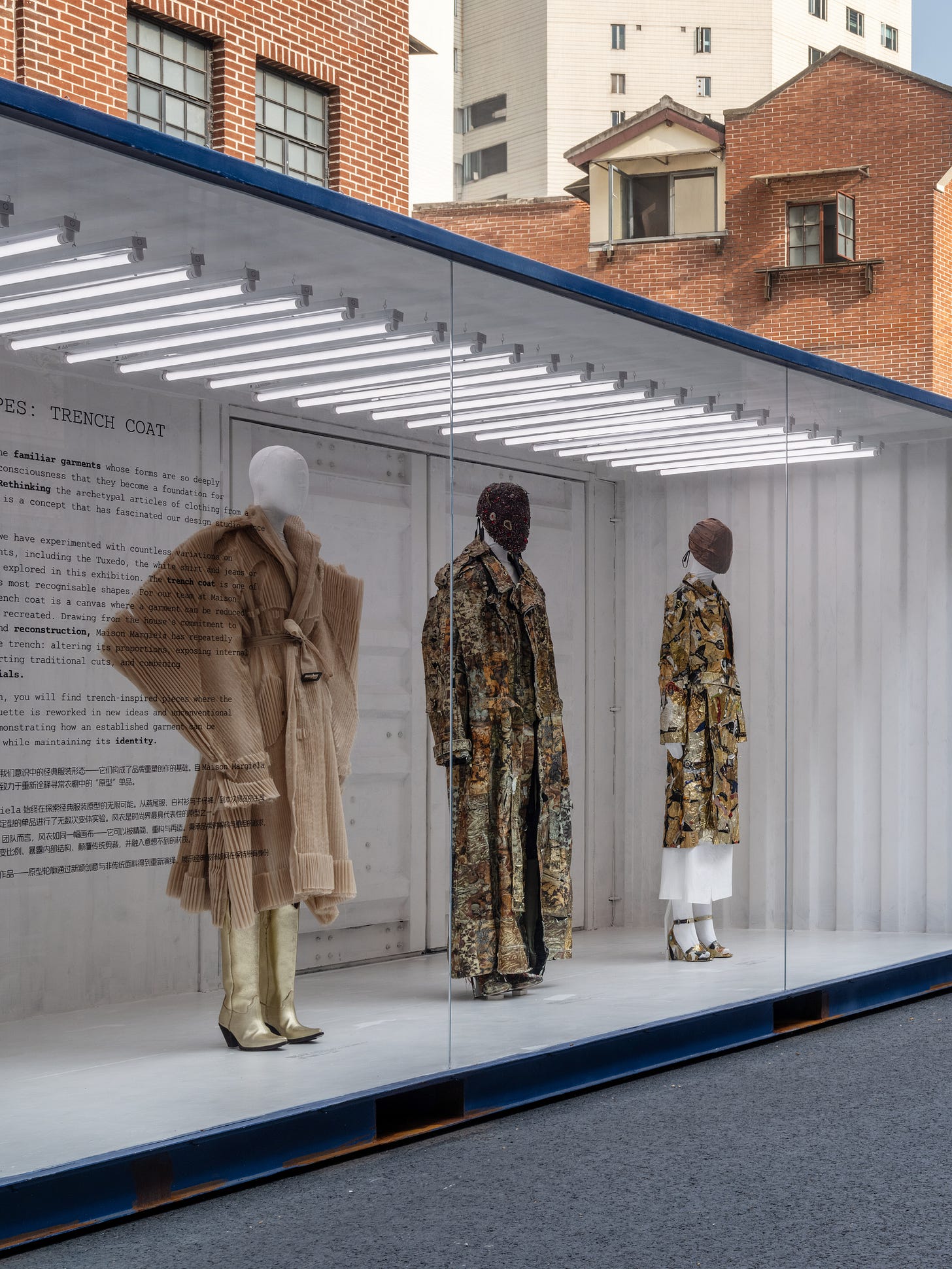
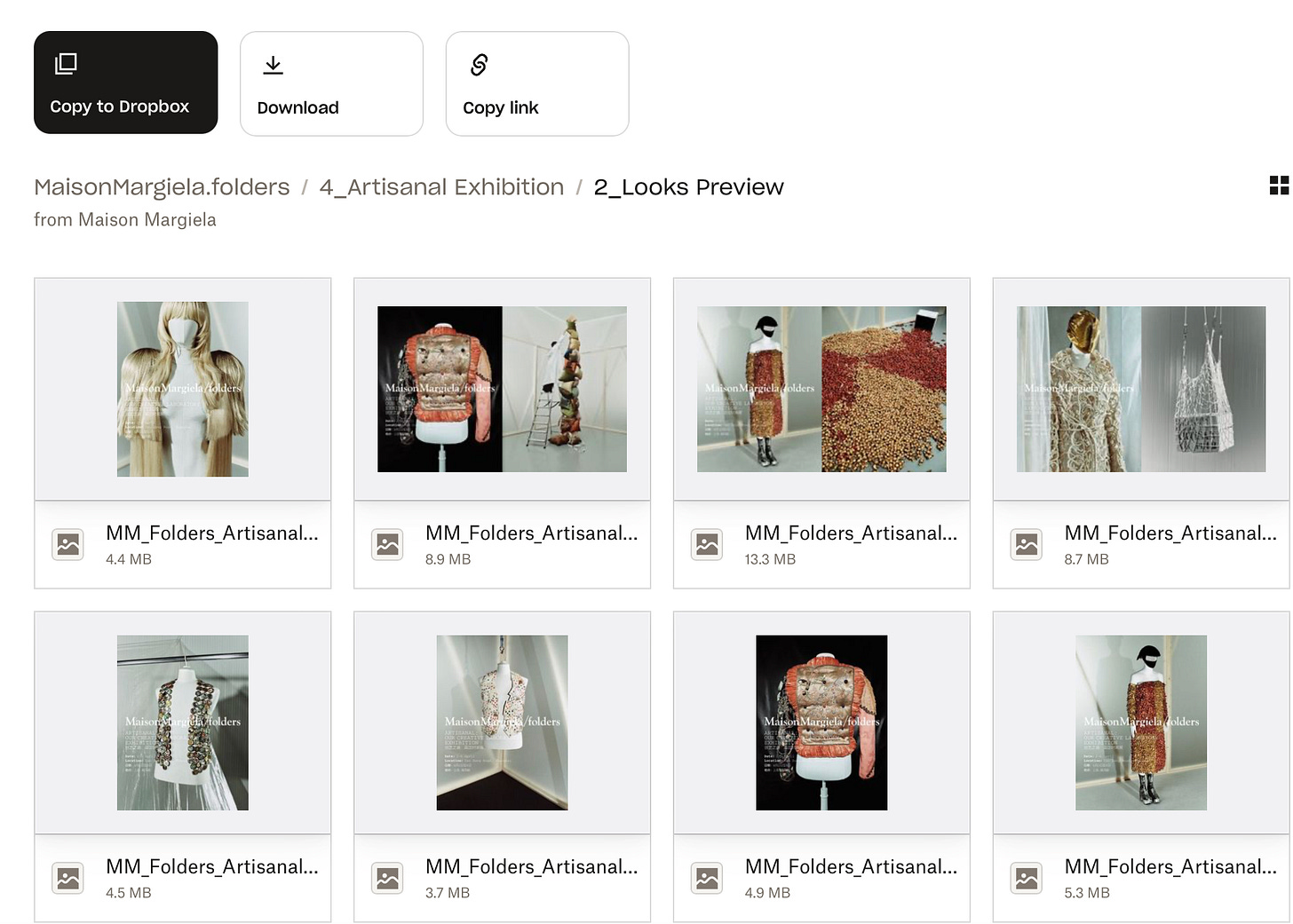
Maison Margiela approached Dropbox with a proposal to share material from its historical folders with the public. The Dropbox team customized the folders, added visual details inspired by the fashion house and supported the release across its channels. Designers and fans could look through the work, study it and use it as material for something new.
The campaign worked because the folder was not treated as a digital display case. It became part of a continued creative exchange. Dropbox supplied the structure, but Maison Margiela determined what the community was being invited to see.
Liz has followed the same pattern on a much longer timeline at Sundance. Dropbox first attended the festival in 2015 with a hypothesis about how films were being made. Production teams handle enormous files, work across locations and rely on people who may never belong to the same company or use the same systems. The workflow seemed suited to Dropbox, but the team went first to interview filmmakers and understand what was actually happening.
They learned that 68% of Sundance films had been made using Dropbox. They also learned that many filmmakers thought of it almost entirely as storage. A crew might use Dropbox to move footage while still passing around paper release forms in the field, unaware that a signing tool lived inside the same platform.
Dropbox gradually expanded its Sundance presence around those gaps. It began by listening and educating, then added panels, premieres and programming that allowed customers to explain how they had made their work. A decade later, the company had a branded house on Main Street, but the program still grew from the same question: How are people already working, and where is the process harder than it needs to be?
Liz learned that habit at IDEO, which she considers more useful than graduate school. The work taught her to study customers in context rather than rely only on what they report in a survey. A broad sample can tell a team which idea is easiest to understand, but the easiest idea may also be the least interesting. Liz will sometimes learn more from a dozen detailed conversations, an extreme user or a parallel industry than from a large group selecting among polished options.
The most important product moment is also the most vulnerable
The Sundance research showed Liz where Dropbox sat in a creative workflow. A later campaign helped her name the emotional moment inside it.
Most creative work begins in private. A song, film, presentation or design can remain protected while its creator revises it alone. Sharing changes the conditions. Another person can challenge it, misunderstand it or improve it. A public release raises the stakes further.
Liz and her team built a campaign around that movement from private to public because millions of ordinary Dropbox shares contain some version of that risk. The action looks functional on a screen, but the person clicking the button may be handing over something they have spent months making.
That vulnerability shapes how Dropbox works with creators. A conventional partnership might begin with a detailed brand brief and ask the creator to reproduce the company’s message in a familiar voice. Liz takes a completely different approach because the creator understands the audience the brand is trying to reach.
Fred’s community knows how he speaks and what he finds worth showing. Replacing that voice with Dropbox language would make the work less credible. Liz’s team reviews partnerships for product inaccuracies and would intervene over offensive material, but it generally does not rewrite the creator’s point of view.
Her clearest instruction is also the best test of the finished work: “If this feels like a commercial, we’ve failed.”
The content still has a job to do. It should teach people something, entertain them or give them material they can use. Dropbox may be visible, but the audience should not have to endure an advertisement to reach the useful part.
The company applies the same thinking beyond household names. Dropbox Studio funds projects from customers at different stages, including an Oakland-based rapper named Fijiana, whose music video was made with friends and supported through the program. Liz likes that the platform can document an established artist’s archive while also helping someone make the work that may eventually establish them.
The difference matters because early creative work carries a different kind of exposure. A famous artist can share an old draft after an audience has confirmed the value of the finished product. An emerging artist shares without that protection.
More output raises the value of judgment
The willingness to give creators room depends on judgment. Liz sees the same need becoming more visible as AI expands the amount of work a marketing team can produce.
Her team uses AI to remove friction from parts of the campaign process that once consumed time and budget. Research that might have run once can now happen four or five times while a campaign is being developed. Synthetic research tools send concepts to real people, analyze the responses and return findings within roughly 48 hours.
The brand team also built a live site that collects performance data, brand tracking, lift studies and other metrics. Leaders can review the information without waiting for employees to spend 20 or 30 hours each month building another reporting deck. Designers can avoid some of the repetitive work of generating the same asset in dozens of sizes.
Liz values those tools because they give the team more chances to improve the work. They do not settle the harder questions. A system may generate 50 options, but someone still has to decide which one fits the audience, which joke sounds forced and which concept resembles everything already in the market.
“The models are fed with history, not future,” Liz says.
That limitation becomes more important as production gets easier. AI can assemble familiar patterns quickly because it has access to so many of them. Creative teams still need a point of view that tells them when familiarity is useful and when it has become repetition.
Liz does not believe taste develops through prompting alone. People learn by watching experienced practitioners choose, discard and revise. Art schools use critique for that reason. Young designers need to see what their more experienced colleagues notice and understand why a visually attractive solution may still fail to function.
The same principle applies to customer research. Data can narrow the possibilities, but it cannot replace the judgment required to interpret what people are saying, what they are avoiding and what they may not have words for yet. Liz wants technology to create more opportunities for that work, not remove the person responsible for doing it.
The infrastructure beneath the finished work
Dropbox will reach its 20th anniversary with a product many customers first encountered as a place to store files. Liz is trying to show the larger role it has played all along.
A filmmaker sends a cut for feedback. A design house opens an archive. A musician hands fans the content they did not need to record. An emerging artist shares a project that has not yet been endorsed by the market. In each case, Dropbox sits between the private act of making something and the public life that follows.
At Fred’s show, the folder arrived after the concert. By then, the audience had already received the more valuable benefit, the gift of presence. They had spent the night looking at the stage instead of their screens, trusting that the files would be there when they needed them.
This season of CMO Uncovered is supported by CleverTap. CleverTap is the world’s leading engagement platform, helping brands build meaningful relationships through data-driven personalization. Powering over 2,000 customers globally, CleverTap’s AI-powered engine processes billions of data points daily to help marketers predict behavior and automate engagement at scale. From onboarding to advocacy, CleverTap provides the infrastructure needed to optimize every stage of the customer journey. For the CMOs building the next generation of iconic brands, CleverTap offers the precision and scale required to win in a crowded market. To learn more, visit clevertap.com.
More from Uncovered Media





Read the full transcript
0:00 Listening to customers, leveraging customer insights, understanding the customer journey being the most important thing. And I think as a marketer, you would think that was always top of mind, but somehow it isn't. I think it's really easy for people to forget. You're ultimately serving a person. - This is Liz Armistead, VP of brand at Dropbox,
0:16 a product 700 million people use. She has one rule for every creator she works with. - We actually, in exploratory conversations with creators, will say, if this feels like a commercial, we've failed. - Part of the value for us is reaching these new communities.
0:31 Do we want them to hear it in our voice or his? So if we weren't gonna leverage his voice and his unique point of view and way of telling that story, that's us being done, frankly. - The most human things is actually a shared memory, right? And that's effectively where Dropbox is living,
0:46 it's living in that community. - That is a very salient moment, which is why we made our campaign around it. A campaign to celebrate the part of the creative process where something goes from being private to public. - And that moment is so crazy, because if people didn't take that leap,
1:01 we wouldn't have culture, we wouldn't have innovation, we wouldn't have any of the things that make life wonderful art music, all the things. - Taste has become all the more important in the world of AI. So how does one actually develop that taste to be discerning, to say that, hey, this is good?
1:17 - Taste is developed through... - Welcome to CMO Uncovered, which is proudly sponsored by CleverTaph, the all-in-one engagement platform, helping brands turn customer moments into measurable growth. If you're serious about retention, lifecycle marketing,
1:34 and using AI to drive smarter engagement, CleverTaph is the partner you want in your corner. - Liz Armistad, I'm so thankful you are here for CMO Uncovered. We have been waiting long for this podcast. We are the biggest fan of you. We are the biggest fan of Dropbox.
1:49 Again, Liz, you oversee a lot of brand marketing and creative campaigns at Dropbox, and you've had some incredible partnerships. Excited to dive in with you to learn a little bit more about how your brain works, how Dropbox works, how you guys are entering this age of marketing.
2:05 But before we dive into things, we'd love for you to just give us a little bit of background on you and what makes you tick and how you got to Dropbox. - Yeah, happy to talk about that. And thanks for having me, y'all. This is gonna be fine, I'm excited. So I spent my career really helping technology companies
2:22 connect with culture for the most part. So I'm currently the VP of brand to Dropbox. I've been at the company almost 10 years, but not consecutively, I'm a boomerang. I came back about February of last year, so it's been about a year and a half back.
2:37 Those four intervening years where I left had brand roles at a couple of other companies, a crypto exchange, a digital security company. But the eight and a half before that at Dropbox, I joined the acquisition actually. I was at a tiny startup called Mailbox. We had created an email app that was,
2:54 had sort of a phenomenon, a really wild ride for about five weeks. We had two million people signed up in a waiting line to get our app and about five weeks after launching, we got acquired by Dropbox. So it was a pretty awesome experience. Joined Dropbox when we were only 250 people
3:11 and grew with the company through IPO, up to when we were maybe 2000 people before I left the first time. So it's been a wild ride. Before that, I was at IDO for a while, some other companies, but that's my journey in a nutshell.
3:26 - Awesome, awesome. And what a great story of being acquired off an incredible wait list of that's super exciting. And also your time at IDO, that is such an iconic brand of just like marketing minds.
3:44 Curious, but before we kind of dive into what you're working on today, can you just set the table a little bit to just give us a sense of the scale that Dropbox is at today? - Yeah, yeah. We have over 700 million users.
4:01 It's been going for almost 20 years. Next year will be our 20th anniversary. So it's a massive business. We've helped all sorts of customers around the world. 180 countries, I believe. But a lot of those customers are in the creative community.
4:19 And that's who we focus on generally in our marketing efforts. So featuring folks, whether they're in marketing and creative agencies or film, fashion, art, music, architecture, those are all industries using really big media files
4:34 distributed across different places, utilizing agencies and freelancers and having really complex workflows that require the type of software and tools that we offer. So that's great. - And speaking of complex workflows,
4:49 you were just off, you just had canned. And so what did Dropbox do there? What was that like if you could, you know, let our listeners know? - He's wild, I'm sure. Anyone who's caught back was probably still sweating, but it was a really great experience. We haven't had a presence at Cannes since about 2018.
5:07 We did a small thing there supporting the young lions in some of their workflow efforts there back then. But this year we were really just trying to get there and trying to understand what the landscape is like. It's a very crowded, very expensive place to show up.
5:23 So just wanted to understand what would be the most authentic way for us to be there, whether that's meeting with prospective customers, having partnership conversations, agency conversations, or activating in some way. The one activation we did do it was really great.
5:40 We had a live show of the shop, you know, LeBron and Maverick's platform. - Yeah, they relaunched. - Yeah. - They relaunched at Cannes with us. So we had an amazing slate. We had Draymond Green, Anthony Ramos, Nigel Sylvester, the BMX rider.
5:55 So that was really cool. Travis Bennett was the new host. So the whole conversation was really on creative process and how people leverage Dropbox in their different, but in their different sort of workflows. So Draymond's talking about his podcast,
6:10 Anthony's talking about writing musicals and making music. Taco was talking about, you know, how he's producing music. So it was a really like lively conversation, a lot of fun, super crowded. So it went well, we were really happy with it. - And you were there in 2018 last,
6:26 anything that's different now. I mean, anything that stood out. - I mean, completely different. Like so many more people, so, so crowded. A lot more brands, sports is a huge focus. Sport beach, Stagelas sport beach is there. So there's a lot, just more creators,
6:43 more industries generally, I think it's just expanded, not to similar from South By, it feels like. I think South By has kind of got in the reverse and gotten a lot smaller since COVID, but it feels like South By heyday when it's just expanded and expanded to, you know,
6:59 include a lot of adjacent agencies that have, or not agency, a lot of adjacent industries that have really become crucial to the brand building process and the creative process. - Right, I find it really interesting that,
7:14 and this is, you know, we were chatting a little bit before we started recording. I've also chatted with a number of people who just got back from Canis. It's really turned, it's moved away from this like celebration of like creativity and more towards this like partnership ecosystem of like creators and brands.
7:31 But I also feel like that's a route where marketing is headed as well. And obviously, you know, we've had many conversations, Liz, about one of the greatest assets of Dropbox is your users are actually some of your best marketing campaigns, right?
7:46 Like if you have a super user that is a LeBron James or a Draymond Green, you know, all of a sudden it's like, great, we should be working with them because they can speak intimately to our product. And so maybe just give us a little bit more insight into how you strategize that to unfold at Can,
8:04 but also just like some of the broader campaigns that you guys are bringing to life. Yeah, you know, I think when you have when you have any sort of technology invisible product, you have to think about marketing a lot differently. I mean, I've never had the luxury
8:20 of marketing something physical, but I've always sort of dreamed of that. Like wouldn't it be so fun to just hand somebody something and take a picture of it or be able to do like a beautiful glossy campaign with out of home where you can actually see it and set up with huge screens. But with Dropbox, we're actually so lucky
8:36 because we can show what people do with it. And that really has endless opportunities because our customers are, as I mentioned, people in music and film and fashion and art and they're doing incredible things every day they're adding to culture.
8:52 And so by showing their process and the way they're making these things and the things they're doing, that's actually the best way we can showcase the power of our product. And so it's a lot more rich. It is additive to culture.
9:07 It feels like a one plus one equals three equation when we're able to support an artist, give them funds to make that project happen in exchange for a how to in Dropbox that also helps their community learn how they do things
9:22 and helps up and coming creatives improve their process. So it's a very feel good way of doing marketing, I think. You know, for Cannes specifically, I think it's a place where a lot of people show up
9:38 and are trying to do product demos or create physical spaces where they can showcase how their product works. That's challenging when you're trying to have a one-to-one engagement with a customer at scale and trying to invite people into a space
9:53 that is quite expensive to operate, especially when you're on a beach in France. So, you know, we think a lot about how can that extend digitally and how does that value become more expansive
10:08 than just that one-to-one engagement on the ground? And so, you know, a customer story, helping somebody see how, you know, an Anthony Ramos or a Draymond Green uses Dropbox. Yes, we got to talk to 100 people in the audience,
10:24 but we're talking to probably 10 million people on social and that's a lot more valuable. And we didn't have to, you know, build out a $5 million space and the beach should do that. - True. And on top of that, one of the most valuable currencies
10:39 in the creative world, at least to me, is being able to see like who the authentic version of these creators are. And I feel like by showing the process, you organically get to do that with your product, right? Like, how do we, how do I say Dropbox without saying Dropbox?
10:58 You know, you guys, you have the ability to do that organically with a lot of your activations. And one of the ones that we chatted about when we were gearing up for this was the one you did with Fred again. And I think it's just such a unique flow
11:14 because art is that one thing that everyone wants, that kind of like BTS exposure of like, how is it created? Especially when it's something that like, I don't know about you guys, but I can't create music.
11:30 And so I tend to look up to people that can, and I'm like, how are they viewing? We'd love to just hear from your perspective, like how that came to be and how it was brought to life. - Yeah, absolutely. It was such an incredible project
11:45 and completely Fred's dream. So let me be clear that we did not as conceive of this from the beginning, but it actually started, I'll go back a little further because it's actually started with Mesa Marjela. Mesa Marjela reached out to us.
12:02 This was like late Q1, maybe March, February, February. And they wanted to open source their Dropbox folders. They wanted to take their whole history of Dropbox folders and share it with their community.
12:17 So they're like classic tabby designs from back in the day and they wanted to basically make those available to everyone. And to my knowledge, I don't think any designers have done this before. This is a big deal in the fashion design community. And so we worked with them closely
12:32 to customize those folders, make it like a little more fun. We put the little stitch designs onto the folders and help them create assets and share it on our channels, et cetera. And that I think was the first sort of catalyst for like, hey, we can share
12:47 and have a two way conversation with our community at scale via folders and sharing assets and inviting people in to collaborate on these assets so that they live on beyond the thing,
13:03 like they can be remixed and they can become something else. And that was really special. And there was an incredible, incredible reaction from the community, lots of press, et cetera. And around the same time, Fred was doing his USB-2 campaign, or sorry, Fred was doing his USB-2 tour.
13:20 And when he was on stage, he was basically telling people, please do not use your phone. Put your phone away, we will give you a drawbacks folder at the end of the show, full of videos and photos, like better than you could take yourself. You can post those to social, but please be present with me here.
13:37 We want you to have a community experience. We want you to engage and you can't do that when you're behind your phone. Which as somebody who goes to a lot of shows, that is just like music to my ears 'cause there's nothing worse than seeing just a sea of phones in front of you and it really just takes you out of the experience.
13:52 So hearing that, we thought it was so cool 'cause we were hearing this second hand and there was a lot of conversations amongst the team of, oh my God, wouldn't it be so great to work with Fred? But, you know, probably not. But great to hear that he loves the product and he's using it in this way and look, isn't he great?
14:08 And at the end of the tour, he reached out to us and said, you know, I wanna do more. We have all this great content from the tour. What would that next step look like? And I think the team had seen some of the Margelis stuff. So that ended up in a conversation of,
14:24 how can we really take this to the next level? How can we tell a story about how your team is using it on top of sharing these folders and how can we make the folders more rich? How can we really invite the community in and give them like even more fodder to work with? And so that ended up becoming our campaign with Fred,
14:42 which also had just an incredible reaction from the community. Still, people are talking about it. The thing people talked to me about the most at Cannes were like, oh my God, that Fred campaign was so great. Like I was dead, which obviously makes me so happy and proud of the team for doing it,
14:57 but also a lot of the credit goes to Fred for using it in that way and being open. But I do think it's gonna be a real trend. I mean, we're seeing so many artists come out and wanting to do the same thing. Brands, there's a lot of conversations at Cannes
15:12 about that project and how folks in other industries are looking to have that sort of two-way conversation with their communities and to engage around content and collaborate with people at scale,
15:27 which we have the product that's built for that. The infrastructure's already there. It's just helping people figure out how to kick it off. And so we're putting together assets now to basically teach people how to do it. It's not hard, but there are a couple of things to keep in mind.
15:43 If you expect a lot of people to hit a Dropbox folder, you need to let us know because we do shut those down because usually it means it's bought traffic or something. But anyway, it's really exciting that people are wanting to use it in this way and that open-sourcing creativity is lovely.
16:00 We want more of that. - That's interesting because from what I hear, this wasn't you reaching out to these creators. These were people who were already using Dropbox who reached out to you and then you found a way to collaborate with them.
16:15 But now that it's potentially an internal engine. So is there now a short-listing process? Are you now thinking inbound, outbound? How are you now looking at this for you to scale this? Because organically, you found some great wins,
16:30 but if you're to scale this, what does that process look like? - It's not too dissimilar from how we operate now. The honest truth is we are so lucky. We get a lot of inbound now. So our job is certainly some outbound,
16:47 some outreach to people we know and we're sort of curating lists of folks. But I think there's enough awareness in the industry of the programs we run and the way we support creatives that people are coming to us proactively and saying, "Hey, I use Dropbox, I'd love to work with you."
17:03 And so our job is more sort of curation and shaping than it is necessarily proactively going out and looking for people. And because there are so many people that are naturally using the product, we never really have to say,
17:19 we're gonna fake it or we're gonna see how to use it. That's not really how we work. So it is often proactive folks coming to us and us sort of deciding which one fits how we making sure that our slate of people that we're featuring
17:35 are diverse across industries and telling interesting stories. So we're not feeling to one note, you know, that sort of thing. - And why do you think, I mean, I just wanna take a step back here, right? Why this nexus of the creative community and Dropbox, right?
17:51 Like, why do you think this has been working so well for the brand, right? And also, how have you been able to convince your leadership to actually go in this direction, right? And stick to this, right?
18:06 You've been at Sundance for 10 years, you've been doing Khan, what is the mental model, right? Like that broad draw box here, right? And what's the mental model that helps you stay on course? - It's a great question. And I think anytime you wanna build a new program,
18:23 you start with a hypothesis, you build on that hypothesis with data and then you continue to grow slowly. So I'll take Sundance as an example. We first showed up at Sundance, in an exploratory capacity in 2010, I believe, sorry, 2015.
18:40 We showed up in 2015 and we were really just, we had an intuition. Like, this is a workflow that involves giant files, people distributed across lots of different places, lots of different teams from different areas,
18:55 whether you're a DP or a cinematographer or a director, you're probably not in the same company. So you're using different services and draw box obviously connects, regardless of whether you're using, you know, a Mac or a PC or Google or whatever.
19:10 So it's a great tool for teams that are in that sort of fragmented situation. - Good night. - So with that intuition, we show up kind of wondering, like, hey, I think probably this is good for filmmakers, but we don't actually know because at that time,
19:26 we didn't have a great insight into, you know, who our users all were. We had email addresses and things like that privacy. We still don't. A lot of times people have to come to us to tell us that their users, like it's always a surprise. But I think then that gave us that when we got there,
19:46 everyone said, well, of course you're here. Everybody uses Dropbox. And that was the sort of, that was the impetus to continue to sponsor. So first year we sponsored, we just showed up and did a lot of interviews talking to people. We got a survey data back that said 68% of Sundance films
20:02 were made in Dropbox. - Oh, wow. - And that was an incredible stat out of year one to just learn that this was already happening. And the thing we actually learned was that, yes, they were all using it, but they were using it in a very specific way. They were using it only for storage and they didn't understand that we actually had a whole suite
20:17 of products that could help them. And the one random example that I'll throw out is, we have a sign tool. Like it's, you know, a document signing function. And when you're in the field and you need to sign release forms for films, there's nothing more convenient than a digital signing tool
20:33 that literally lives inside of Dropbox, but they didn't even know it existed. So for us to just tell them we're in their space, we're in their community, we're just, they're helping them learn and saying, you're already using Dropbox here, just use this other thing that's gonna make your life so much easier than handing around stacks of papers
20:48 and having to scan them all. And this was like, you know, light bulbs going off. So each year we're listening, we're learning, we're building on that presence and we're making it more impactful for our customers. And so that builds up to 10 years later where we have a branded house on Main Street,
21:03 we're like hosting panels and premiere parties for our customers. We have Olivia Wilde talking about the invite, which just came out and how she made that in Dropbox. And these are really important touch points for us to be able to not only interact with the customers,
21:18 but tell their stories, give them a platform to talk about this film that they just made. That content is very repeatable. Obviously we're resharing that right now because she's about to launch the film publicly, but it's a really great opportunity for us to just interface and educate.
21:33 - Yeah. And I keep thinking about, you know, this word. And then we spoke about this when we spoke last week, right? Like, well, I keep thinking about storage, right? And storage is a category, but it's actually memories, right? Like, and memories is, did they hit different?
21:48 And I think it really makes sense that the most human thing there is is actually a shared memory, right? And that's effectively where Dropbox is living. It's living in that community, right? When we were speaking last time,
22:04 you said that it's in that moment when you're sharing something that you've created, right? You're extremely vulnerable, right? And it's an extremely vulnerable and special moment. So that's a strange way to describe a button, right? And I kept thinking about that, right?
22:20 I'm like, you know, and if I think about it, the entire brand experience effectively lives only in that moment when I'm sharing because that's when the product really becomes visible. That is the only time it's visible, right? Like, so how does it feel that that entire brand moment
22:39 is just that singular moment? And how do you scale that for a company like Dropbox? - It's a good question. I think that, you know, we have a suite of products. So that's probably the brand moment for our core product. There are, you know, obviously more rich experiences
22:58 if you're in our replay product, which is a video editing tool that would look very different and have a very different brand experience. But for our core product in particular, that is a very salient moment, which is why we made our campaign around it. And the campaign that you're talking about, it's, we put it out a few months ago.
23:15 It's essentially a campaign to celebrate the part of the creative process where something goes from being private to public. So you have an idea or something that you made and you're sharing it either with someone to collaborate and give you feedback or maybe you're sharing publicly,
23:31 maybe you're dropping an album to the world that happens actually a lot. And that moment is so crazy if you think about it. Just exciting and scary and, you know, very, very vulnerable, as you say. And the fact that we don't acknowledge that
23:48 in culture enough and celebrate it as something that we should be doing more of, because if people didn't take that leap, we wouldn't have culture, we wouldn't have innovation, we wouldn't have beautiful things. We wouldn't have any of the things that make life wonderful, right?
24:04 Like art, music, all the things that we adore. So we wanted to really honor that and acknowledge that so much of that does happen in Dropbox. Millions and millions of shares a day happen in Dropbox. And those are those moments that become,
24:19 that become those things that we all love in culture. So that's what the campaign is all about. And we really celebrate that moment of sharing. And so I'm proud that we recognize that and we're able to do that for people. And I think it really does resonate with the community.
24:34 So that's nice. - That's a beautiful insight. That's a beautiful brand story to tell. I'm jealous. Oh yeah, I feel like Dropbox is like, actually I feel like you're meeting this moment in marketing right now and in a really unique way.
24:51 'Cause I actually feel and what I've seen is the under-produced moments are the moments that everyone wants to be a part of. And it's what you're talking about. It's the moment before it's perfect, right? - I had it. - Yeah, yeah, yeah.
25:06 What we launch, what we what the world to see is it's perfect as we want it to be. But I mean, we're seeing on social media right now, so many people, like right now we're talking about the yapping economy on social media where it's like, oh, like we're gonna do a very light edit, but it's me just like talking direct to camera about whatever is most important to me.
25:23 But like, people are craving this under-produced moments because the over-produced moments have just flooded the market. And so what I love about Dropbox is what you guys are designing around. All your campaigns are the moments
25:39 that people are afraid to share with the world. And even if you talk about like a Fred again, right? Like, I can't imagine that when Fred again was first starting on Dropbox, he'd be like, oh, everyone, like, I'm just gonna share all my Dropbox stuff. Like, once the world has validated you,
25:55 then you're like, oh, now I feel comfortable letting people know how I got here. But I'm curious, right now, a lot of your campaigns are with people that have been validated by the world. Therefore, they are totally fine with sharing
26:10 how they got there. But is there like a larger opportunity from like a partnership perspective? To work with even like smaller folks that still haven't been fully validated, but like, find ways to partner and share their story.
26:25 I like to call it like the pre-launch button, share button moment. - Yes, definitely. And we are doing a little bit of, not, well, I think we're doing a decent amount of that. We have a program called Dropbox Studio where we fund programs for Dropbox customers
26:43 of all sizes, really. And I'll give a random example, but there's an artist named Fijiana who's an Oakland based rapper. And we just funded her music video that she made herself with friends in Oakland and it was rad.
26:58 And we put that on our Dropbox Studio websites, Dropbox.Studio. And there's a bunch of people on that site that are not necessarily household names, but have really interesting stories about how they're doing cool things in our products. And so it's not always about being the top line story.
27:16 It's not always about being established. It's about the come up. - Yeah, totally. And like, one thing that Renal and I always talk about offline, it's like, what is the front door to your product, right? One thing I think is really cool about,
27:31 you guys have very much sounds like you have this Landon Expans product, right? You land in storage and then all of a sudden, once you're a super user of that, then it becomes a journey of like, what else can I learn about this ecosystem you've created? Would you say that like the storage piece
27:49 will always be the front door? Are you guys trying to create other front doors? And or are you really committed to that Landon Expans model? - Good question. I mean, I think Dropbox will always be a Landon Expans spot because just because of our large footprint, so many people have Dropbox links
28:04 and will always receive Dropbox links from somebody. So storage will be an entry point. But there are so many other entry points now. And I think especially with the AI ecosystem expanding, that's always going to be a new entry point, right?
28:20 So now we integrate with all big data AI tools. So we integrate with Cloud and GPT and Gemini. So you can attach your Dropbox and actually search against them and create content that way. That is yet another way to learn about Dropbox
28:35 and use it differently. So I think there are always going to be different sort of ways in different ways of learning about the product, different ways of using it and having it work for you. And so it's just about how you work and us sort of meeting you where you are.
28:50 That makes sense. - Yeah, I love that. Why is the competition not doing this, right? Like if we look at a, why is a Google Drive or an Apple iCloud Plus storage, right? Like why are they not tapping into this community, right?
29:09 And why has Dropbox been able to do this so successfully as compared to them? Because this clearly is a market, right? Like the creators of the world is clearly a market. You validated that, you went on the ground, found out, but we don't see them
29:27 talking to this audience from that perspective. Why is that? Because Google got 350 products, Dropbox has their beautifully curated ecosystem. Yeah. Go ahead. Sorry. Yeah. I mean, I think it's a different business model.
29:44 It's a different size company, it's a different, different whole operation. So again, I couldn't speak for them, but yeah, I think creatives have been the core of our community for a very, very long time. They've stayed with us for a very long time, and I think they appreciate our
30:00 products because they're secure and we care about their IP and they just work. And for that reason, people have stayed with us for a very long time. I think when you're at one of these other companies and the incentive structure
30:16 is different, what you're paying for is actually a suite of products, and maybe there's advertising against those products when you're a Dropbox, you're paying for the service and the service alone. And I think as a creative person, when you care a lot about that IP, that is
30:31 probably comforting. I'm speculating. Sure. Yeah. Yeah. Yeah. I want to go back in time in our conversation a bit because we talked about open sourcing creativity and as a creative, as a head of brand, historically, it is, let's
30:50 lock the brand team in a room and think about what these really creative briefs are for a talent. But you have an ecosystem in a culture you've built within your brand team where you actually relinquish a lot of that control and put it in the hands of the creator or the
31:07 talent in this instance. Sure, you're building parameters that they have to work within still, but tell us about the art of relinquishing control of creative. You know, I mean, I think having done it for a while, I think you realize
31:24 really quickly that these people do this for a living. They're incredibly talented at what they do, and making content is just, you're in good hands, pretty much. Number one, also, part of the value for us is reaching these new communities.
31:44 So let's say we're talking to Fred. Part of why we want to work with him is because we want to reach his communities. We want to expand our horizons and talk to more people about how they can use Dropbox. So do we want them to hear it in our voice or his?
32:00 Why would they want to hear from us? They don't know us. They know him. They trust him. So we want them to hear him talk about it, and so the way he's going to craft that story and create that content is we already know it's going to be compelling to them. So if we weren't going to leverage his voice and his unique point of view and
32:18 way of telling that story, that's us being done, frankly. So it's just logic plus trust because this is a community that does create really beautiful content. In terms of parameters, there's really only a few, I mean we generally say, can
32:37 we see it just to make sure there's no factual inaccuracies about the product? One thing we generally look out for is if people are framing it as a storage- only product, that's just not true and we don't want to perpetuate that rumor.
32:54 So we would edit that, but for the most part, it's really just, is there something wrong that they're saying? Otherwise, we wouldn't edit something out, or if it's extremely vulgar or offensive or something like that, but I'm not experiencing that personally, so we've
33:10 never had to do that. Yeah, and I'm guessing that the trust factor is extremely important, right? If you don't trust the community and the people that you are collaborating with
33:25 , then they're not likely to trust you as a brand either, right? And I think for you to truly be in, and especially the creative community, because the creative community can be extremely unforgiving, right, like they can be extremely unfor
33:43 giving and that trust is implicitly layered in your conversation that, hey, you know what, we, and I'm just going back to, maybe I'm answering my own question on why the competition is not doing because it's easier to trust Dropbox, right, like I, it's effectively just that
34:01 . And I think you trusting Dropbox, I mean, Dropbox, trusting these creators to do what you will with my product, I trust you, I think that that goes a long way. I hope so. I think also recognizing the way audiences are responding to creator content
34:19 and brand content in general and how those things stay in balance, for decades, people have not trusted branded content as much as they trust creator content. It's changing. I think creator content used to have to be really heavy handed and it was, you
34:38 know, I use this for this reason. And now people don't want to watch that. People will skip that. It's very easy to just flip past to the next thing. And so we actually in exploratory conversations with creators will say, you know, if this feels like a commercial, we've failed.
34:55 This should be interesting. If you're not giving somebody something that they need, like, if you're not educating or creating something that's genuinely entertaining or making my life better through this content, then we shouldn't be making it. So it's not meant to feel like an advertisement.
35:10 It's meant to feel like something additive to culture. And yes, it's going to teach you in the process how to use Dropbox. And hopefully not in a way that makes you feel gross. So if you did that, we need to start over. And that's a conversation that we have upfront and almost every time the creator's reaction
35:25 is like, oh my God, this is the greatest ever because we get them. They don't want to make that either. But we all understand that the audience doesn't want that, that that's just going to result in all of us getting really negative results that people are just going to skip
35:40 that and not watch it. So it's better for everybody if that content feels actually good. And everybody watches it. And then they actually engage and absorb the information that we're trying to get them to absorb. That I fully align there and as someone that is so focused on getting people, I
35:58 'll keep using that term front door, which is storage, can you tell us a little bit more about the journey that you're creating, host someone being a storage super user? What is that? What are those second and third activations? And someone's inside or feel free to tell me that like that's another team that
36:16 you just passed them along to. I got them in. It's sort of another team, but let me think about when you have so many users, your advertising is going to hit a lot of people who are already in the ecosystem. And a lot of those people are already in the ecosystem using storage.
36:32 So what we try to do is make sure that all of our campaigns are really telling a 360 story about the platform and everything it can do for you. So whether it's telling a story about how teams are using it for collaboration or how teams who are leveraging video content are using replay or sign or protect,
36:51 like all of these products have different use cases within the creative process. And we make sure we're telling stories across the funnel to explain how people can use each one. So if you're in storage, then you're like, oh, I didn't know about that.
37:07 So you can dip your toes in it and really explore the rest of the platform. Yeah. Yeah. And I'm going to say two letters that everyone's waiting to hear. AI. AI. I want to know how AI is being embedded in your day to day.
37:25 And I'm sure it's, I mean, I'll speak for myself, like I'm always trying to push AI to do more for me, but when it comes to anything around creating or creative, I find myself
37:41 doing some things operationally for me, but it never quite being good enough to help me actually create really special shit, forgive my, forgive my, my, my, my French. Go ahead, Bernal. And I just want to layer one more thing, and especially for a brand that's so
37:57 embedded in the community in, in, in IRL moments, how, how does AI feature in, in, in contrast to that, right? Like, so that is something that I'm definitely curious about. Yeah. I mean, I think AI is so incredibly powerful when it comes to, you know,
38:17 creating time, removing friction, helping teams work more effectively, obviously. But I think it's happening in ways that maybe we didn't quite think it would. And at least for our team, it's really giving us more leverage to make the work
38:35 better. And I think I'll give you a couple of examples. We, you know, maybe in a, in a campaign process, you would have run research once because that's what you had the time and the budget for. You would take your creative and your copy lines and you'd run them through
38:51 research to understand how people responded to those things. Now we have synthetic researchers that can send these close creative out to real people and synthesize and analyze that content and get it back to you in 48 hours.
39:06 So you can run research four or five times throughout a process. That's making work better. That's making sure that the stuff that you're putting out there is actually going to resonate with your audience. And that is incredibly powerful and it's not derailing the timeline. It's not costing us more in fact, it's probably less than aggregate.
39:24 But that's a way of leveraging AI that's making the work better. Another example, you know, everybody hates reporting. I don't know, one marketer that's like, this is my favorite thing, reporting. But we, you know, we, our team builds a website that's live updating, that
39:39 pulls in all of our brand data, all of our leading metrics, leading indicators, our brand tracker data, live studies, all of that accessible to our leadership anytime they want to look at it. So instead of spending, you know, 20, 30 hours a month pulling together a deck,
39:56 that's already ready for them. So in that spare time, they can continue honing their craft, like thinking about the work, deciding like, what are the insights we want to pull in? How do we make this better? How do we make it feel more human? How do we take this AI output that we got, these like 50 ideas and actually
40:14 call it to something that feels real and make sure we're inserting things that feel human, that like funny joke or that little thing that's going to set it apart? How do we like rip out those endashes like everybody's doing and of course. And you know, I think AI definitely helps you, it's like the little helping
40:30 hand that gives you, you know, an idea boost when you're feeling kind of stuck, it can help you write that first draft, but there's absolutely still a need for judgment and taste. And that is where creatives come in and that's where their special sauce has
40:46 always been. And so if anything, I think creative teams are more necessary, more valuable and given more leverage in this world because they are not doing maybe the busy work they had to do before, like generating 100 versions of an asset in 85 sizes for whatever
41:06 platform it had to go on, right? Those are repetitive tasks that were not necessarily the best use of a creative 's brain. And so great, that seems great to me.
41:22 So as for IRL, I mean, there's absolutely ways we can leverage, that we are leveraging AI in a way to connect with people in person to make that in person experience more valuable. And I think that sometimes manifests in sort of indirect ways the way I just
41:37 spoke about, you know, saving time in one way gives us more time to think about how that IRL experience can be really special. But IRL is a really great way to just connect with your community where they are, especially at a time when people are still really craving in person experiences and
41:54 connection. So we find places like Sundance and Cam and Art Basel are really great ways to find our community, talk to them in person, understand how they're using the products, like where they have feedback, how we can talk about things, how we can make more stories.
42:12 I would hate to miss that way of experiencing our community and ways to highlight the way our customers are connecting with our community. I mean, two of the in-person experiences we have had this summer, one was with
42:28 a customer, she hear away, who's a podcaster, he does the Song Explorer podcast, launched an album for the first time in 20 years, and he did an event tour with us. And that was one of the sort of IRL experiences we did this summer, he went to
42:43 a bunch of different cities to tour the album in a in the same format as Song Explorer, so inviting friends to come interview him about the album. But it was such a cool experience, all he did everything in Dropbox, we worked with him in Dropbox, and then we helped him put on the event. So I think that way of bringing customers together with us in a room, with his
43:02 community, with our community, it felt just wonderful to be together. And yeah, she just can't even want to miss that. So I just want to go back to what you said before, right, and as you were describing, the thing about taste, right?
43:19 Obviously, you know, IRL moments, the cost more takes definitely, I think the creative judgement there, I think has has a lot more its take, right? I mean, you single thing off, and it's a very real moment that's ruined.
43:35 But from what you said, I could also hear that taste has become all the more important in the world of AI, because now it's the marketers judgment that's actually being judged, right? And I'm constantly scared that my poor taste will be exposed because of AI,
43:56 like I'm constantly worried, I'm like, hey, I had options and I picked that one, like you picked that one. So I'm constantly worried, right? So how does one, you know, develop that taste in this AI world, right?
44:11 And we spoke last week and you said that taste, you used to think that taste was something that you were born with, but something changed, I don't know what, right? But then how does one actually develop that taste to be discerning, to say that , hey, this is good? Oh, that's hard.
44:29 You know, I think, and obviously, this remains to be seen because this is all developing in front of us in real time. But I think taste is developed through observation.
44:44 So some people are born with an eight taste. Some people, you know, you see a kid, you know, that child who is a fashion designer and made amazing things are like the little kid who got an amazing picture and you're like, well, they clearly were born with something.
45:00 But I think for the most part, people are, people are crafted over time, you hear about, I didn't go to art school, but you hear about the critique process and how brutal that is and having people really understand and hone a point of view through that process and seeing what good looks like.
45:17 And in this AI world where we're inundated with options and those options are being built off of things that already exist, so they're inherently repetitive. The models are fed with history, not future and not human intuition, not new
45:33 ideas, not, you know, whatever. So that requires a person to come in and not only sift through those options, but insert some sort of vision into it. And when we're not necessarily training up designers in the same way in the
45:50 future because of the way AI is sort of taking some of that off the table, I think it'll be really important for designers to learn through watching and through observation and through experiencing the process of culling with more experienced designers and creatives to
46:09 understand what is that judgment process, how do I know if something is good or not good? And also understanding that it's not just about making things pretty. And I think that was the thing that really made my experience at IDEO so
46:25 amazing is understanding what is design really? Design is not about making something beautiful, it's about making something functional and having it work and having it do, you know, have a role in your life. And that is something you just learn by doing, I think.
46:45 And you started at IDEO before any of this, but that's a very different starting point from, you know, from most people who end up running brands, right? So what from that period do you still carry forward, like something that, you
47:00 know, first principles for you even today? Oh, so much. I like joke that that was my grad school, I did a different grad school, but that was my actual best grad school. It really taught me about listening to customers, leveraging customer insights,
47:18 understanding the customer journey being the most important thing. And I think as a marketer, you would think that was always top of mind, but somehow it isn't. I think it's really easy for people to forget that you're ultimately serving a person. Somebody is ingesting this content at the other end and you have to think about
47:34 how they're experiencing that, where that experiencing that, what is their mindset when they're taking this content in? Are they in the right headspace to really understand what you're talking about? Are the words making sense to them? The importance of ethnographic research, and it's not just surveys.
47:52 If you math survey a bunch of people about something, you're probably going to end up with the option that is the most clear and direct, which might be good, but it also might be the most boring. And that might also not cut through at all. It might be the thing that is the least differentiated in the market.
48:09 And so sometimes talking to only 12 people and looking at those extremes or talking to people in parallel industries and understanding how other people do it is actually a much better indicator or a much better inspiration for you than talking to the
48:26 people that are doing the exact thing that you're trying to emulate. So there's a lot of things. I think it was just a great incubator of intelligence. I know it was very lucky.
48:41 I don't know how they snuck in there, but it was a really special place. But any of this that you will fiercely protect in the AI world, anything that these principles are not letting go in this AI world, because what you just said, you're doing
48:59 math surveys, ethnographic research, and then talking to those extremes, I don't think AI is doing that. It cannot do that, but we assume that when we are chatting with our little plot
49:14 and trying to get some responses, we assume that it's doing some things that's almost like what you just described. But what are those principles that you would tell the marketers of today, marketers of tomorrow, that these core principles you have to defend to continue being an effective
49:32 marketer in the age of AI? Always be customer-centric. Think about the human, start with a customer insight. That should be the core of every campaign you work on. Everything should start from a place of what is that human thing we're solving
49:49 for or that little, real, empathetic moment that we're highlighting and how is that reson ating emotionally with a person? How do they see themselves in this piece of content and feel like when they're watching it, they're like, "They get me," because otherwise, it's just going to feel
50:06 like every other piece of samey content. Yeah. I 100% agree and, again, they shout out to all of your background on the design front.
50:21 I will tell you, anyone I know from IDEO, I knew if they told me it was a good idea or a bad idea, it's because they did all the research to know that that was the answer. Also, understanding deeply that humans innately are irrational, and that is
50:40 such an important trait to understand, because that's why the research is the research. We all know that if we opened up a new chat on cloud or open AI right now and we said, "Is this a good idea," they tell us it's a good idea. We unfortunately have to give a lot more context for them to start challenging
50:57 us. The last thing that we always do is we just ask some really, really quick speed questions. These are questions that were created while we were chatting based on some of the things you said. Feel free to answer them as quickly as you'd like, because we want to get you out on the hour here.
51:13 But earlier you said that you wish that there was a world where you could just give someone a physical product and just take a photo. If there was a physical product that you could be head of brand of right now, what product would that be? You had to be head of brand of that part.
51:28 I mean, just for fun, it would probably be some luxury fashion brand just because it would be a hoot. Exactly. We have a $80 billion marketing budget of Louis Vuitton or something like that. Let's just have some fun with it.
51:44 From something intangible to something absolutely tangible, the exact opposite, and let's do that. It would be so foreign from my day-to-day that would be a nice, not a mental break, because I'm not suggesting it's not hard, I'm sure it's incredibly hard, but just different, so different from my model, it would be a lot of fun.
52:02 Yeah. What's one AI product or hack that you can't live without right now? Honestly, it's connecting my Dropbox to chat GBT. I can't live without it. I know that's like too self-promoting, but having my AI connected to my actual
52:18 work is like a game changer. This is when you know your VP of brand, because even in a rapid-fire question, you have to drop your product's name. It's where to go. That's true. It's one of the last things. Creator style, no brief. That was all organic.
52:34 If you could only do one activation at one event in 2027, what event would that be? Oh, I love Art Basel. I think it's a really cool place to activate, and you can make just incredible live experiential
52:49 activations with artists. I would make some wild, huge thing with... We work with Alex Prager. She does really cool theatrical things. I would do something epic with her. Cool. Cool. Very last question. Dream Dropbox creator collaboration. Oh, my God.
53:04 Oh, that's so hard. I can't even answer that. There's too many. Too many? Well, give us one you just need to be really excited about. Too many. I mean, I would have to take my personal favorite. I'm a radio head stand, so I would go with Tom York.
53:21 Nice. Nice. Radiohead it is. Awesome. Thank you so much for joining us on CMO and Covered. It's been an incredible conversation. Thank you. And we will be watching Dropbox Closie as you guys continue to do some incredible collaboration with some awesome creators.
53:36 Thank you. It was so nice hanging out with y'all.
Transcript generated automatically; it may contain errors.
Originally published on CMO Uncovered · By Mrinal Parekh